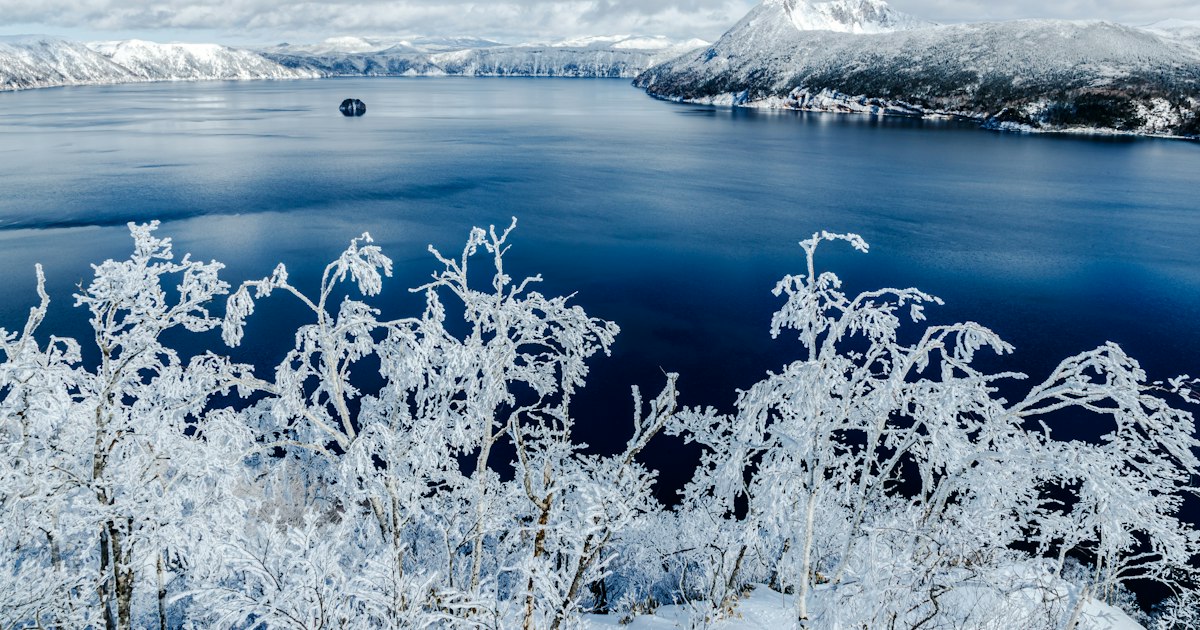
Photo by Masa Miyamoto on Unsplash
Lake Mashu sits inside a steep caldera in eastern Hokkaido, and on the rare day the fog lifts, the water below is an almost unnatural shade of deep blue. It has long been cited as one of the clearest lakes in the world, with no rivers flowing in or out to muddy it. But Mashu is also famous for hiding itself — thick fog rolls through the crater on a huge share of summer days, and plenty of visitors arrive to see nothing but white. Getting the timing and logistics right matters more here than at almost any other Hokkaido viewpoint, so here’s how to actually plan the trip.
Why Lake Mashu Is Worth the Detour
Lake Mashu is a caldera lake inside Akan-Mashu National Park, near the small town of Teshikaga in eastern Hokkaido. There’s no trail down to the shoreline — the steep crater walls and protected ecosystem mean the lake is viewed entirely from observation decks perched on the rim, roughly 200 meters above the water. That distance is part of the appeal: you get a sweeping view of the near-perfect circular caldera, the small central island (Kamuishu), and, on clear days, the Mashu-dake crater rim across the water. Unlike Lake Akan to the south, there are no boats, no lakeside towns, and no souvenir stalls down by the shore — just the overlook itself, which keeps the site feeling wild.
Getting There: Train, Bus, Car and Taxi
The nearest station is JR Mashu on the Senmo Line, which connects Kushiro and Abashiri with only a handful of local trains a day (roughly a 70–80 minute ride from Kushiro). The station itself is about 6 km from the observatories, and there is no regular public bus route covering that last stretch — most travelers without a car take a taxi, which runs around ¥4,000–5,000 one-way and should be booked or arranged in advance since taxis don’t wait around at this small station.
From late spring through autumn, a seasonal sightseeing bus loop operated out of Teshikaga links Kawayu Onsen, Mashu Station, the First Observatory, and Lake Kussharo a few times a day — useful if you’re based in Kawayu Onsen without a car, but schedules are limited and change year to year, so confirm current times with the Teshikaga tourist information office before relying on it.
By far the most flexible option is a rental car. Lake Mashu is about 50 km (roughly 55 minutes) from Kushiro Airport and around 70 minutes from Memanbetsu Airport near Abashiri, both well-served by domestic flights. If you’re driving in from elsewhere in Hokkaido, note that this is remote, winding mountain road — in winter that means genuine black-ice and whiteout risk, so read up on winter driving precautions in Hokkaido before you go, and if you’re not on a Japanese license, double check that your home country’s permit actually qualifies using this rundown of International Driving Permits for Japan.
Choosing Your Viewpoint: First vs. Third Observatory
Two observation points are open to the public. Mashuko Dai-ichi Tenbodai (First Observatory) is the main one, with a rest house selling the local “Mashu Blue” soft-serve and curry, restrooms, and the biggest parking lot — which also means the biggest crowds and tour buses. A parking fee of around ¥500 per car is typically collected here during the warmer months (roughly May to October); it’s usually fee-free once winter sets in.
Mashuko Dai-san Tenbodai (Third Observatory), a short drive further around the rim, gets a fraction of the visitors and has only a small shop, but the angle on the lake and the central island is arguably better, and it’s a good fallback if the First Observatory’s lot is full. The former Second Observatory has been closed to the public for some time, so don’t plan around it.
Best Season and Time of Day to See It Clearly
This is the detail that trips people up most: Lake Mashu is famous for fog, and summer — peak tourist season — is statistically the foggiest stretch, especially from late morning onward as moist air rolls up from the Pacific side. If you’re visiting July or August, your best odds of a clear view are early morning, ideally before 8–9am.
Winter, by contrast, often delivers the sharpest, bluest views, particularly on cold, clear mornings in January and February — the tradeoff is driving on snow and ice to get there. Autumn (late September through October) is a reasonable middle ground: cooler air, fewer crowds, and decent visibility odds. Whatever season you go, build in flexibility — locals will tell you the lake “chooses when to show itself,” and no amount of planning guarantees a clear day. If fog has settled in, it’s often worth waiting 20–30 minutes or driving between the First and Third observatories, since conditions can differ noticeably between the two.
Where to Stay and Eat Nearby
Kawayu Onsen, about 15–20 minutes from the lake by car, is the natural base. It’s a working hot-spring town with a sulfuric smell in the air from nearby Mt. Io, and it covers every budget:
- Budget: Simple business ryokan and guesthouses in Kawayu Onsen from around ¥6,000–9,000 per person with breakfast; several have free access to their onsen baths even for non-staying day-trippers for a small fee.
- Mid-range: Family-run hot-spring hotels with half-board (dinner and breakfast included) typically run ¥12,000–20,000 per person, a good option if you want a proper kaiseki-style dinner after a day of driving.
- Splurge: A handful of larger resort-style ryokan in Kawayu Onsen offer private open-air baths and higher-end seasonal menus, pushing ¥25,000+ per person — worth it if eastern Hokkaido is the highlight of your trip rather than a quick stopover.
This is a rural area with limited card acceptance — small shops, the observatory rest houses, and some ryokan still expect cash. It’s worth sorting out yen before you head out this way; see this guide to currency exchange in Japan for where to get a better rate than the airport counter.
Common Mistakes to Avoid
- Treating it as a quick photo stop on a tight schedule. If your only window is a midsummer afternoon, set your expectations low — plan a buffer day or an early-morning visit if the lake is a trip priority.
- Assuming the train gets you there. Mashu Station is not walking distance from the observatories; arrange a taxi in advance or rent a car.
- Skipping the Third Observatory. If the First Observatory is socked in or packed with tour buses, the quieter viewpoint is worth the short drive.
- Underestimating winter roads. This is mountain driving in a snow region — don’t attempt it on summer tires or without checking conditions first.
Pairing Mashu With Other Eastern Hokkaido Highlights
Lake Mashu sits within easy reach of two other standout stops in the same national park corridor. Lake Kussharo, Japan’s largest crater lake, is about 20–30 minutes away and known for wintering whooper swans at the Wakoto Peninsula. Further south, Lake Akan is roughly a 1.5–2 hour drive and home to the famous marimo moss balls — if you’re curious about the real plants versus the souvenir versions sold around the lake, this breakdown of Lake Akan’s marimo moss balls is worth reading before you buy one. Together, the three lakes make a natural two-to-three-day loop through eastern Hokkaido that rewards travelers willing to go well off the Sapporo–Niseko circuit.