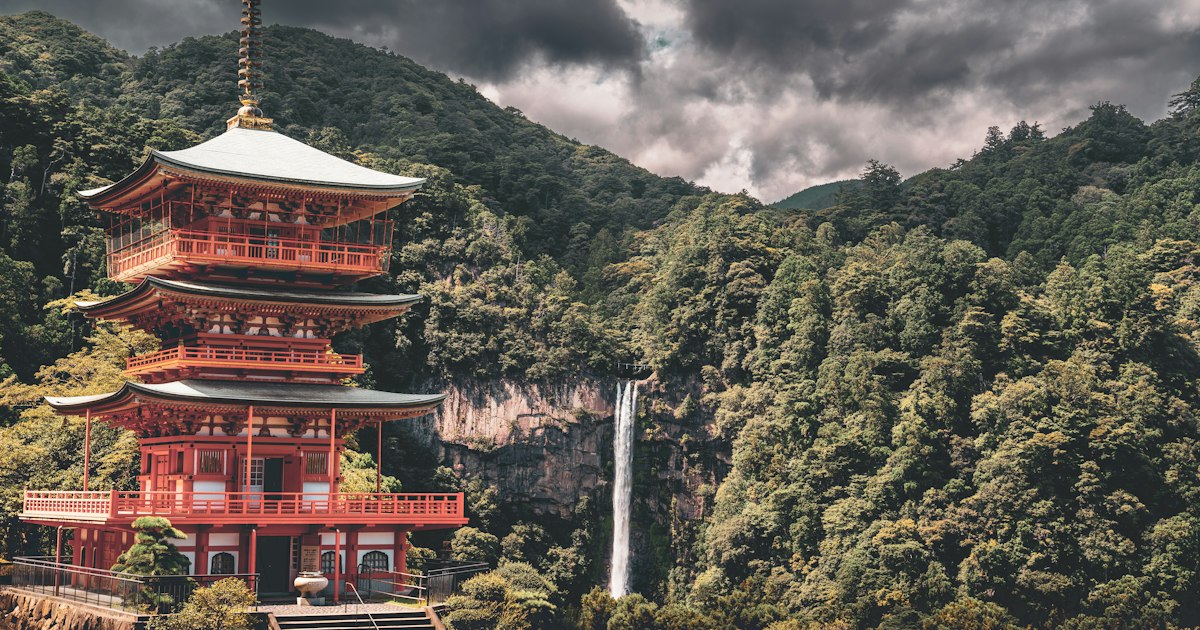
Tucked into the forested Kii Peninsula south of Osaka, Nachi Falls drops 133 meters in a single, uninterrupted plunge — the tallest waterfall in Japan — right beside a vermilion shrine complex that has drawn pilgrims for over a thousand years. The combination of a thundering waterfall, a Shinto shrine, and a Buddhist pagoda all visible in one frame is one of the most photographed scenes in the country, but the site is far enough from Tokyo and Osaka that most first-time visitors skip it. That’s a mistake if you have even one extra day to spare in the Kansai region, and this guide covers exactly how to get there, what it costs, and how to avoid the mistakes that catch out day-trippers.
What Makes This Site Special
Nachi Falls (Nachi no Otaki) is one leg of the Kumano Sanzan, the three grand shrines of the Kumano region, and the whole area is part of the UNESCO World Heritage-listed Sacred Sites and Pilgrimage Routes in the Kii Mountain Range. The falls themselves are considered a sacred object (goshintai) of Hiryu Jinja, a sub-shrine at the base of the water. Just up the hill sits Kumano Nachi Taisha, the main shrine, and right next to it stands Seiganto-ji, a Tendai Buddhist temple with a three-story pagoda that frames the falls perfectly in photos — the view you’ve likely seen on postcards or Instagram. Having a working Shinto shrine, a Buddhist temple, and a natural waterfall shrine in one compound is unusual even by Japan’s standards of religious overlap, and it’s worth 15 minutes of reading on-site to understand why pilgrims have walked here since the Heian period.
Getting There: Trains, Buses, and Costs
The gateway town is Kii-Katsuura, reached by the JR Limited Express Kuroshio from Shin-Osaka or Tennoji (around 3.5-4 hours, roughly ¥7,000-8,000 one-way with a reserved seat) or from Nagoya via the JR Nanki limited express (also around 3.5-4 hours). There is no shinkansen connection — this is a genuinely rural corner of Japan, which is part of its appeal.
From Kii-Katsuura Station, local Kumano Kotsu buses run to the Nachi-san area (roughly 25-30 minutes, around ¥620-680 one-way). Buses are not frequent — often just one or two per hour — so check the timetable posted at the station before you plan your day, and note the last bus back in the evening; missing it means an expensive taxi back to town. If you’d rather hike part of the old pilgrimage route, get off one stop earlier at Daimon-zaka and walk up the 600-meter cobblestone, cedar-lined slope (267 stone steps) that pilgrims have used for centuries, rejoining the main complex at the top.
If you’re building a longer Kumano Kodo hiking itinerary, the YAMAP hiking app has offline GPS maps for the Daimon-zaka and Nakahechi route sections, which is handy given how spotty mobile signal gets in the mountains.
What to See Once You Arrive
From the Nachi-san bus stop, it’s a climb of several hundred stone steps up to Kumano Nachi Taisha itself — wear real shoes, not sandals. The shrine grounds are free to enter and generally open from early morning until around 4:30-5:00pm; the shrine office selling goshuin (shrine stamps) and charms typically keeps similar hours. Seiganto-ji’s pagoda, right next door, charges a small entry fee (around ¥300) to climb inside, and it’s worth it: the upper floor gives you the classic framed view of the falls behind the pagoda roof.
The falls viewing area is a separate stop (Taki-mae) a short bus ride or walk back down the hill. There’s a free public viewpoint, but for around ¥300 you can enter the inner shrine precinct closer to the base of the falls, where you can get a much closer, louder view and draw sacred water believed to bring longevity. Budget at least two to three hours total for the shrine, pagoda, and falls if you want to see everything without rushing.
Best Time to Visit
Nachi Falls runs year-round, so there’s no bad season, but each has a different character. Autumn (mid-to-late November) brings vivid maple color against the pagoda and is the single most popular window — expect crowds and consider booking accommodation in Katsuura well ahead. Early summer brings hydrangeas along the approach paths and heavier water flow after rains, which makes the falls more dramatic but also means slippery stone steps. If you’re visiting in July or August, check conditions ahead of time — the Kii Peninsula gets genuinely hot and humid, and the shrine’s stone steps have no shade; the advice in our guide to Japan’s extreme heat warnings applies directly here. Mid-July also brings the Nachi Fire Festival (Nachi no Ogi Matsuri) on July 14, when massive burning torches are carried down the stone steps past the falls — spectacular, but the area gets very crowded and hot at the same time.
Common Mistakes to Avoid
- Treating it as a quick Osaka day trip. With roughly 4 hours each way by train, a same-day round trip from Osaka means 8+ hours of travel for a few hours on site. Staying one night in Katsuura makes the trip far more enjoyable and lets you catch the early morning light at the falls before tour groups arrive.
- Not carrying cash. The pagoda entry, the inner shrine precinct fee, and many small shops near the bus stop are cash-only or card-unfriendly. Bring coins and small bills.
- Missing the last bus down. Bus service thins out by late afternoon. Check return times the moment you arrive, not when you’re ready to leave.
- Planning around Obon or other peak weeks without checking seat availability. If your trip overlaps mid-August, the Kuroshio limited express to Kii-Katsuura can sell out of reserved seats just like shinkansen routes do — see our guide on traveling during Obon for how far ahead to book.
- Wrong footwear. Between the shrine’s stone steps and the Daimon-zaka slope, this is not a sightseeing stroll in dress shoes. If you’re extending the trip into a longer Kumano Kodo hike, Decathlon Japan is a reliable, inexpensive place to pick up proper hiking shoes or a rain shell mid-trip if you didn’t pack for it.
Where to Stay and Eat Nearby
Kii-Katsuura is a genuine onsen town built around a fishing harbor, and it happens to be one of Japan’s largest tuna (maguro) landing ports — the morning tuna auction near the station is open to the public and worth an early walk, and fresh maguro-don (tuna rice bowls) at harbor-front restaurants run roughly ¥1,500-2,500.
For budget travelers, there are simple business hotels and guesthouses near Kii-Katsuura Station from around ¥5,000-7,000 a night. Mid-range travelers can find traditional ryokan with onsen baths and kaiseki dinners in the ¥15,000-25,000 per person range. For a splurge, Hotel Urashima — accessible only by the hotel’s own boat from the harbor — has several cave-like natural onsen baths carved into seaside cliffs and is a memorable one-night stay in its own right, generally starting upward of ¥20,000-30,000 per person with dinner included. Whichever tier you choose, booking ahead matters most in autumn foliage season.