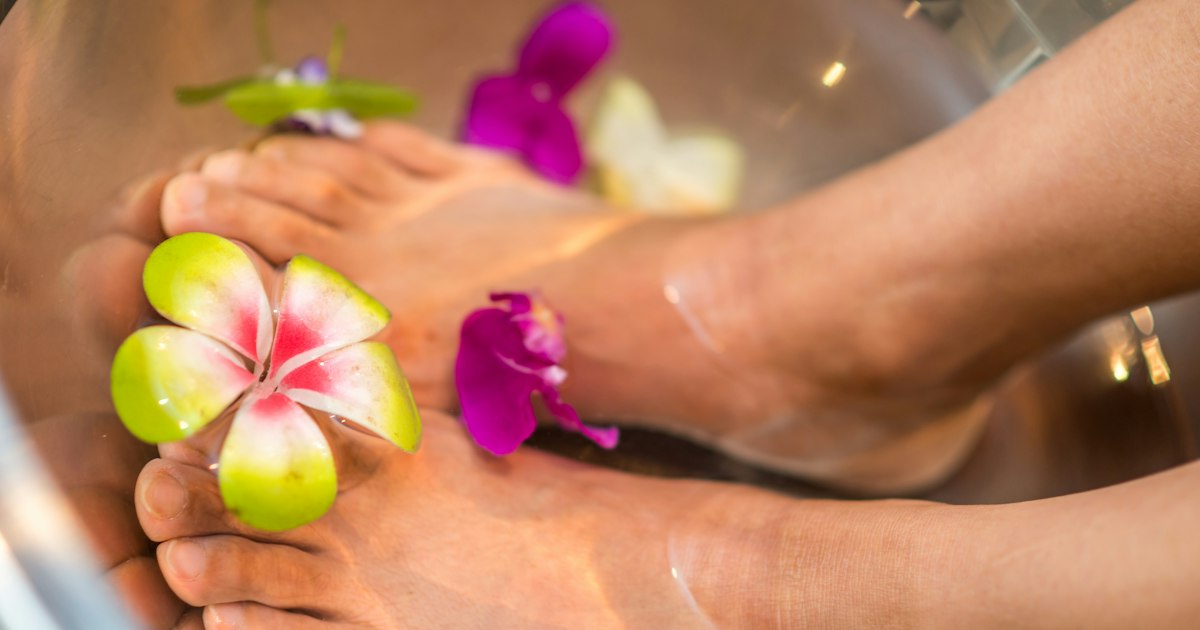
Photo by Rune Enstad on Unsplash
You don’t need a towel, a change of clothes, or the nerve to bathe naked in front of strangers to enjoy Japan’s hot spring culture. Ashiyu (足湯), or foot baths, let you roll up your pant legs, dip your feet into real onsen water, and soak for as long as you want — almost always for free. They’re scattered across train station plazas, riverside promenades, and hot spring towns from Hokkaido to Kyushu, and they’re one of the easiest ways to experience onsen water without planning a whole bathing trip around it.
What exactly is an ashiyu?
An ashiyu is a shallow, usually tiled or stone-lined trough filled with hot spring water, built at a height where you sit on an edge or bench and submerge your feet and lower calves. Most draw from the same source as the town’s full-body baths, so the mineral content and water temperature (typically 40-43°C) are the real thing, not a heated tap. Some are covered pavilions with roofs for rain and snow; others are open-air and built right into a riverbank or shrine approach. A few add extras like fish-shaped stone paths for a foot massage, or a connected “teyu” (hand bath) nearby.
Almost all ashiyu are self-service and unstaffed. You find a spot on the edge, remove your shoes and socks, and lower your feet in. There’s no entry fee at the vast majority of them — they’re a goodwill gesture from the town to let visitors sample the local water.
What to bring (and the etiquette mistakes to avoid)
Bring a small hand towel to dry your feet afterward — most ashiyu do not provide towels, and the few that do (usually at hotel-run or ryokan-adjacent spots) may charge a small fee, often around ¥100-200 for a rental towel from a vending machine or front desk. Wear socks and shoes that are easy to slip on and off; sandals make this far more convenient than lace-up sneakers or tall boots.
- Don’t put your whole leg or clothing in the water. Ashiyu are for feet and lower calves only, not for washing clothes, soaking a scraped knee under a rolled-up sleeve, or dunking a water bottle to cool it.
- Don’t bring food or drink to the water’s edge at facilities that post signs against it — many do, since spills attract bugs and stain the stone.
- Rinse your feet before stepping away if a rinsing station is provided, and dry them before putting socks back on — walking off with wet feet in cold weather is how people end up with cold feet (literally) for the rest of the day.
- Watch posted hours. Unlike a 24-hour foot spa fantasy, most ashiyu close at night (commonly 9pm or earlier) and some drain the water seasonally for cleaning or winter freeze protection.
Best season and time of day
Ashiyu work year-round, but the experience changes a lot by season. In winter, dipping cold feet into 40°C+ mineral water while snow sits on the roof is genuinely one of the best cheap experiences in Japan — towns in Tohoku and Hokkaido lean into this hard. In summer, many visitors skip the foot bath at midday when it feels redundant against the heat, and instead go in the early morning or evening when the warm water is a relief rather than an overload. Early morning (before 9am) and dusk tend to be the quietest times at popular stations and tourist streets, since daytime hours overlap with sightseeing crowds and lunch breaks for locals who use the baths on commutes.
Where to find them: stations, hot spring towns, and city streets
Ashiyu show up in three main settings, each with a different vibe:
Train and bus station plazas. Many regional train stations, especially on lines serving onsen towns, built a free ashiyu right outside the station to give connecting passengers something to do during a layover. Kinosaki Onsen, Yunokawa, and Dogo Onsen’s approach streets all have well-known examples, and it’s common to see travelers with rolling suitcases parked beside them, feet in the water, waiting for the next train.
Onsen town streets. This is where ashiyu culture is thickest. Hot spring towns often string several free foot baths along the main walking street so visitors in yukata can bathe-hop between shops without checking into a ryokan bath each time. Towns built around a specific historic bathing culture, like Takeo Onsen in Saga, often have an ashiyu near the main gate or bathhouse as a free preview of the water before you commit to a paid soak inside.
City parks and riverside paths. Some cities with no obvious hot spring reputation still pipe in mineral water from a nearby source for a park or riverside ashiyu, usually as part of a redevelopment project. These are less famous but often emptier, which makes them a nice stop if you’re already walking a scenic riverside route or exploring a quieter neighborhood.
Budget, mid-range, and splurge ways to do it
Budget (free): The standard ashiyu experience costs nothing beyond getting there. Pack your own small towel, wear easy shoes, and treat it as a 10-15 minute rest stop between sights rather than a destination in itself.
Mid-range (¥200-¥500): Some hot spring towns run a slightly upgraded “premium” ashiyu with a small entry fee that includes towel rental and sometimes a flavored drink or tea service at an attached stand. A few footbath-and-café combinations let you order a coffee and keep your feet in the water while you drink it.
Splurge: If a free foot soak leaves you wanting the full experience, book an actual onsen room or a ryokan stay with a private bath, where nightly rates run anywhere from roughly ¥8,000 for a simple room to well over ¥30,000 for a high-end ryokan with a private outdoor tub. If you’re planning that leg of the trip, it’s worth comparing rates across Rakuten Travel, Jalan, and Booking.com before booking, since onsen ryokan pricing varies more between platforms than standard city hotels.
Working ashiyu into a day trip
Foot baths are at their best as a free add-on to a day that’s already built around something else — a shrine visit, a scenic walk, or a train transfer. If you’re heading out to a natural landmark like Shiraito Falls near Mount Fuji, check whether the nearby town has a foot bath to warm up afterward — waterfall spray keeps the air noticeably cooler than the surrounding area even in summer. Likewise, a long walking day around a bay or coastal view like Matsushima Bay is a good excuse to seek out a local ashiyu for a mid-afternoon reset before more walking.
The bottom line
Ashiyu are one of the few genuinely free, no-planning-required experiences left in Japanese tourism. You don’t need to reserve a slot, strip down, or speak Japanese — just find a spot on the edge, roll up your pant legs, and let your feet soak while everyone else keeps walking past. Keep a small towel in your bag whenever you’re near a hot spring town or a station plaza, because you’ll find more of these than you expect, often when you least plan for them.