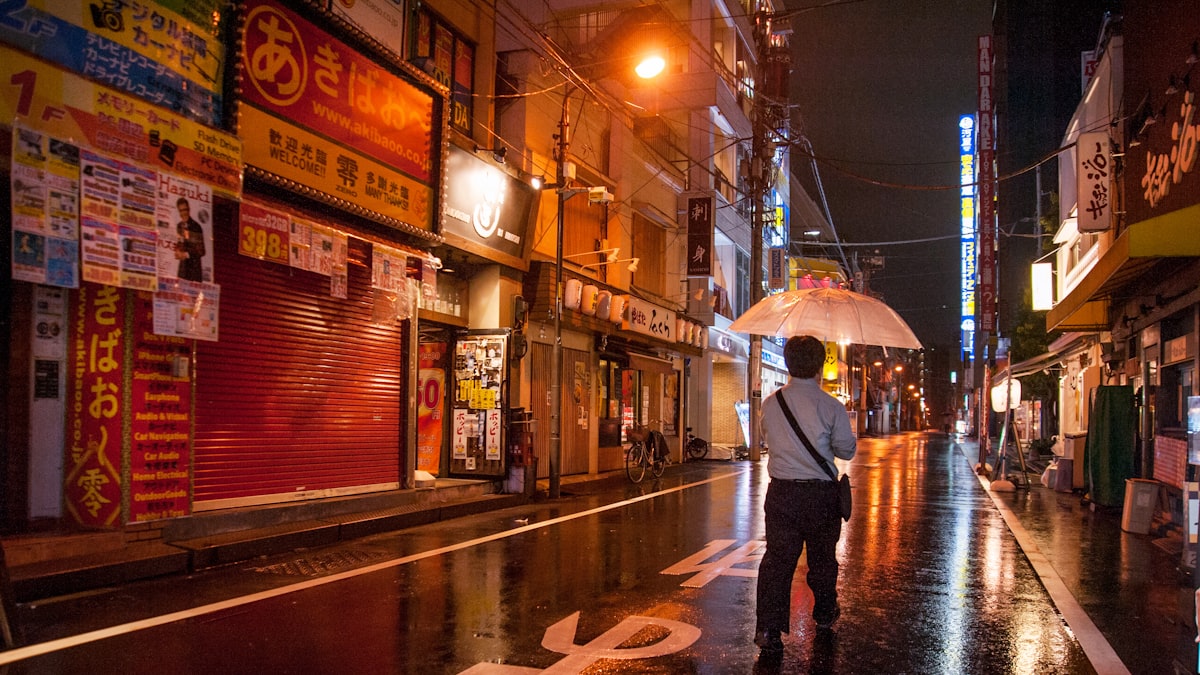
Japan’s rainy season (tsuyu) puts many travelers off — but it has real upsides and is very manageable with a little planning. Here’s what to expect and how to make the most of it.
When is the rainy season?
Tsuyu typically runs from early June to mid/late July across most of Japan (Okinawa earlier; Hokkaido largely skips it). Expect humid days with periods of rain rather than constant downpours.
The upsides
- Fewer crowds and lower prices at big sights and hotels.
- Lush greenery — gardens and moss temples look their best; see our gardens guide.
- Hydrangeas (ajisai) bloom beautifully at temples and parks.
How to plan around the rain
- Mix indoor and outdoor plans — museums, aquariums, teamLab, shopping, and food halls are perfect rain backups.
- Carry a compact umbrella (cheap at any konbini) and quick-dry clothes; see what to wear.
- Check forecasts daily and stay flexible — with an eSIM you can adjust on the go.
What to know
- It’s humid — pack breathable clothing and a hand towel.
- Rain rarely ruins a trip here; trains and indoor life carry on as normal.
- Onsen towns are lovely in the rain — see our onsen towns guide.
Bottom line
If you don’t mind some rain, tsuyu offers value and beauty with fewer crowds. Compare with our best time to visit guide, and plan with a flexible itinerary.
What tsuyu means for your budget
- Hotel rates in June and early July often sit 15-25% below the cherry blossom and summer peaks, and popular ryokan that book out months ahead in April are frequently available with a week or two of notice.
- Flights into Japan during this window are also typically cheaper than the surrounding shoulder seasons, since it falls between the two big domestic travel peaks of Golden Week and Obon.
- An umbrella from a konbini costs about JPY 500-700 and is disposable enough that buying one on arrival, rather than packing one, is a normal local habit during this season.
Common mistakes during rainy season
- Cancelling outdoor plans entirely — most days bring a few hours of rain, not a full washout; checking an hourly forecast rather than the daily one often reveals a dry window to work with.
- Packing only cotton clothing — it stays damp in the humidity; the same quick-dry fabrics recommended for summer help here too.
- Skipping Hokkaido on the assumption all of Japan is rainy in June — Hokkaido largely misses tsuyu and can be a smart regional pivot if the forecast further south looks grim.
Regional timing differences
Okinawa’s rainy season starts and ends earlier (roughly May to mid-June), so a trip timed for late June often finds Okinawa already clear while the mainland is still damp. If flexibility allows, watch the Japan Meteorological Agency’s tsuyu-akemi (rainy season end) announcements, since the season can run shorter or longer than the average by two or three weeks in either direction.
What to pack for rainy season
A packable rain shell beats an umbrella on breezy days, and quick-dry socks and shoes make a real difference if you’re walking outdoor sights in steady rain. See our packing list for a full season-by-season rundown, and pair a rainy-season trip with a flexible itinerary that can shuffle outdoor and indoor days as the forecast changes.