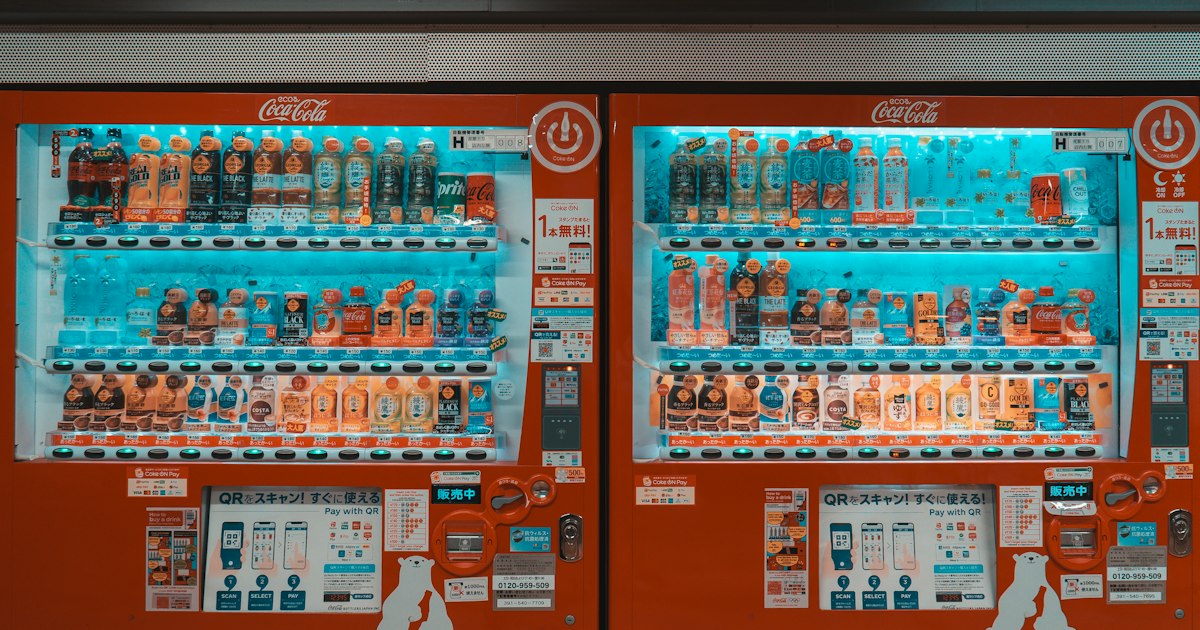
Photo by Alexandre Valdivia on Unsplash
Walk down the snack aisle of almost any Japanese convenience store or supermarket and you’ll spot it: a plump, sausage-shaped stick wrapped in glossy red-and-white plastic, usually stacked near the dried squid and cheese sticks. This is gyoniku soseji (魚肉ソーセージ), fish sausage, one of Japan’s longest-running convenience snacks and a genuine piece of Showa-era food history. It’s cheap, needs no refrigeration, and tastes nothing like what the name suggests to most foreign visitors. Here’s what it actually is, where to buy it, and how to eat one without making the one mistake almost every first-timer makes.
What Exactly Is Gyoniku Soseji?
Gyoniku soseji is made from surimi, the same minced, pressed fish paste used in kamaboko fish cakes, but it’s shaped and cased like a Western sausage rather than steamed into a block or half-moon. The paste (usually a mix of pollock, mackerel, or other white fish, plus starch, egg white, and seasoning) is pressed into a cellophane or plastic casing, then cooked and pressure-sterilized, which is why it sits safely on an unrefrigerated shelf for months. The result is bouncier and denser than a hot dog, mildly sweet, and much less “fishy” than the name implies — closer in texture to a firm, pale pink bologna. It isn’t the same product as kamaboko, but it comes from the same post-war fish-paste tradition and is often shelved near it in supermarkets.
Why It Became a Retro Icon
Fish sausage took off in Japan in the 1950s, when meat was still expensive and fish was abundant and cheap. Food makers realized surimi could be stretched into a sausage shape that mimicked the Western-style sausages becoming popular at the time, giving families an affordable source of protein that kids would actually eat. By the 1960s and 70s it was a staple in bento boxes, school lunches, and as a between-meals bite — the kind of snack that now triggers genuine nostalgia for anyone who grew up in that era, in the same way tokoroten does for an older, more old-fashioned generation of Japanese snackers. The packaging design, especially the twisted, tied ends, has barely changed in decades, which is a large part of its charm for modern shoppers hunting for dagashi-adjacent retro treats.
Where to Buy It and What to Pay
You don’t need to seek out a special shop; gyoniku soseji is sold nationwide at convenience stores (Lawson, FamilyMart, 7-Eleven), supermarkets, and drugstores with a food section. Convenience stores are open 24 hours, so this is a snack you can grab at 2am just as easily as at lunchtime.
- Budget (~¥108–¥162): A single stick from a convenience store, often from major makers like Marudai Foods, Nippon Ham, or Itoham. This is the classic single-serving format most tourists encounter first.
- Mid-range (~¥300–¥550): Multi-packs of 4–6 smaller sausages from a supermarket, which work out cheaper per piece and are what most Japanese households actually buy for kids’ bento boxes.
- Splurge (~¥400–¥800): Premium versions with a higher percentage of real fish, less starch filler, and firmer texture, sometimes sold in department store food halls (depachika) or by regional kamaboko specialty makers. Towns famous for traditional fish-paste products, such as Odawara in Kanagawa, sometimes sell a gourmet sausage-style product alongside their classic kamaboko lineup.
Prices and exact brand lineups vary slightly by region and by which chain you’re in, but the price band above holds true almost everywhere in Japan.
How to Eat It
This is where most newcomers go wrong, so pay attention to the casing. The red or clear plastic wrapper is not edible — it’s a sausage casing, not a seal like on a chocolate bar. Each end has a small plastic or paper tab you pull to loosen a string tie, after which you peel the casing down like a banana and eat the sausage straight out of it, a bit at a time, re-peeling as you go. No cooking, slicing, or heating is needed; it’s designed to be eaten cold or at room temperature straight from the package. Some people do slice it into coins for a bento box or stir-fry, but as a convenience-store snack it’s meant to be eaten on the spot, on foot.
Common Mistakes to Avoid
- Biting into the casing. It won’t hurt you in small amounts, but it’s plastic, not a food-grade edible film, and it tastes unpleasant. Always peel.
- Assuming it needs refrigeration. Unopened packs are shelf-stable for months thanks to pressure sterilization, which makes them an excellent shelf item to stock up on before a long train ride or hike. Once opened, though, eat it that day.
- Expecting a strong fish flavor. It’s mild and slightly sweet, closer to a basic lunch-meat sausage than to something like dried fish or sashimi. If you’re hoping for a bold seafood taste, you’ll be underwhelmed; if you’re wary of “fishy” food, you’ll likely be pleasantly surprised.
- Assuming it’s vegetarian. Despite the sausage shape and mild taste, it is 100% fish-based, not a meat substitute, so it’s not suitable for vegetarians or vegans.
Best Times and Situations to Grab One
There’s no real season for gyoniku soseji; it’s sold year-round and makes sense any time you need cheap, portable protein. It earns its keep specifically in a few travel scenarios:
- Long train or bus rides, since it needs no utensils and doesn’t smell strongly enough to bother other passengers.
- Hiking and backcountry trips, including winter walks like those covered in the guide to renting snowshoes for backcountry walks in Japan’s snow country, where a shelf-stable, no-cook protein source is genuinely useful.
- Budget road travel, including the kind of low-cost, convenience-store-sustained travel discussed in our piece on hitchhiking in Japan, where you want calories that survive a hot car and a long day without spoiling.
- Japan’s traditional 3pm snack break, oyatsu time, when convenience stores restock their snack shelves and fish sausage sits comfortably alongside the sweets and rice crackers covered in our guide to oyatsu time and what convenience stores stock for it.
A Fun Side Note for Fish-Shaped Snack Fans
If the fish-shaped food theme appeals to you beyond the sausage itself, Japan has a whole category of fish-shaped snacks and cookware worth exploring, from taiyaki to the molds covered in our guide to kanban-yaki fish-shaped molds versus taiyaki pans. Gyoniku soseji isn’t fish-shaped itself, but it belongs to the same broader tradition of Japanese cooks turning humble fish paste into something playful and affordable, a tradition that stretches from Edo-period kamaboko to the brightly wrapped sausage sitting on a convenience store shelf today.
For a souvenir that costs under ¥200, takes thirty seconds to eat, and gives you a genuine taste of mid-century Japanese food culture, gyoniku soseji is hard to beat. Grab one on your way out of any convenience store, peel it properly, and you’ve got a quick, honest snack that most Japanese visitors over 40 will recognize instantly and smile at.