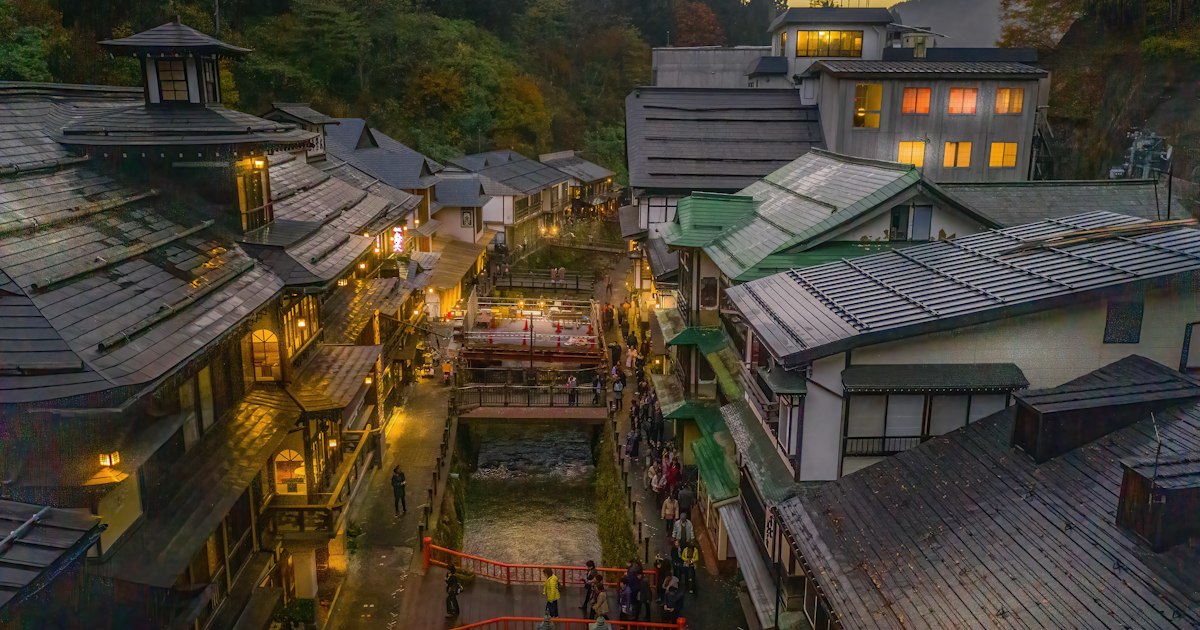
Photo by Ken Cheung on Unsplash
Tucked into a narrow river gorge in the mountains of Nikko City, Tochigi Prefecture, Yunishigawa Onsen is the kind of place that still feels like a secret, even though it’s only about three hours from Tokyo. Locals trace the village’s founding to survivors of the Heike (Taira) clan, who fled here after their defeat by the Minamoto in the Genpei War of the 1180s and settled deep in the mountains where no one would find them. That legend shapes almost everything about the village today, from its folk museum to the candlelit snow huts that draw visitors every winter. Here’s what you need to know to visit well.
The Heike Legend and Why It Matters Here
After the Taira clan’s catastrophic loss at the Battle of Dan-no-ura in 1185, scattered survivors are said to have scattered into remote valleys across Japan to avoid Minamoto retribution. Yunishigawa is one of several “Heike villages” (Heike no Sato) that claim this ancestry, and the village leans into it unapologetically — look for the Heike-themed banners along the main street and the open-air folk museum called Heike no Sato, a short walk from the central hot spring area. The museum (roughly ¥500 entry, open approximately 8:30 to 17:00, with shorter winter hours) displays thatched-roof farmhouses and tools tied to the settlement story. It’s a modest attraction, worth 30–45 minutes rather than a half-day trip, but it gives context to why this valley feels so deliberately isolated — narrow, steep-sided, and reachable by only one road for most of its history.
Getting There From Tokyo
There’s no shortcut here, which is part of the appeal. From Tokyo, take the Tobu Railway limited express (the Spacia/Kegon-type service) from Asakusa Station toward Kinugawa-Onsen or Aizu-Tajima. Through-trains continue past Kinugawa-Onsen onto the Yagan Railway line, which terminates at Yunishigawa Onsen Station — the whole rail journey runs about 2.5 to 3 hours depending on the connection. From Yunishigawa Onsen Station, a local bus (around 20–30 minutes) covers the final stretch down into the onsen village itself; buses are timed loosely around train arrivals in the warmer months but run less frequently in winter, so check the schedule board at the station rather than assuming you can just walk out and catch one.
If you’re coming from Nikko’s main sightseeing area (Toshogu Shrine, Lake Chuzenji), there’s no direct bus — you’ll backtrack to Kinugawa-Onsen or Shimo-Imaichi first. Budget a full travel day each way if you’re combining Yunishigawa with central Nikko, and if you’re shuttling luggage between hotels on a multi-stop Tochigi itinerary, same-day hotel-to-hotel forwarding can save you from hauling bags onto a train that makes several transfers — see Hotel-to-Hotel Luggage Forwarding in Japan for cutoff times before you book.
The Kamakura Snow Festival
The signature event here is the Yunishigawa Onsen Kamakura Festival, held annually for about five weeks from late January through early March, timed to when snow is reliably deep enough in this valley. “Kamakura” refers to the domed snow huts — ranging from waist-high candle-lit miniatures lining the riverbank to a few large enough to crawl inside. After dark, roughly 17:00 to 21:00, hundreds of small kamakura are lit with candles along the Yunishigawa River and around the village, turning the whole valley into a quiet, snow-muffled lantern display. Some larger huts function as seating for grilled food and amazake (sweet, low-alcohol rice drink) sold by vendors, and in past years visitors could reserve a kamakura for hot pot dining inside — worth asking your ryokan to help book in advance if that’s a priority, since spots are limited and in Japanese only.
Come dressed for real winter: waterproof boots, insulated layers, and hand warmers (sold at any convenience store) make a far bigger difference than a stylish coat. The snow underfoot is uneven and often icy by evening, so this isn’t a stroll in regular sneakers. If you want to explore beyond the festival grounds into the surrounding hills, rented snowshoes open up quiet backcountry walks well away from the crowds — see Renting Snowshoes for Backcountry Walks for where to pick up a pair near Tochigi’s snow country.
Where to Soak
Yunishigawa’s hot springs are mildly alkaline and valued for soft water that leaves skin smooth — most ryokan pipe it into both indoor baths and open-air rotenburo overlooking the river gorge. Several riverside ryokan have outdoor baths positioned so bathers can watch snow fall directly into the water in winter, which is the main reason people come in January and February despite the cold commute. If you’d rather not commit to a full ryokan stay (or your feet are the only part of you that need warming after a day outdoors), check for a free ashiyu foot bath near the village center — Japan has these dotted around onsen towns precisely so day-trippers can soak without undressing; see Ashiyu: Japan’s Free Public Foot Baths for how they typically work.
Where to Stay
Budget: Smaller family-run minshuku (guesthouse-style inns) in the village can run from roughly ¥9,000–13,000 per person per night with two meals included — simpler rooms, often shared or basic private bathing facilities, but still with access to the hot spring.
Mid-range: Standard ryokan with private or semi-private rotenburo typically fall between ¥18,000–28,000 per person per night with a kaiseki-style dinner and breakfast — this is where most visitors land, and it’s worth paying the premium for a room with its own river-facing bath if you’re visiting during the Kamakura Festival, since it means you can soak while watching the lit snow huts below.
Splurge: A handful of larger riverside ryokan offer premium rooms with open-air baths attached directly to the room, plus multi-course kaiseki dinners featuring local yamame trout and wild mountain vegetables, generally ¥35,000 and up per person per night. Book these well ahead for festival weekends — the village is small and rooms sell out fast once the festival dates are announced each autumn.
Common Mistakes to Avoid
- Underestimating travel time. People see “near Nikko” on a map and assume it’s a quick add-on to a Toshogu Shrine day trip. It isn’t — budget it as its own overnight trip or a very long day.
- Arriving without checking bus connections. Winter bus frequency from Yunishigawa Onsen Station drops significantly; missing one can mean an hour’s wait in the cold.
- Visiting the Kamakura Festival but leaving before dark. The huts are unremarkable by daylight — the entire point is the candlelight after sunset, so plan to stay through dinner and the evening lighting, not just pass through in the afternoon.
- Packing for a “ski trip” instead of a “walking around outside at night” trip. Ski gear is overkill; what you actually need is grippy waterproof footwear and warm layers you can walk and stand around in for an hour or two after dark.
Best Time to Visit
For the Kamakura Festival, aim for a weekday evening in February if you can — weekends draw day-trippers from Tokyo and the Kanto area, and the narrow village streets and limited parking feel it. Outside festival season, early autumn (October into early November) brings colorful foliage along the gorge and far fewer crowds, with milder weather for exploring the Heike no Sato museum and nearby walking trails. Avoid midsummer if hot spring bathing is your main goal — it’s still pleasant, but the valley’s cold-weather charm is really the draw, and before or after a soak, jotting a quick postcard home on washi stationery from your ryokan’s writing desk is a nice, quiet way to fill the evening; see Hikyaku-Style Letter Sets and Washi Stationery for where to find good sets if your ryokan doesn’t stock them.