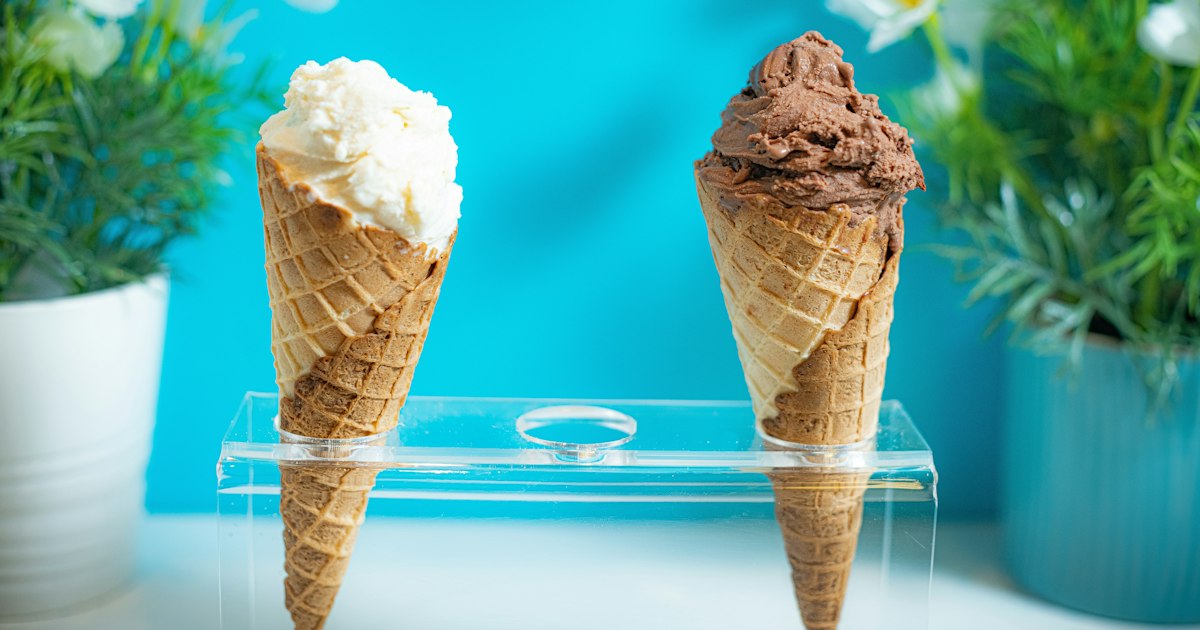
In most countries, soft serve means vanilla, chocolate, or maybe a swirl of both. In Japan, it’s a national obsession with a local twist: nearly every prefecture, hot spring town, and roadside rest stop has engineered its own signature flavor, often using whatever the region is famous for. That means you can eat your way across Japan one cone at a time — wasabi in Shizuoka, black sesame in Kyoto, salt in Kamakura, purple sweet potato in Okinawa. Here’s where the best “soft cream” (as it’s called in Japanese) is worth a detour, what to actually expect flavor-wise, and how to avoid the tourist-trap versions that taste like nothing at all.
Wasabi Soft Serve: Shizuoka and Nagano’s Signature Shock
Shizuoka Prefecture grows most of Japan’s wasabi, particularly around the Izu Peninsula and the Abe River valley, so it’s no surprise this is ground zero for wasabi soft serve. The best versions use real grated wasabi root swirled into fresh cream, not green food coloring — you’ll know the difference immediately because the fake ones just taste like vanilla with a vague bitterness, while the real thing gives a brief, sinus-clearing kick about three seconds after the first bite, then fades into a clean, almost herbal sweetness.
Look for it at wasabi farm shops like Utougeno-Wasabien near Shizuoka City (open roughly 9:00–17:00, closed irregularly in winter) and at rest stops along Route 1 through the Amagi mountains, where cones run ¥400–¥500. If you’re riding the Oigawa Railway through Shizuoka’s tea country, several station kiosks near Kanaya and Senzu sell wasabi soft serve alongside matcha, making it an easy two-flavor comparison in one afternoon. Nagano’s wasabi farms near Azumino run a milder version worth trying if you’re doing the Matsumoto–Hakuba circuit instead.
Common mistake: expecting it to be genuinely spicy. It’s a novelty flavor, not a dare — the heat is a light tingle, not a punch. If you want more intensity, ask for extra wasabi paste on the side (sometimes offered for an additional ¥50–¥100).
Black Sesame (Kuro Goma): Kyoto and Nara’s Go-To
Black sesame soft serve is less a regional novelty and more a default flavor across the Kansai area, especially in Kyoto and Nara, where it pairs naturally with the area’s tofu, yatsuhashi, and other subtly sweet, nutty snacks. The best versions are genuinely gray-black (not just dark brown) and taste roasted and slightly bitter under the sweetness — a world apart from the nearly flavorless black sesame soft serve sold at generic souvenir shops.
In Kyoto, Arashiyama’s Nakamura-ya and shops along the approach to Kiyomizu-dera sell solid versions for ¥450–�003¥500. In Nara, stalls near Todai-ji and Nara Park do a good one too, and you can eat it while dodging the deer. Spring and autumn are the most pleasant times to eat it outdoors, but be aware that if you’re visiting Kyoto or Nara during shugaku ryoko season, when school trips flood the temples, the queues at the most famous soft serve stalls near Kiyomizu-dera and Nara Park can run 15–20 minutes deep on weekday afternoons in May, June, and October. Go before 10am or after 4pm to skip the worst of it.
Hokkaido Milk: The Benchmark Everyone Compares To
If you only try one “normal” soft serve in Japan, make it Hokkaido milk flavor — it’s the standard against which every other regional version gets judged, thanks to the prefecture’s dairy farms and genuinely higher butterfat content. It’s richer, slightly yellow rather than stark white, and has a faint grassy sweetness that mass-produced soft serve elsewhere doesn’t replicate.
Furano and Biei, in central Hokkaido, have some of the best farm-stand versions (¥350–¥450), and Hakodate’s Morning Market and Otaru’s canal area both have reliable tourist-friendly stalls. Budget travelers can get a perfectly good version at Seicomart convenience stores across Hokkaido for under ¥300; if you want a splurge, farm cafes like Nakafurano Cheese Factory add fresh cheese curds or hand-made caramel for ¥600–¥700. Summer (July–August) is peak season for both flavor and crowds — the cows are on fresh pasture, but so is everyone else.
Salt (Shio) Soft Serve: Kamakura and Enoshima’s Beach Classic
Salt soft serve became a beach-town staple along the Shonan coast, and Enoshima in particular has leaned into it hard — you’ll find shio soft serve stands lining the approach to Enoshima Shrine, usually ¥400–¥450, often dusted with extra sea salt flakes on top. The effect is less “salty” than it sounds; it mostly intensifies the sweetness and cuts the richness, which is genuinely refreshing after a hot walk up the island’s stone steps in summer.
This is a fair-weather food in the most literal sense: go between May and September when the stands are fully staffed and the queue moves fast, since several close early or operate limited hours in winter. It also pairs oddly well with a savory afternoon of coastal street snacking — if you’re the type who enjoys grazing your way through a day out, treat it the same way you’d approach hunting down grilled whole squid (ikayaki) at a street stall: one savory, one sweet, both eaten standing up.
Purple Sweet Potato: Okinawa’s Beni Imo
Okinawa’s beni imo (purple sweet potato) is a genuinely distinct regional crop, and the soft serve made from it is one of the few flavors in this list that would be hard to replicate convincingly with food coloring — the taste is earthy, mildly sweet, and a bit like chestnut. It’s sold island-wide, but the most famous version is at Yomitan Village’s Beni Imo Tart shop and at Kokusai-dori stalls in Naha, running ¥350–¥500.
Okinawa is warm nearly year-round, so there’s no bad season for this one, though midsummer (July–August) is brutally hot and humid enough that a melting cone becomes a real hazard — eat fast or get a cup instead of a cone.
Where It Falls Apart: Spotting the Fake Regional Flavor
Not every “local” soft serve is actually local. Big tourist areas sometimes sell a rotating cast of novelty flavors (charcoal black, rainbow, gold-leaf-topped) that have nothing to do with the region and everything to do with Instagram. A few tells that a flavor is the real, worthwhile version: the shop is attached to or near the actual producer (a wasabi farm, a dairy, a sesame or tea processor); the color is muted and natural rather than neon; and the price is in the realistic ¥350–¥550 range rather than ¥700+ for a gold-flake gimmick cone near a train station.
Budget-wise, convenience stores and rest stops (michi-no-eki) are your cheapest reliable option at ¥250–¥350, mid-range sit-down farm cafes run ¥400–¥600, and splurge versions with mix-ins (fresh fruit, roasted nuts, a shot of liqueur) can hit ¥800–¥1,000 at specialty shops in Tokyo or Kyoto. None of it requires a reservation — just good timing, since popular stalls sell out of specific flavors on hot weekend afternoons, especially matcha and uji flavors in Kyoto by early afternoon.
Planning Around It
Soft serve hunting works best as a side activity rather than the main event of a day, since the best versions are tied to farms, shrines, and rail lines you’d likely visit anyway. If you’re building a multi-region itinerary, it’s worth noting that most of these shops are cash-friendly and cheap enough that they won’t dent a daily budget — the bigger planning consideration is simply seasonality: wasabi and milk flavors are available year-round, but beach-town salt soft serve and some farm-stand specials genuinely shut down or scale back from November through March. Check this before building a winter itinerary around a specific flavor you saw online.