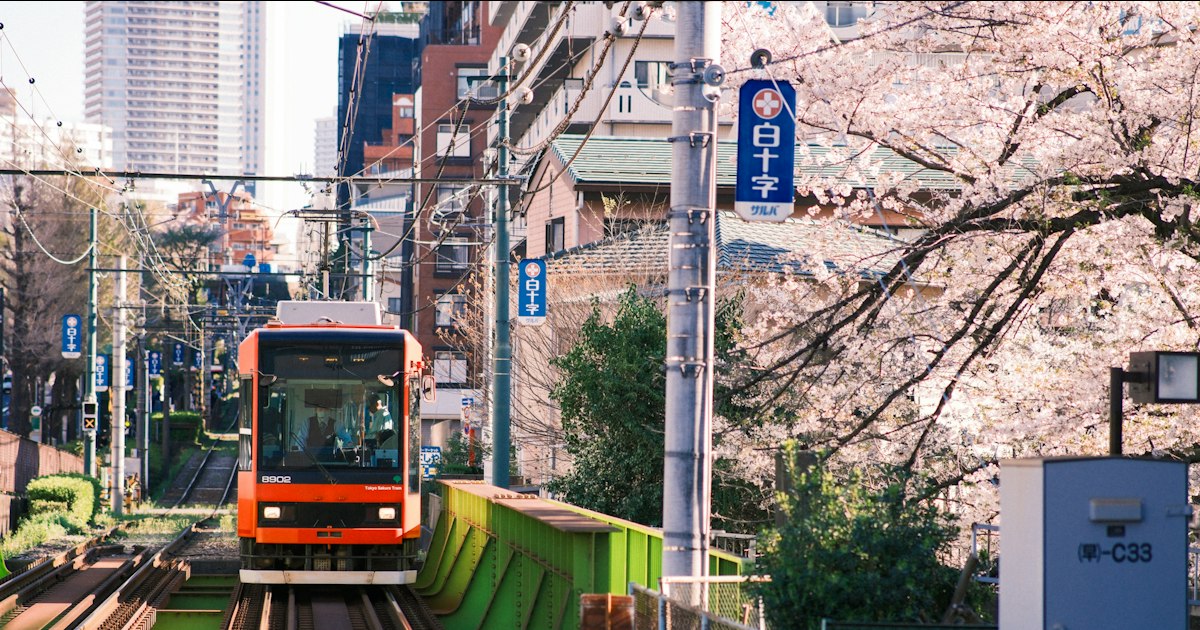
Photo by YUNAN WANG on Unsplash
Tokyo tore up nearly all of its streetcar tracks during the subway-building boom of the 1960s and 70s, but one line survived: the Toden Arakawa Line, now officially branded the Tokyo Sakura Tram. For about ¥170 a ride, you can rattle through quiet residential backstreets, temple neighborhoods, and old shopping arcades in a single-car tram that feels nothing like the rest of Tokyo’s transit network — and almost no tourists bother to try it.
What Makes the Arakawa Line Special
Run by the Tokyo Metropolitan Government’s transit operator Toei, the line connects Waseda Station in the west to Minowabashi Station in the east, covering 12.2 km and 30 stops. It’s the last fragment of a tram network that once crisscrossed the whole city. Unlike the subway, the tram runs mostly at street level — sometimes on its own fenced lane, sometimes sharing the road — so it moves slowly, which is exactly the point. This is a line for looking out the window, not for getting somewhere fast.
The “Sakura Tram” nickname comes from the roughly 200 cherry trees planted along the tracks between Omokagebashi and Waseda, which bloom in late March to early April and turn that stretch into one of Tokyo’s most photographed, least crowded hanami spots.
Fares, Passes and How to Pay
The fare is flat regardless of distance: ¥170 for adults and ¥90 for children, whether you ride one stop or all 30. You board at the front door and pay as you get on, like a bus — drop exact cash into the fare box or tap an IC card (Suica, Pasmo, or any nationwide equivalent) on the reader by the driver. There’s no gate and no ticket machine on the platform itself.
If you plan to hop on and off, buy the Toden one-day pass (都電一日乗車券) for ¥400 (adult) or ¥200 (child), sold on board or at tram offices — it pays for itself after your third ride. Toei also sells a broader one-day ticket covering its subway lines, buses, and this tram together, worth considering if you’re combining the streetcar with a day of Toei subway travel. Because the tram runs on its own IC card system shared with the rest of Japan’s transit, the usual advice about carrying backup cash applies — if your card gets flagged, it’s worth reading up on why foreign cards sometimes get declined in Japan before you’re stuck fumbling at the fare box while the driver waits.
The Best Stops to Hop Off
You don’t need to ride the whole line to get the experience. A handful of stops reward getting off:
- Zoshigaya — home to Zoshigaya Cemetery, where novelist Natsume Soseki is buried, and the small Kishimojin Temple precinct a few minutes’ walk away.
- Otsuka — a scruffy, un-touristy nightlife strip around the JR Yamanote Line interchange, good for an inexpensive dinner.
- Sugamo — nicknamed “Harajuku for grandmas,” this is the stop for Jizo-dori, a covered shopping street selling red underwear (considered lucky for seniors), senbei, and simple set-lunches for ¥800–1,200.
- Oji / Asukayama — Asukayama Park has free cherry blossoms in spring, a small museum on industrialist Shibusawa Eiichi, and a retired streetcar and steam locomotive kids can climb on.
- Minowabashi — the eastern terminus, a short walk from Yanaka Ginza’s old-fashioned shopping street and the Yanaka cemetery district.
When to Ride: Best Season and Time of Day
Late March through early April is peak season for the Omokagebashi–Waseda cherry blossom stretch, and it does draw local photographers, though nowhere near the crowds of Ueno or the Meguro River. Outside of sakura season, the line is pleasant year-round and genuinely useful off-peak: trams run roughly every 6–12 minutes from around 6:00 am to 11:00 pm, so there’s no need to plan around a timetable. Weekday mid-mornings are the quietest time to ride if you want an empty car and clear photos of the old rolling stock; weekend afternoons around Sugamo get busy with local shoppers rather than tourists.
Getting There and Common Mistakes
The single biggest mix-up: the tram’s Waseda stop is not the same as Tokyo Metro’s Waseda Station on the Tozai Line. They’re about a 15-minute walk apart in different directions from Waseda University, so don’t assume you can transfer directly between them. At the other end, Minowabashi is reachable via a roughly 7-minute walk from Tokyo Metro Hibiya Line’s Minowa Station, or by transferring at Machiya Station (JR Joban Line, Keisei, or Chiyoda Line) to the tram’s Machiya-ekimae stop.
Boarding itself trips people up too: this is a one-car tram with a single front door for both boarding and alighting, and you pay on the way in — there’s no tapping out, since the fare is flat. Because stops are unstaffed and signage is tram-specific rather than part of the usual JR/Metro wayfinding, it’s worth having offline maps loaded before you go; if your current phone plan is limited, see our guide to picking up an unlocked SIM-free phone mid-trip for more reliable data on the road.
Budget, Mid-Range, and Splurge Ways to Ride
On a strict budget, pay cash per ride (¥170) and stick to free attractions like Asukayama Park and window-shopping on Jizo-dori — a half-day costs almost nothing beyond a few tram fares and a street snack. For a comfortable mid-range day, get the ¥400 day pass, budget ¥800–1,500 for a sit-down lunch in Sugamo or Otsuka, and build in time for the Shibusawa museum (small admission fee) at Asukayama. If you want to splurge, pair the ride with a guided walking tour of the Yanaka/Nippori old-town district near Minowabashi — several local operators run these for a few thousand yen per person — or simply take your time, exit at every interesting stop, and treat the whole afternoon as a slow, unhurried alternative to Tokyo’s usual transit-at-speed pace.