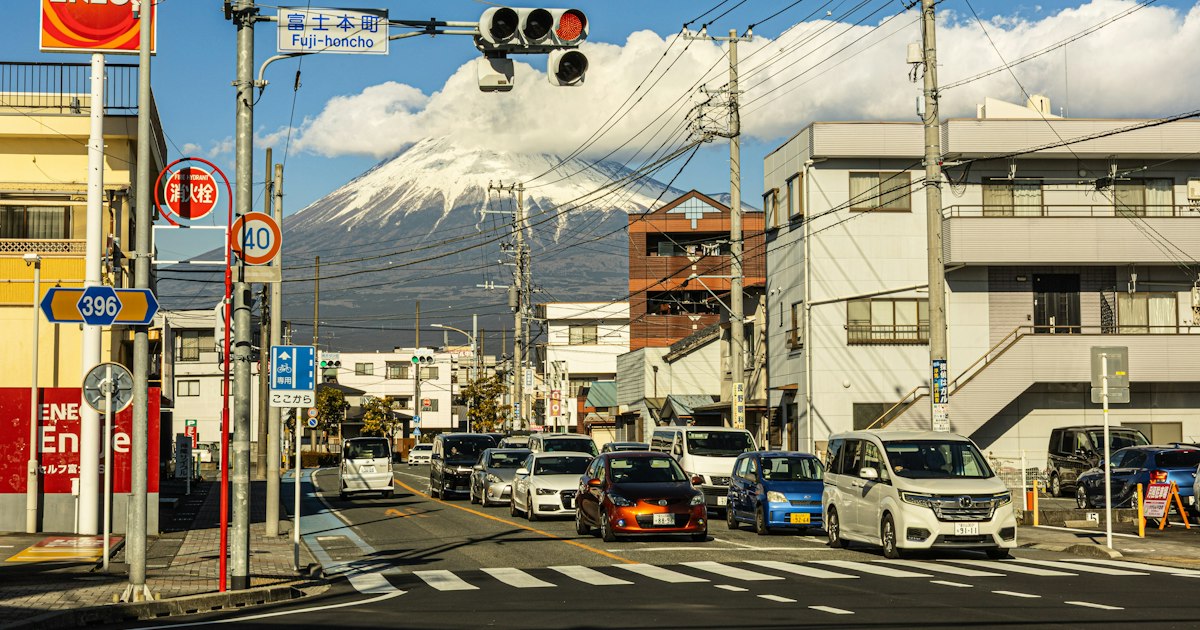
Photo by Uğur Bolat on Unsplash
If you’re moving to Japan for work, study, or family reasons and plan to drive, there’s a hard deadline you need to know about: your foreign license (or International Driving Permit) only lets you drive in Japan for one year from your date of entry, and since a 2022 rule change, leaving and re-entering the country no longer resets that clock. Once the year is up, you need a Japanese license — and the process to get one from a valid foreign license is called gaimen kirikae (外免切替), literally “foreign license switchover.” Here’s what the process actually involves, what it costs, and where people trip up.
What Gaimen Kirikae Is and Who Needs It
Gaimen kirikae lets you convert a valid foreign driver’s license into a Japanese one without going through a full Japanese driving school — provided you can prove the license is genuine and that you actually drove on it. This is the route almost all long-term residents use, because Japanese driving schools (which first-time Japanese learners attend) are expensive and time-consuming, often running ¥300,000–¥400,000 and several weeks of lessons. Gaimen kirikae skips all of that: you go straight to your local driver’s license center (運転免許センター) with your documents and, depending on your country of issuance, sit a short written test and possibly a practical driving test.
This applies to residents on any visa type who hold a valid, non-suspended foreign license — it’s not limited to a specific visa category, but you do need a Japanese address and residence card (zairyu card), since the application is tied to your registered residency.
The Residency Rule Most People Get Wrong
The single biggest documentation hurdle is proving you held your foreign license for a combined total of at least 3 months in the issuing country after the license was obtained. This isn’t about how long you’ve had the license in total — it’s about proving you actually lived in that country for 90+ days post-issuance, using passport entry/exit stamps or official residency records. If your license was issued the same month you moved abroad for work, or if your passport doesn’t show enough stamped days in that country, the center can reject your application on the spot. Dig out old passports (even expired ones) before your appointment if you’ve lived in multiple countries since getting your license — you may need several passports stacked together to prove the 90 days.
Documents You’ll Need
- Valid passport(s) covering the period that proves your 3-month post-issuance residency
- Residence card (zairyu card) and proof of current address
- Your original foreign driver’s license, still valid (not expired)
- A Japanese translation of your license — for most countries this must come from JAF (Japan Automobile Federation), costing around ¥4,000 and taking about a week if mailed, or done same-day at a JAF office. A handful of countries (Germany, France, Belgium, Switzerland, Monaco, Taiwan among them) allow a translation from their embassy or official agency instead
- One passport-style photo (3cm x 2.4cm)
- The application form, available at the center itself
Bring originals, not photocopies — centers are strict about this, and a missing original foreign license is an automatic turn-away.
Written Test, Practical Test, or Both?
This is where your home country matters a lot. Japan has reciprocal agreements with roughly two dozen countries and regions (including most of the EU, the UK, Australia, Canada, Taiwan, and South Korea) that waive the on-road practical driving test entirely. If your license is from one of these places, you’ll only sit a short written test — typically 10 true/false questions on Japanese road signs and rules, needing 7 correct to pass, with same-day retakes allowed if you fail.
If your license is from a country without this agreement (the United States is the most common case foreign residents run into, along with China, the Philippines, and several others), you must pass a full practical driving test on the center’s own closed course, in addition to the written test. This test has a reputation for being unexpectedly strict — examiners mark you down for things driving schools in many countries never emphasize, like exaggerated shoulder checks before lane changes, precise stopping distances at crossings, and specific speeds through S-curves and crank turns. It’s common for people to fail two or three times before passing, and each retake means paying the exam fee again and often waiting weeks for the next available appointment slot, since popular centers like Tokyo’s Fuchu and Samezu locations can be booked solid.
Costs and a Realistic Timeline
Budget-wise, the official fees are modest even if the process itself drags on:
- JAF translation: around ¥4,000 (skip this if your embassy offers a free equivalent)
- Document screening and written/practical exam fee: around ¥2,550
- License issuance fee: around ¥2,050
For exempt-country applicants, that’s often a one-day, roughly ¥5,000–¥6,000 process if your documents are in order. For non-exempt applicants facing the practical test, factor in ¥2,550 per retake and plan for several weeks to a couple of months end-to-end, especially in major cities where appointment slots fill up fast. Arrive at the center right when it opens — most run application windows only in the morning, and same-day slots for walk-ins are limited.
Common Mistakes That Cause Rejections or Delays
- Not bringing enough passports. People who’ve lived in two or three countries since getting licensed often need to present multiple passports together to piece together the 90-day proof.
- Letting the foreign license expire before the appointment. If it lapses, you generally can’t use it for gaimen kirikae at all and have to start from a Japanese driving school instead.
- Assuming an International Driving Permit works the same way. An IDP is only a translation aid for temporary driving — it cannot be converted into a Japanese license on its own; you still need the underlying foreign license.
- Waiting until the one-year mark to start. Between the 90-day document hunt, JAF translation lead time, and possible test retakes, starting the process with only a few weeks left on your one-year window is cutting it close.
- Underestimating the practical test. If you’re from a non-exempt country, consider a one-off paid practice session at a local driving school before your test — many offer short “road test prep” lessons specifically for gaimen kirikae applicants.
Once you’re set up to drive long-term in Japan, it’s worth sorting out the practical side of family travel too — if you’ll be renting cars or taking taxis with young children, check the child car seat rules for taxis and rental cars in Japan before you need them. And if converting your license is part of a broader move and you’re short on space while you settle in, a trunk room storage unit can be a useful stopgap for extra belongings until you’re fully moved in.
Gaimen kirikae isn’t difficult on paper, but it rewards preparation — gather your passports early, get your translation sorted well ahead of time, and if you’re facing the practical test, treat it with more respect than you might expect. Getting your Japanese license early also opens up road trips that are hard to do on trains alone, from chasing ume blossom season in the countryside to reaching rural destinations that only make sense with your own car.