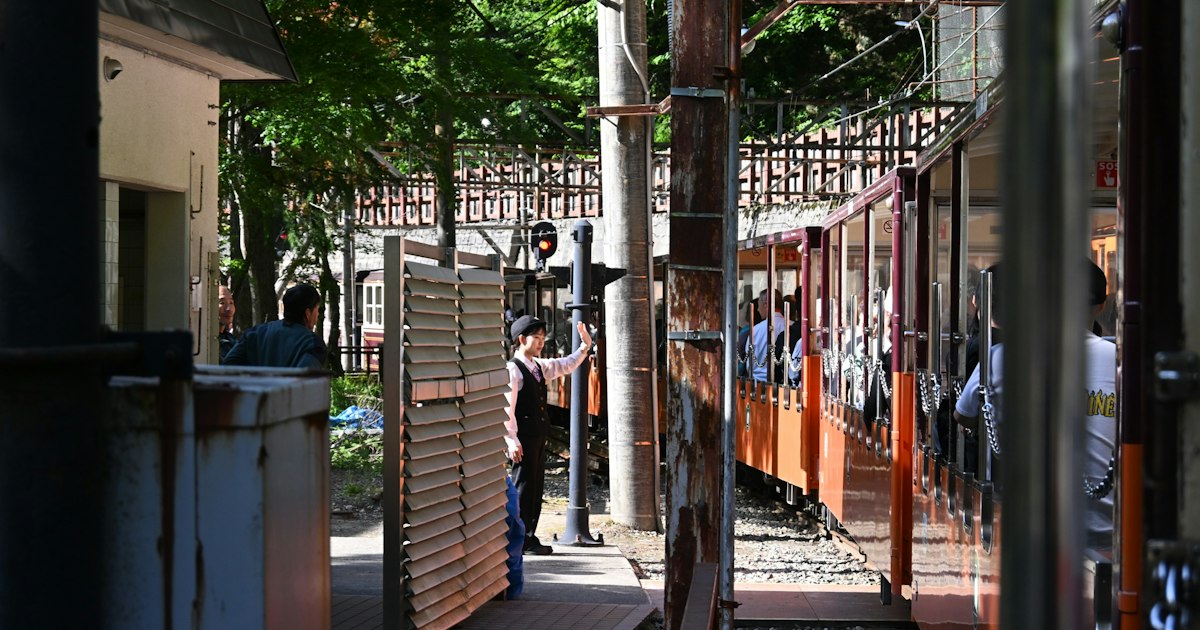
Photo by Kyung-Min Park on Unsplash
Most visitors who pass through Toyama are on their way somewhere else — usually up into the mountains via the Tateyama Kurobe Alpine Route. That’s a shame, because the city itself runs one of Japan’s most charming local rail networks: a fleet of tiny, occasionally decades-old streetcars that still rattle through downtown Toyama, feeding into the same company’s longer line out to the Alpine Route’s starting point. The Toyama Chihou Railway (often shortened to “Chitetsu”) is worth a slow morning on its own, and essential if you’re heading into the mountains.
What Is the Toyama Chihou Railway?
Toyama Chihou Railway operates two very different things under one brand. Inside Toyama City, it runs a tram network — a loop line around the old castle area plus several radial routes out to the suburbs — using a mix of modern low-floor cars and genuinely old single-car streetcars, some dating back to the 1950s and 60s, still in daily service alongside the newer stock. Outside the city, the same company runs conventional train lines: the Main Line toward Unazuki Onsen (gateway to the Kurobe Gorge Railway) and the Tateyama Line, which ends at the foot of the Tateyama Kurobe Alpine Route. One ticket gate, two completely different travel experiences.
A common point of confusion: Toyama’s retro trams are not the same company as the Manyosen tramway in nearby Takaoka. If a guide or map mentions “Takaoka’s retro tram,” that’s a separate railway — don’t mix up your routes when planning.
Riding the Retro Trams Around Toyama
The city tram network uses a flat fare of around ¥200 for adults and ¥100 for children, regardless of distance, paid in cash or by tapping an IC card as you exit. Like buses, you board through the rear door and pay (or tap) when you get off at the front — a layout that trips up visitors used to Tokyo’s tap-in/tap-out train gates. Most cars now accept the major national IC cards (Suica, ICOCA, Pasmo and others), not just the local passca card, so there’s no need to buy a special card just for a short visit.
If you plan to hop on and off, Toyama Chihou Railway sells a one-day unlimited tram pass for around ¥700, available from the driver or at the Toyama Station tram stop. For photographers, the best place to catch the old single-car trams is around the castle moat loop or waiting at Toyama Station’s tram platform in the early evening, when several vintage cars tend to cycle through on their regular runs — there’s no published “retro tram timetable,” so it’s a matter of patience rather than planning.
The Gateway Line: Toyama to Tateyama
From Toyama Station, the Tateyama Line runs about 60 minutes to Tateyama Station, the actual starting point of the Tateyama Kurobe Alpine Route. One-way fare is roughly ¥1,560 on a regular train; limited express “Alpine” services cover the same route a little faster and require a reserved-seat surcharge of a few hundred yen on top. At Tateyama Station, you transfer directly to the Tateyama Cable Car, a funicular that climbs to Bijodaira in about 7 minutes, followed by a highland bus (around 50 minutes) up to Murodo — the stop for the famous Yuki-no-Otani Snow Corridor in spring.
It’s a similar structure to the journey up to Koyasan, where a private railway hands off to a cable car at the base of the mountain — if you’ve done that trip, see our guide to the Nankai Koya Line and the cable car to Koyasan for a sense of how these gateway-town transfers typically work.
Best Season and Timing
The trams run year-round, so there’s no bad season to explore downtown Toyama. The Alpine Route itself is strictly seasonal: it opens in mid-April (usually around April 15) and closes for winter in late November. The snow-wall corridor at Murodo, when the plowed banks tower well above the bus, is at its most dramatic from mid-April through early June, before gradually melting down over the summer. If snow walls are the goal, aim for late April to mid-May and book Alpine Route tickets ahead — the cable car and buses run on fixed capacity and sell out on Golden Week (late April–early May) and weekends through the snow season.
Outside the snow-corridor window, autumn (mid-to-late October) brings good foliage around Murodo and Midagahara, with far smaller crowds than spring.
Common Mistakes to Avoid
- Treating the tram and the Tateyama Line as the same system. Trams are flat-fare and pay-as-you-exit; the Tateyama Line is a distance-based ticketed train with its own platforms at Toyama Station — check the departure board carefully, as both services share the “Dentetsu Toyama” station building but not the same gates.
- Not reserving ahead in peak season. The limited express trains to Tateyama and the connecting cable car/bus combo can sell out on spring weekends; buy tickets in advance if your dates are fixed.
- Missing the last tram. City trams stop running relatively early, generally by around 11pm, earlier on some routes — don’t assume Tokyo-level late-night frequency.
- Confusing this line with Takaoka’s Manyosen. If you specifically want the “retro tram” experience, double-check you’re in Toyama City, not Takaoka, which has its own separate historic tramway.
Budget, Mid-Range, and Splurge Options
On a budget, a few ¥200 tram rides (or the ¥700 day pass) let you circle the castle area, visit the moat park, and explore downtown Toyama cheaply and at a pace the old streetcars seem built for. For a mid-range day trip, ride the Tateyama Line one-way to Unazuki Onsen instead of all the way up the Alpine Route — it’s a classic onsen gateway town with its own charm, not unlike the footbath culture described in our guide to Gero Onsen’s free footbath circuit. For a splurge, commit to the full Tateyama Kurobe Alpine Route traverse — train, cable car, highland bus, ropeway, and trolleybus all the way through to Shinano-Omachi on the Nagano side — which runs several thousand yen one-way but covers one of the most scenic mountain crossings in Japan.
If you’re already riding the Hokuriku Shinkansen to reach Toyama, it’s worth timing a stop in Kanazawa as well; if your visit lines up with early June, our piece on the Hyakuman-goku Matsuri samurai parade covers a festival worth building a schedule around. And if distinctive local trains are becoming a theme of your trip, Toyama’s trams pair nicely with Tokyo’s own oddity, the driverless Yurikamome line to Odaiba and Toyosu — two very different ways a short, unglamorous commuter line turns into a small reason to visit.