Every June, a man and woman costumed as a 16th-century feudal lord and his wife ride through downtown Kanazawa trailed by several hundred retainers, lion dancers, and geiko in full procession dress. This is the Hyakuman-goku Matsuri, the city’s biggest festival by far — but it’s also only the most visible layer of a weekend packed with smaller, less-photographed samurai-era events that most visitors never find out about until they’re already standing on the sidewalk wondering what else is going on.
What the Hyakuman-goku Matsuri Actually Commemorates
The festival name means roughly “one million koku,” a measure of rice that signaled the enormous wealth of the Kaga domain under the Maeda clan — one of the richest fiefs outside the Tokugawa shogunate itself. The festival marks Lord Maeda Toshiie’s entry into Kanazawa Castle on June 14, 1583, and has been staged in its modern form since 1952. It runs over three days in early June, usually the first weekend of the month, with the exact dates published by the city around six months in advance — worth confirming before you book flights, since the weekend shifts slightly year to year.
Watching the Main Parade: Route, Timing, Seats
The centerpiece, the Hyakuman-goku Gyoretsu, runs on the Saturday afternoon, usually starting between 1:00 and 2:00pm and lasting about two hours. The route covers roughly 3km from near Kanazawa Station’s Tsuzumi-mon gate through the downtown shopping streets to Kanazawa Castle Park and Kenrokuen Garden. Each year a well-known actor or actress is cast as Toshiie and his wife Omatsu, accompanied by hundreds of participants in Edo-period armor, Kaga lion dancers, taiko drummers, and geiko from Kanazawa’s historic teahouse districts.
You can watch for free from the sidewalk, but spots along the central stretch fill up 30–60 minutes before the start. Reserved grandstand seating is sold in advance through the festival’s organizing committee, typically for a few thousand yen per seat — worth it if you want a guaranteed, unobstructed view rather than craning over a crowd.
The Processions Most Visitors Miss
The daimyo parade gets all the press coverage, but the festival schedule around it is where things get interesting for anyone who’s already seen a big city parade before:
- Hyakuman-goku Odori — an evening street dance, usually the night before the main parade, where locals and visitors dance together through the downtown streets. Free, casual, and open to anyone who wants to join in.
- Kaga Hashigo Nobori — ladder-top acrobatics performed by local firefighting brigades, a tradition descended directly from Edo-period firefighting units that operated under samurai domain oversight. Performers balance and pose atop tall bamboo ladders without harnesses. If this kind of fire-and-tradition spectacle appeals to you, it’s worth comparing to Japan’s other extreme ritual performances, like the Hiwatari Matsuri fire-walking festivals held elsewhere in the country.
- Lantern floating on the Asano River — paired with a firelit outdoor Noh performance (Takigi Noh), usually on the opening evening. Far fewer tourists make it to this one, and it’s one of the most atmospheric parts of the whole weekend.
- The children’s procession — local schoolchildren dressed as junior samurai and attendants march a shorter route, usually on the Sunday morning. It’s smaller-scale, much less crowded, and genuinely charming.
- Outdoor tea ceremony (nodate) — hosted inside Kenrokuen Garden over the festival weekend, open to visitors for a bowl of matcha and a seasonal sweet for a few hundred yen.
Samurai Heritage You Can See Any Day of the Year
If you can’t make the festival weekend, Kanazawa’s samurai history is still on display year-round. The Nagamachi Samurai District, a short walk from the Korinbo shopping area, preserves the earthen-walled lanes where mid-ranking Kaga retainers once lived. The Nomura Family Samurai House (Nomura-ke) is the best-preserved example open to the public, with an entrance fee of around ¥600 for adults; it’s open daily, roughly 8:30am to 5:30pm (closing an hour earlier in winter), with closures only around the New Year holiday.
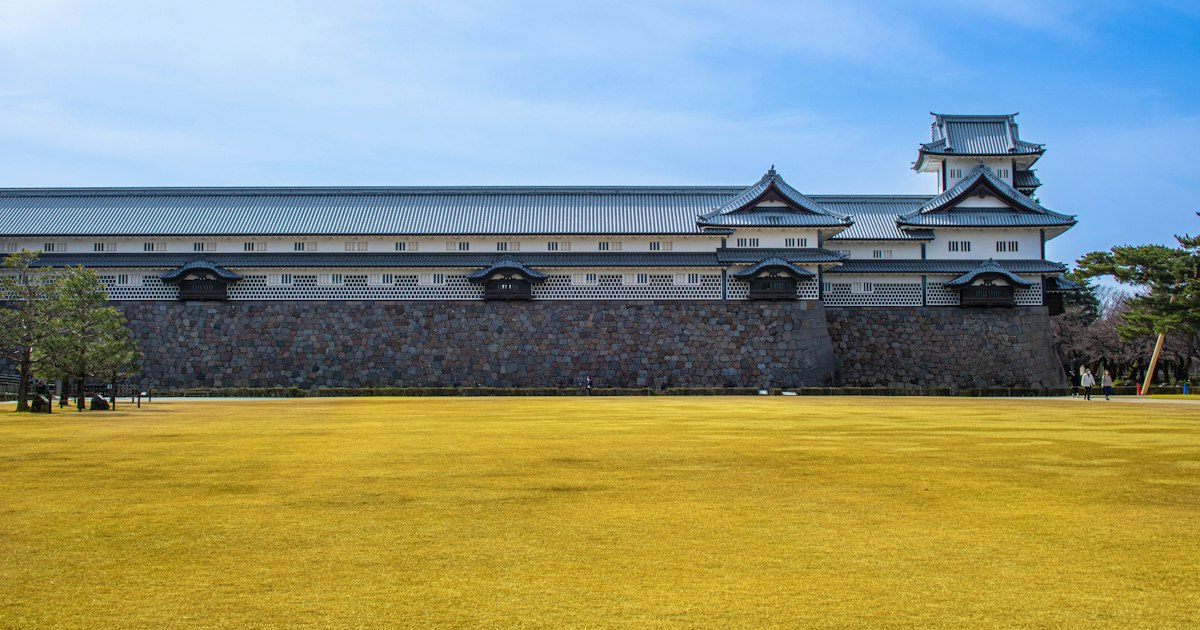
Kanazawa Castle Park itself is free to walk through. If you want to go inside the restored turret and storehouse buildings, a combined ticket covering both the castle buildings and neighboring Kenrokuen Garden runs around ¥500; Kenrokuen alone is ¥320 for adults. Nearby Oyama Jinja Shrine, dedicated to Lord Toshiie, is free to visit and almost always quiet — a good alternative if the castle grounds feel crowded during festival week.
Getting There and Timing Your Trip
From Tokyo, the Hokuriku Shinkansen (Kagayaki service) reaches Kanazawa in about 2.5 hours with no transfer. From Kyoto or Osaka, the route now runs via a limited express to Tsuruga with a transfer onto the Hokuriku Shinkansen, covering the trip in roughly 2 to 2.5 hours total. If you’re coordinating train tickets and accommodation for a larger family or friend group, it’s worth checking what group discounts exist before you book individually — see our guide on traveling to Japan as a large group.
Early June sits right at the edge of Japan’s rainy season, so pack a light rain layer — the parade almost never cancels outright, it just continues through drizzle.
Common Mistakes to Avoid
- Booking a hotel too late. Rooms near Kanazawa Station and downtown sell out months ahead of the festival weekend, and prices climb accordingly.
- Standing at the start point expecting the lead procession immediately. The Toshiie and Omatsu segment comes partway through the parade order, not at the very front — check the printed schedule posted along the route.
- Skipping the evening events. The lantern floating and street dance are free, far less crowded than the daytime parade, and arguably more memorable.
- Relying only on cards. Grandstand ticket windows and festival food stalls are frequently cash-only; it’s worth having a backup plan in mind too, in case something goes wrong with your card — see our notes on replacing a lost or frozen credit card in Japan.
- Assuming the whole city shuts down. Only the parade route closes to traffic for a few hours; shops, restaurants, and Omicho Market operate normally all weekend.
Where to Stay: Budget to Splurge
Budget travelers can find business hotel chains near Kanazawa Station for roughly ¥6,000–9,000 a night, though festival-weekend rooms need booking two to three months out at minimum. Mid-range options include guesthouses and hotels around Korinbo or Omicho Market, within easy walking distance of the parade route, generally ¥12,000–18,000 a night. For a splurge, a traditional ryokan near Kenrokuen or in the nearby Yamashiro and Awazu onsen towns — a short train or bus ride from the city — runs ¥30,000 and up with a kaiseki dinner included. Early June is warm enough that ryokan should already have switched to lighter summer bedding; if you’re unsure what to expect, our guide to natsubuton versus fuyubuton covers what to ask for.