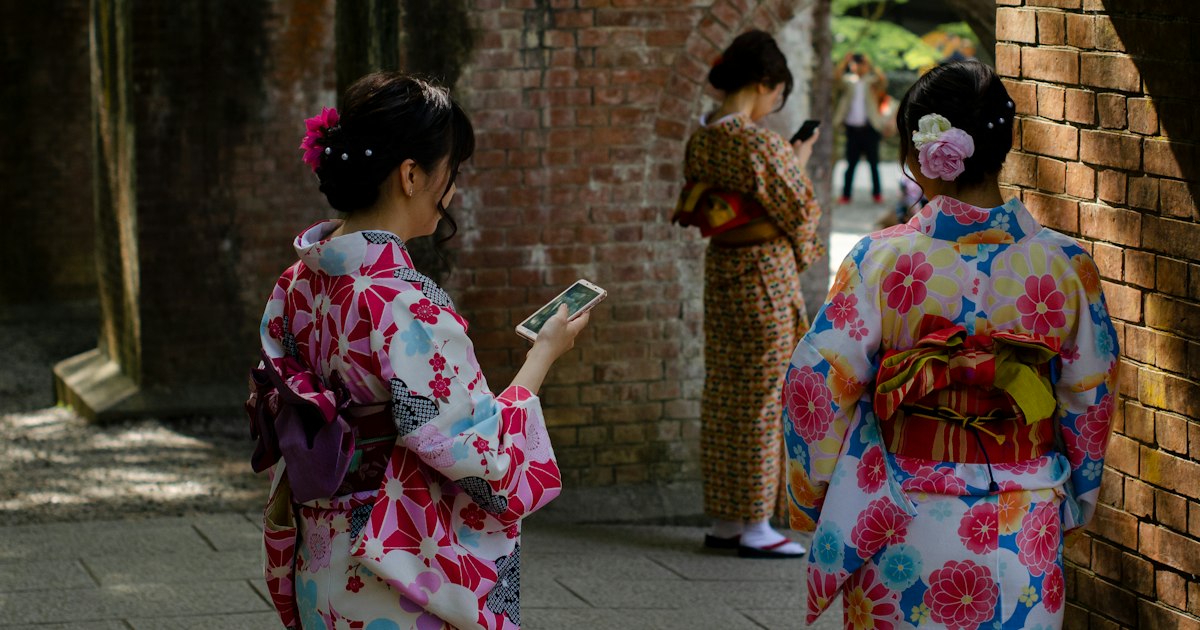
Photo by Launde Morel on Unsplash
If you’ve been invited to a Japanese wedding, a tea ceremony, or any event where “formal dress” is written on the invitation, you’ve probably noticed that “kimono” isn’t one outfit — it’s a whole wardrobe of rules. Sleeve length, pattern placement, and even the number of family crests sewn into the fabric all signal exactly how formal an occasion is and what the wearer’s marital status is. Get it wrong as a foreign guest and nobody will say anything, but a few people will quietly notice. This guide breaks down the three kimono types you’re most likely to encounter at formal events — furisode, houmongi, and tomesode — and tells you what they cost, where to get one, and the mistakes to avoid.
The Formality Ladder, in Plain English
Japanese formal kimono are ranked the way Western formalwear is ranked from ball gown down to cocktail dress. The three you need to know, from most formal to flexible, are:
- Tomesode — the most formal kimono a married woman can wear, reserved for close relatives at weddings.
- Furisode — the most formal kimono for an unmarried woman, with long swinging sleeves that reach nearly to the ankle.
- Houmongi — “visiting wear,” one notch below the top two, and the most versatile because any adult woman, married or not, can wear one.
The quickest tell at a glance: sleeve length signals age/marital status (long sleeves = furisode, unmarried), while the continuity of the pattern across the seams signals formality (a design that flows unbroken across the shoulders, sleeves, and skirt as if painted on one canvas, called eba styling, marks the more formal pieces).
Furisode: The Statement Piece for Unmarried Women
Furisode are instantly recognizable — bold, colorful, and with sleeves (sode) that swing (furi) nearly to the floor. They’re worn exclusively by unmarried women, most famously at Coming of Age Day (Seijin no Hi, the second Monday of January) and at graduation ceremonies, and as a guest outfit at a close friend’s wedding.
Buying a new furisode set (kimono, obi, undergarments, accessories) from a department store or specialty shop typically runs ¥300,000–¥1,000,000+, which is why almost nobody buys one outright anymore. Rental is the norm even for Japanese families: a full furisode rental package including hair styling, makeup, and photography for Seijin no Hi usually costs ¥150,000–¥400,000 through a photo studio, while a simpler rental-only plan (kimono and dressing, no photos) can be found for ¥30,000–¥80,000 in Kyoto and Tokyo tourist-oriented studios. If you’re a visitor wanting the experience purely for photos rather than attending an actual family milestone, book at least a week ahead — popular studios in Asakusa and Gion fill up fast on weekends and during the January/March graduation season.
Houmongi: The Everyday Formal Option
Houmongi is the kimono most foreign guests should actually aim for. It carries the same continuous, flowing pattern as a furisode but with standard-length sleeves, which means it works for married and unmarried women alike. It’s correct for wedding receptions (as a guest, not immediate family), formal tea ceremonies, and many “business formal” social events — basically anywhere a cocktail dress would work in the West.
Rental prices are gentler than furisode: expect ¥15,000–¥35,000 for a day’s rental including dressing (kitsuke) at a specialty kimono rental shop, versus ¥80,000–¥300,000+ to buy new. Secondhand houmongi in good condition, sold at kimono resale shops and some antique markets, can go for ¥10,000–¥40,000 — a realistic splurge-but-not-crazy option if you want to own one rather than rent. If you already own a kimono and it’s stained, faded, or the seams have come loose from storage, it’s worth getting it professionally restored rather than buying new — see our guide to arai-hari kimono cleaning and restoration for where to take it in Japan.
Tomesode: As Formal As It Gets
Tomesode is the married woman’s equivalent of a furisode in terms of formality, but visually calmer: the pattern sits only below the waistline, and the upper body is left in a solid, usually dark, color. There are two tiers:
- Kuro-tomesode (black base, five family crests) — the single most formal kimono in regular circulation, worn only by the mother, grandmother, or aunts of the bride/groom at a wedding.
- Iro-tomesode (colored base, three or five crests) — a step down, worn by other close female relatives or sometimes as formal attire at imperial-related events.
As a foreign visitor you’re very unlikely to need a tomesode unless you’re marrying into a Japanese family or attending as an actual relative — it would read as presumptuous to show up in one as a casual guest. Rental runs ¥20,000–¥50,000 for kuro-tomesode including the crest-bearing obi and formal accessories (hakoseko purse, fan). If you do need one, book through a kimono rental shop that specializes in ceremonial wear — the general tourist-yukata shops near temples usually don’t stock tomesode at all.
Renting vs. Buying: What Makes Sense for a Visitor
For a one-off formal event, rental is almost always the right call. Budget option: a basic houmongi rental with simple dressing, ¥15,000–¥20,000. Mid-range: full rental with professional hair and photography add-on, ¥40,000–¥80,000. Splurge: a bespoke-fitted furisode or tomesode rental with a kimono stylist and studio photo session, ¥150,000+. Most formal-wear rental shops require booking 3–7 days ahead because fitting and pressing take time, unlike same-day tourist yukata rental.
One practical note for larger visitors: formal kimono sizing runs smaller than Western dress sizing, and many rental shops’ formal stock tops out around a Japanese size L. If that’s a concern, it’s worth checking in advance — our guide on plus-size kimono and yukata rental covers which shops carry extended sizing, though note formal pieces like houmongi and tomesode have a much shallower size range than casual yukata.
Common Mistakes Foreign Guests Make
- Wearing a furisode to a wedding as a married guest. It signals “unmarried,” which is confusing at best and awkward at worst.
- Treating any patterned kimono as interchangeable. A casual komon (repeating small-pattern) kimono, the kind sold cheaply at flea markets, is not acceptable formal wear no matter how nice the fabric looks.
- Underestimating dressing time. Proper formal kimono dressing (kitsuke) with obi tying takes 30–45 minutes and genuinely requires a trained dresser — don’t DIY it for an actual event.
- Ignoring the season. Lined (awase) kimono are worn October–May; unlined (hitoe) versions for June and September; summer gauze (ro) for July–August. Rental shops adjust automatically, but it matters if you’re buying secondhand.
Quick Reference
Attending as a close relative of the bride or groom at their wedding: kuro-tomesode (married) or furisode (unmarried). Attending as a friend or colleague: houmongi works for everyone; furisode is also fine if you’re unmarried and want to go bolder. Tea ceremony or formal New Year visit: houmongi or a slightly simpler tsukesage. When in doubt, ask the rental shop staff what’s appropriate for your specific event — they do this daily and would rather correct you gently in the fitting room than have you misjudge it on the day.