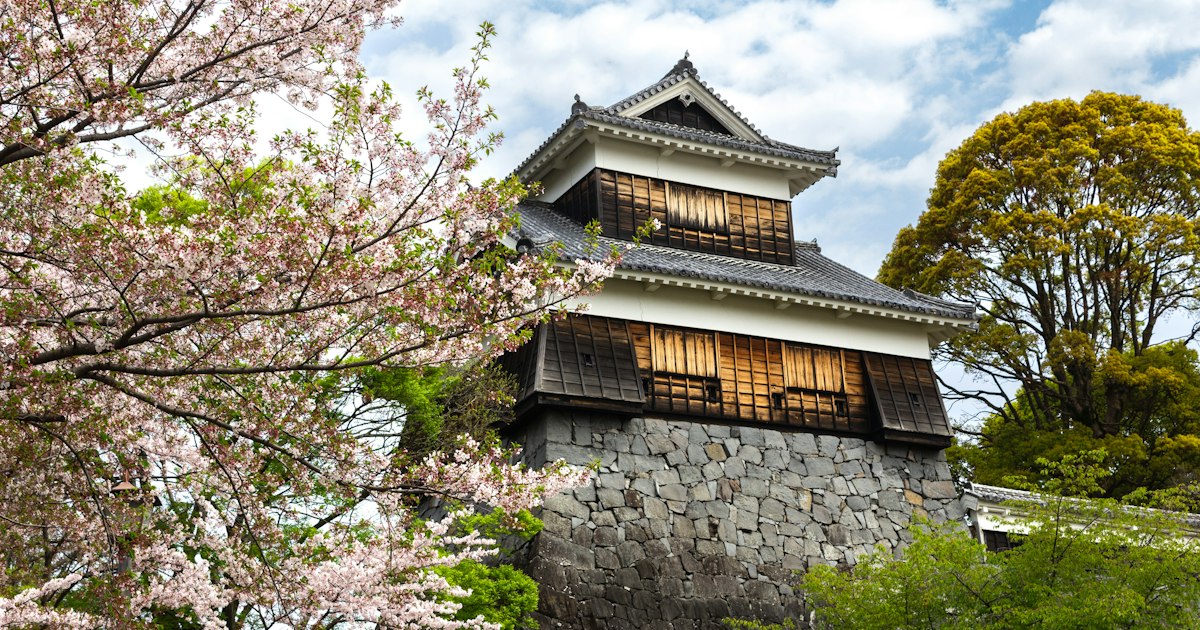
Photo by Mohammed Kertiou on Unsplash
If you wander through the stalls near Kumamoto Castle and spot a flattened, pale dumpling studded with a slice of orange sweet potato, you’ve found ikinari dango — one of the few local sweets in Japan that’s genuinely better eaten on the street than packed in a souvenir box. It’s cheap, it’s filling, and almost nobody outside Kyushu has heard of it. Here’s what it is, where to get it fresh, and how not to waste your money on a stale version.
What Is Ikinari Dango?
Ikinari dango (いきなり団子) is a steamed bun from Kumamoto Prefecture made with a wheat-flour dough — not the rice-flour mochi you’d find in most “dango.” A slice of raw satsuma-imo (Japanese sweet potato) is wrapped inside, often along with a spoonful of sweetened red bean paste (anko), then the whole thing is steamed until the dough turns slightly translucent and the sweet potato softens. The result is dense, mildly sweet, and warm — closer to a savory-sweet bread roll than a chewy mochi sweet.
Because it isn’t baked or dried, it has almost no shelf life. Most shops expect you to eat it within a few hours, which is exactly why it’s sold as a snack to eat on the spot rather than a shelf-stable gift box like castella or senbei. If you’ve browsed Sanshoku Dango vs Hanami Dango before a trip and assumed all “dango” are the same skewered pastel balls, ikinari dango is the exception worth knowing: it’s never skewered, it’s roughly palm-sized, and sweet potato — not rice flour alone — is the point of the whole thing.
The Story Behind the Name
“Ikinari” in Kumamoto dialect roughly means “suddenly” or “right away.” The most commonly told origin story is that it was a quick dish Kumamoto farm households could throw together on short notice when guests arrived unannounced — sweet potato, flour, and anko were pantry staples, and the whole thing steams in under 20 minutes. A second, less romantic theory holds that “ikinari” referred to using the sweet potato raw (ikinari = as-is, unprocessed) rather than pre-boiling it first. Either way, it’s a good example of the kind of improvised hospitality covered in Omotenashi in Practice — a snack built around making something for a guest with whatever was already on hand, rather than planning ahead.
Where to Buy It in Kumamoto
You don’t need to hunt for it — ikinari dango is sold all over central Kumamoto City, but these are the most reliable spots:
- Kumamoto Jousaien (桜の馬場 城彩苑) — the shopping and dining complex at the foot of Kumamoto Castle, right by the Kurokawabashi-mon gate. Several stalls here steam dango to order; this is the easiest place for a first-timer to try it still warm. Most shops run roughly 9:00am–6:00pm daily.
- Kobai (お菓子の香梅) — a long-established Kumamoto confectionery chain with several branches around the city and a stall inside Jousaien; sells ikinari dango alongside its better-known castella-style sweets.
- Shimotori and Kamitori covered arcades — the pedestrian shopping streets downtown have a handful of bakeries and wagashi shops selling it individually, useful if you’re staying in the city center rather than near the castle.
- Kumamoto Station — the station’s food hall (Sakura Machi Kumamoto area) sells boxed versions for travel, though these are usually a few hours old by the time you buy them, not freshly steamed.
Expect to pay around ¥150–¥250 per piece bought individually and fresh, or roughly ¥900–¥1,500 for a box of 6–8 if you’re buying a set to share or bring back to a hotel. There’s no meaningful “luxury” version of ikinari dango the way there is with premium fruit — it’s a working-class snack by design, so paying much more than that usually just means a bigger box, not better ingredients.
Best Time to Visit and Eat It
Ikinari dango is sold year-round, but Kumamoto’s satsuma-imo harvest runs roughly September through November, and shops near the castle are visibly busier with fresh batches in autumn — the sweet potato tends to taste sweeter and less starchy during this window. It also pairs naturally with a castle visit: Kumamoto Castle’s main keep and grounds are at their most comfortable to walk in autumn and spring, and the Jousaien stalls are set up precisely so you can eat one while walking between the castle and the shopping street. Buy it in the morning or early afternoon if you can — many stalls sell out of the freshly steamed batches by late afternoon and switch to pre-wrapped, cooler stock.
Common Mistakes Visitors Make
- Buying it as a take-home souvenir. Because it has no preservatives, it dries out and the dough turns gummy within a day. If you want something shelf-stable to bring home, look for other Kumamoto confections instead and treat ikinari dango purely as something you eat while you’re there.
- Expecting mochi. First-timers who know Japanese rice-dumpling dango expect a chewy, bouncy texture. Ikinari dango’s wheat dough is softer and denser, closer to steamed bread — it’s a different category entirely, which is also why it’s worth distinguishing from the skewered sweets in the dango comparison guide if you’re trying to shop for the “right” version as a gift.
- Not asking if it’s fresh. At tourist-facing stalls, it’s completely normal to ask “できたてですか?” (dekitate desu ka — “is this freshly made?”). Staff are used to the question and will tell you honestly if the batch has been sitting out.
- Skipping it because it “looks plain.” It photographs far less interestingly than it tastes — don’t judge it against more visually dramatic regional specialties.
Budget, Mid-Range, and Splurge Options
There’s genuinely very little price spread here, which is part of the appeal:
- Budget: A single piece from a Jousaien stall or downtown bakery, ¥150–¥200, eaten standing up.
- Mid-range: A box of 6–8 from Kobai or a similar confectioner, ¥900–¥1,500, good for sharing with travel companions or bringing back to a ryokan for a same-day snack.
- “Splurge”: Realistically just means buying a larger gift box (10+ pieces) from a named confectioner for around ¥1,800–¥2,500 — still modest by Japanese regional-gift standards. If you want an actual high-end regional specialty to splurge on elsewhere in Japan, something like Densuke watermelon from Hokkaido is a better comparison point — ikinari dango simply isn’t built to be a luxury item.
Getting to Kumamoto
Most visitors reach Kumamoto via the Kyushu Shinkansen from Hakata Station in Fukuoka — the fastest Mizuho trains take around 33 minutes, while Sakura trains run closer to 40–45 minutes. If your trip starts in Fukuoka, it’s worth building in an extra day there before heading south; it’s also where you’ll find craft shopping like the obi weavers covered in Hakata-ori. From Kagoshima, the Shinkansen takes roughly 45 minutes north to Kumamoto.
From Kumamoto Station, the castle area and Jousaien are about 15–20 minutes away by the Kumamoto City Tram or the “Shiromegurin” loop bus, which runs a one-way fare of around ¥200, with a one-day pass for about ¥400 — worth it if you’re also visiting the castle keep and other sights near Jousaien the same day.