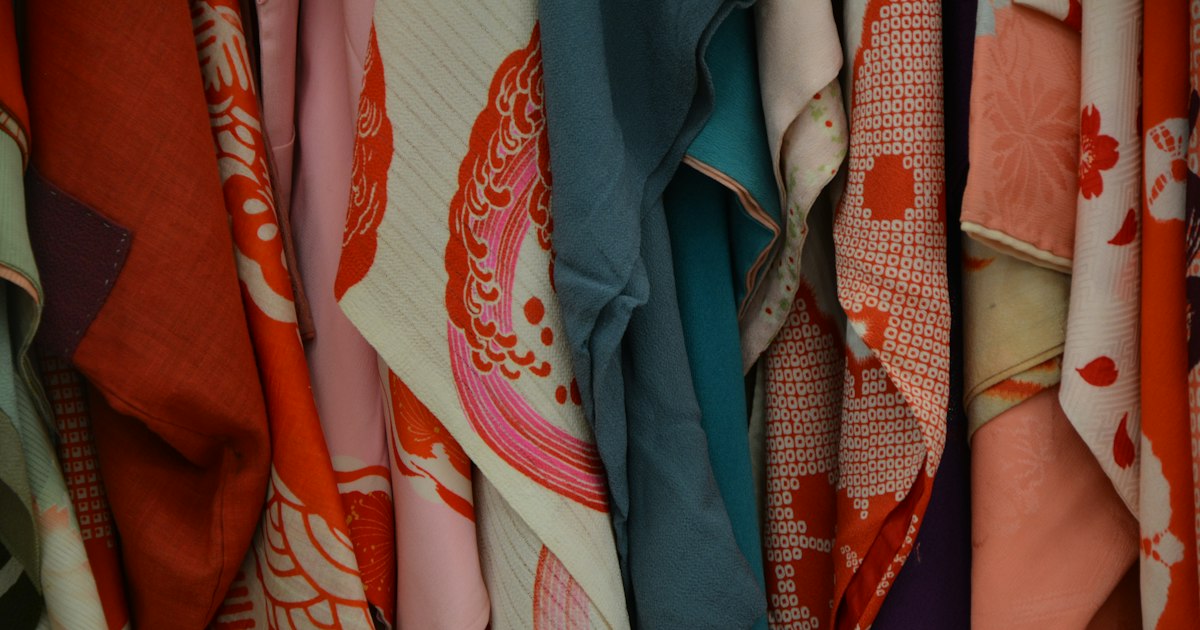
Photo by Beth Macdonald on Unsplash
If you’ve bought a secondhand kimono at a flea market, inherited one from a relative, or just want to wear a well-loved piece again without the yellowed collar line and faint mustiness, dry cleaning won’t fix it. Kimono are built from a single bolt of fabric sewn into a wearable shape, and the traditional way to properly clean one — arai-hari (洗い張り) — involves taking it apart entirely, washing the flat fabric, and sewing it back together. It sounds extreme, but it’s the method that’s kept silk kimono wearable for over a century in Japan, and it’s available to visitors too, not just collectors and kimono dealers.
What Arai-hari Actually Is
Arai-hari literally means “wash and stretch.” A kimono is unstitched (hodoku) back into its original flat panels — called a tanmono shape — washed by hand in water or a mild solvent depending on the dye, then stretched and dried on long wooden boards or needle frames (shinshi) to restore the fabric’s original width and remove the wrinkles and sheen loss that build up over years of wear and storage. Once dry, a craftsperson re-sews the entire garment from scratch, which also gives the shop a chance to fix problem areas — a frayed hem, a stretched-out collar, moth damage — along the way.
This is different from two other services you’ll see offered at kimono shops:
- Kyo-arai (京洗い) — a gentler dry-cleaning-style process done without unstitching the garment. It’s faster and cheaper, and fine for a general refresh after one or two wearings.
- Shimi-nuki (しみ抜き) — targeted stain removal, priced per stain rather than per garment, often done alongside either of the above.
Ask for arai-hari specifically if the kimono has old, set-in stains, has lost its shape, smells of mothballs or storage, or if you want it taken in or let out — resizing is only possible once the seams are fully opened up.
How Much It Costs
Pricing depends on the fabric and the kimono’s formality, since more layers and more delicate dyework mean more hand labor. As a rough guide for a single kimono (not including the obi):
- Casual silk komon or tsukesage: roughly ¥8,000–¥15,000
- Formal houmongi or iromuji: roughly ¥13,000–¥20,000
- Tomesode, furisode or uchikake (heavier fabric, embroidery, more panels): ¥20,000–¥40,000+
- Shimi-nuki per stain: from around ¥1,000–¥3,000 for a small, fresh stain; old or large stains (especially collar makeup stains, called eri-jimi) can run several times that, and some old stains simply can’t be fully removed
- Obi cleaning and restretching: typically ¥8,000–¥25,000 depending on width and weave complexity — a hand-woven obi like those from the Hakata-ori tradition sits at the higher end
Get a quote before committing — most shops inspect the garment first and give a written estimate, since hidden damage sometimes changes the price.
Where to Go
Budget: Kimono rental and resale shops near tourist areas (Asakusa, Kyoto’s Gion and Nishijin, Nihonbashi) often take in arai-hari orders even though they don’t do the work in-house — they act as a drop-off point and send items to a workshop, which keeps your cost close to wholesale. This is also a good option if you’re already dealing with a kimono rental or purchase shop and want to ask about aftercare for a piece you bought.
Mid-range: Department store kimono counters — Takashimaya, Mitsukoshi and Isetan all have dedicated kimono sections in their flagship stores (generally open 10:00–20:00, closed a few irregular days a year) — accept items for arai-hari and forward them to established workshops. Staff usually speak some English at flagship Tokyo and Osaka locations and can walk you through fabric type and pricing in person.
Splurge / specialist: Kyoto’s Nishijin district, historically the center of Japan’s silk weaving industry, is still home to dedicated arai-hari and kimono restoration workshops that handle antique and heirloom pieces, including full re-dyeing (irosashi) and pattern touch-ups where the design itself has faded. These are the right choice for a valuable inherited kimono, but expect higher prices and longer waits, and it’s worth going through a kimono shop that has an existing relationship with a workshop rather than cold-contacting one, since many don’t deal directly with the public.
How Visitors Actually Use This Service
You don’t need to be based in Japan long-term. Most arai-hari providers accept kimono by mail — you pack the garment and send it via a courier like Yamato (Takkyubin) or Sagawa, the shop processes it, and ships it back. This matters if you’re only passing through Kyoto or Tokyo for a few days: hand the kimono over or ship it early in your trip, and have it sent to your hotel, a forwarding address, or even internationally (ask about EMS or courier options, which cost extra but are routine for shops used to overseas customers buying antique kimono).
If you’re dropping it off in person, bring the kimono folded in its original paper wrapping (tatoshi) if you have one — it protects the fabric in transit and shops appreciate it.
Best Timing
Arai-hari is a seasonal business. Demand spikes before Coming-of-Age Day (early January, for furisode), graduation season (March), and wedding season (spring and autumn), which can stretch turnaround from the usual 3–6 weeks to 2 months or more. If you can, send items in the off-peak months of midsummer or late autumn.
The best time to have a worn kimono cleaned is within a couple of months of wearing it, before storing it away — sweat, humidity and invisible stains oxidize and set over time, especially through Japan’s rainy season (tsuyu, roughly mid-June to mid-July), after which a stain that was removable becomes permanent. If you’ve just picked up a secondhand kimono and plan to store rather than wear it right away, get it cleaned first rather than storing it as-is.
Common Mistakes
- Taking silk kimono to a generic dry cleaner. Standard dry cleaning chemicals and pressing can damage silk dyes and hand-applied gold leaf (surihaku) or embroidery. Always use a shop that explicitly advertises kimono handling.
- Waiting too long on stains. Collar foundation stains and food/alcohol spills are far cheaper and more completely removed when fresh.
- Assuming “cleaning” automatically means “resizing.” If you need the kimono taken in or let out (common for secondhand finds), say so upfront — it only happens if the shop fully unstitches the garment as part of arai-hari, not during a quicker kyo-arai.
- Not asking about turnaround before a deadline event. If you need the kimono back for a specific festival or ceremony, say so when you drop it off — rush service is sometimes available for an added fee.
Done right, arai-hari can take a tired, slightly musty kimono and make it look and feel close to new — and for a well-made silk piece, it’s cheaper over a lifetime than replacing it.