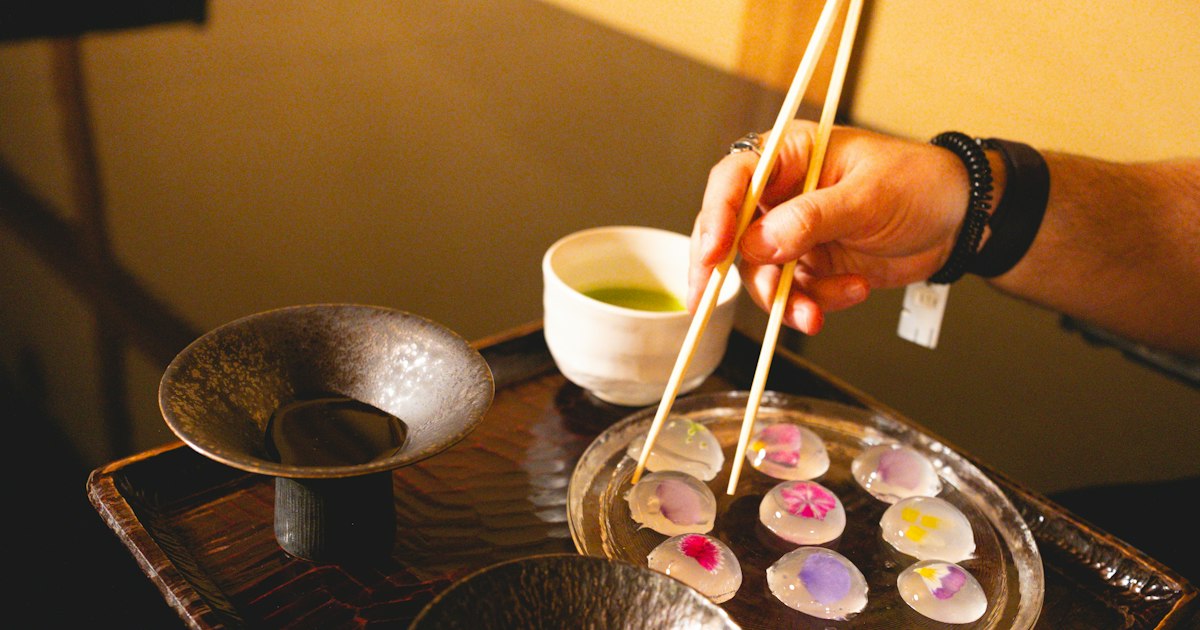
Photo by Igal Ness on Unsplash
Wagashi — Japan’s traditional confections made from sweet bean paste, mochi, and agar — are often admired behind glass at department store food halls, but a growing number of shops in Kyoto and Tokyo now let visitors shape their own. These one-off classes are short, require no Japanese language ability, and send you home with sweets you made yourself. Here’s what the experience actually involves, what it costs, and how to avoid the most common booking mistakes.
What a Wagashi Class Actually Teaches You
Almost all tourist-facing classes focus on nerikiri — a pliable sweet made from white bean paste mixed with mochi or yam — because it’s the most visually rewarding technique for beginners. An instructor demonstrates how to layer colored paste, then hands you small bamboo and metal tools (sometimes called tsutsuki) to sculpt the dough into seasonal motifs: a cherry blossom in spring, a hydrangea in June, a maple leaf in November. Most sessions run 45–90 minutes, you make two or three pieces, and you eat at least one on the spot with a cup of matcha or sencha while the rest go into a small box to take away. Note that nerikiri has no preservatives, so anything you don’t eat that day should be finished within 24–48 hours.
Kyoto: Classes Near Kiyomizu-dera and in Gion
Kyoto has the most established options because the city’s confectioners have supplied tea-ceremony sweets to temples and tea houses for centuries. Kanshundo, a long-running wagashi shop in Higashiyama near the Sannenzaka slope leading up to Kiyomizu-dera, runs small nerikiri classes several times a day, typically around ¥2,200–3,300 for a roughly 45–60 minute session, with picture-based instructions so no Japanese is needed. It’s an easy add-on if you’re already walking the Kiyomizu-dera/Sannenzaka route — take Kyoto City Bus 100 or 206 from Kyoto Station to the Gojo-zaka or Kiyomizu-michi stop and walk about 5–10 minutes uphill.
In Gion, several tea-ceremony operators (Camellia is the best known) combine a formal matcha tea ceremony with a short nerikiri-making segment, run in English, for roughly ¥5,000–8,000 per person depending on group size and whether kimono rental is included. If you’re considering the kimono option for photos, it’s worth reading up on kimono formality levels first so you know what you’re actually renting versus what’s appropriate for a casual tea-ceremony setting.
Tokyo: Asakusa and Beyond
Tokyo’s options are more scattered but still accessible. Asakusa, with its concentration of traditional craft shops around Senso-ji, has small studios offering nerikiri workshops aimed squarely at tourists, usually priced ¥2,000–4,000 for a 45-minute session with an English-speaking staff member or translated materials. The area is a straightforward walk from Asakusa Station (served by the Ginza and Asakusa subway lines, plus the Tsukuba Express), so it pairs naturally with a morning at the temple.
Beyond Asakusa, department stores like Isetan Shinjuku and Nihombashi Mitsukoshi occasionally run cultural-center wagashi workshops, but these are typically Japanese-language group classes aimed at locals, cheaper (often under ¥2,000) but with no guarantee of English support — fine if you’re comfortable following visual cues, frustrating if you want detailed explanation. For a quieter neighborhood pairing, the Yanaka/Nezu area near Nezu Shrine and the Nezu Museum has several old-school wagashi shops worth browsing even if a formal class isn’t on offer there.
Budget, Mid-Range and Splurge Options
- Budget (¥1,500–2,500): Department store or community culture-center group classes, Japanese-language only, bring-your-own enthusiasm for following along by watching. Best if you’ve done a class before or don’t mind missing some explanation.
- Mid-range (¥2,500–4,000): Dedicated tourist-oriented studios like Kanshundo in Kyoto or the Asakusa workshops in Tokyo — English materials, small groups, 45–60 minutes, two to three pieces made and a cup of tea included.
- Splurge (¥5,000–8,000+): Private or small-group experiences in Gion combining tea ceremony, kimono, and wagashi-making with a dedicated English-speaking host — the closest thing to the full “tea house” experience in a single booking.
Best Time to Book and Seasonal Motifs
Wagashi classes run year-round, and that’s part of the appeal — the motifs you’ll be taught to shape change with the season: plum blossoms and pine in January, cherry blossoms in late March and April, hydrangeas and morning glories in June and July, maple leaves and chrysanthemums in November. Classes during cherry blossom season (late March–early April) and autumn foliage season (mid-to-late November) fill up fastest since they overlap with peak tourist travel, so book at least a week or two ahead for those windows. Outside peak season, many shops can accommodate walk-ins or next-day bookings, especially for morning slots before tour groups arrive.
Common Mistakes to Avoid
- Booking same-day during peak season: Small studios often cap classes at 6–10 people; cherry blossom and foliage weeks sell out days in advance.
- Assuming tea is included: Some budget classes charge separately for the matcha or sencha served alongside your finished sweet — ask when booking.
- Wearing clothes you care about: Bean paste dye stains easily. Most shops provide an apron, but sleeves are your own problem.
- Expecting the sweets to keep: Nerikiri has no preservatives. Eat same-day or within a day or two, and don’t pack it in checked luggage for a later flight.
- Not checking the language situation in advance: “English-friendly” can mean anything from a fluent instructor to a laminated picture sheet — if you want real explanation of technique, confirm before paying.
Getting the Most Out of the Experience
A wagashi class is a small, contained thing — an hour, a few sweets, a cup of tea — but it’s one of the more tactile ways to understand why Japanese confectionery is taken so seriously: the shapes aren’t decoration, they’re a calendar. If you’re building a food-focused day around it, it’s worth combining with other distinctly regional sweets you won’t find at home, like Yamanashi’s mizu shingen mochi or Kumamoto’s ikinari dango if your itinerary takes you further afield — seeing how differently regions treat simple ingredients like sweet potato, bean paste, and rice flour makes the Kyoto or Tokyo class land with a bit more context.