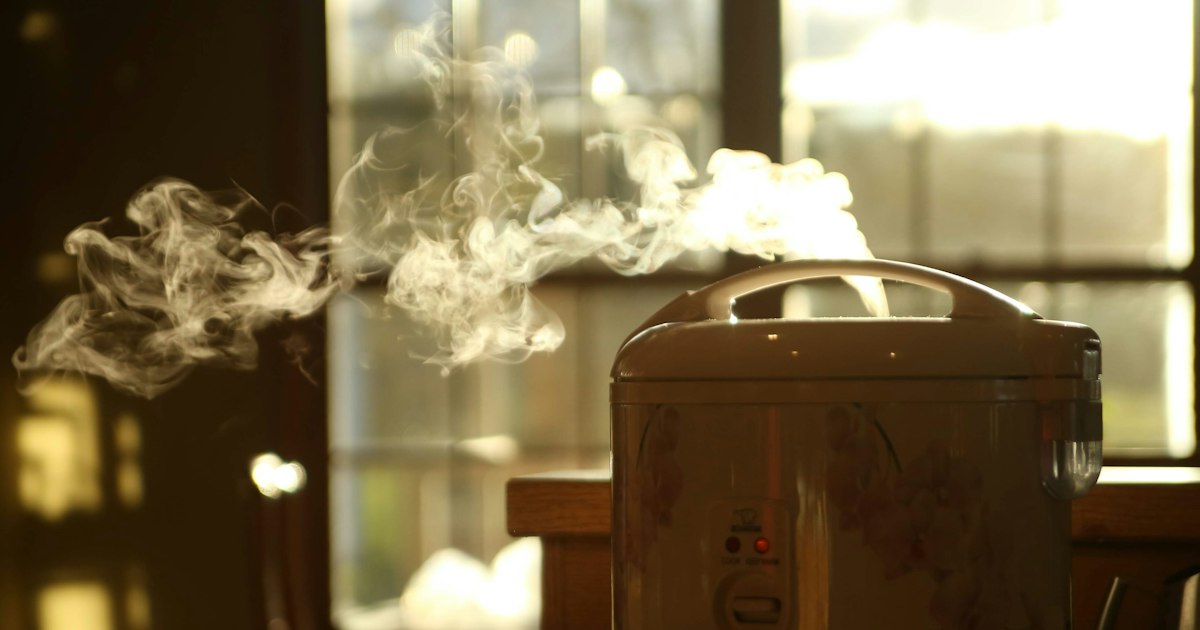
Photo by J. Brouwer on Unsplash
Walk into Yodobashi Camera or Bic Camera’s rice cooker aisle and you’ll find a wall of Zojirushi, Tiger, and Panasonic pressure-IH cookers that look like small appliances but cost like small furniture — some pressure-induction-heating models run ¥60,000 to ¥90,000. Before you swipe your card, there’s a question that trips up almost every foreign buyer: should you buy the Japanese domestic model sold to local households, or hunt down the export version made for your home country’s voltage? The two are not the same machine, and picking wrong means either a cooker that underperforms or one that never turns on at all.
Why Domestic and Export Models Aren’t the Same Rice Cooker
Japanese brands build two distinct product lines. The domestic line is designed around Japan’s 100V electrical system and is sold exclusively through Japanese retailers — this is what you see in Akihabara’s big-box electronics stores. The export line, often with a different model number (for example, Zojirushi’s domestic NP-HBH series pairs with an NP-HCF or NP-NVC export equivalent sold in the US), is rewound internally for 120V or 220–240V and comes with an English-language control panel and manual. Export models are usually a notch simpler: fewer menu presets, sometimes slightly different inner pot coating, and a price that’s often similar to or even higher than the Japanese domestic price once you account for currency and local retail markup.
The domestic model is almost always the better cooker for the money — more rice-type presets (haiga, musenmai, porridge, sushi rice, germinated brown rice), finer pressure-IH heating curves, and the latest firmware Japan gets first. The export model exists purely so the cooker will run safely on your home outlet.
The Voltage Problem: 100V Japan vs Your Home Country
This is the part people get wrong. Japan runs on 100V AC. The US and Canada run on 120V — close enough that a 100V appliance will often limp along, but heating elements (which is what a rice cooker’s pressure-IH coil fundamentally is) run hotter and age faster than designed, and some models will trip an internal safety cutoff or simply cook unevenly. If you’re in the UK, continental Europe, Australia, or most of Asia outside Japan, you’re on 220–240V, and plugging a 100V-only domestic rice cooker straight into that outlet can damage it immediately or create a genuine fire risk — a step-down transformer rated for the cooker’s wattage (many pressure-IH models draw 1200–1400W) is not optional, and a cheap travel voltage converter sold for hairdryers won’t handle that load safely.
A transformer heavy and warm enough to safely run 1300W continuously for 45 minutes isn’t a casual purchase — expect to pay ¥8,000–¥15,000 for one with the right rating, plus the inconvenience of using it daily. For most travelers, that cost and hassle alone is the deciding factor.
The Japanese Rice Cup Quirk
One detail that surprises almost everyone the first time: the measuring cup that comes with a Japanese rice cooker holds 180ml, not the 200ml or 1-US-cup (240ml) that measuring cups elsewhere use. The water-fill lines etched inside the inner pot are calibrated to that 180ml “go” unit. Use a standard overseas measuring cup with a Japanese cooker and your rice-to-water ratio will be off every single time. This matters whether you buy domestic or export, but it’s worth knowing before you ship anything home — pack the cooker’s own cup, and if it doesn’t survive the trip, note that generic 180ml rice cups are easy to find at any Japanese home goods store but much harder to source once you’re back home.
Where to Buy: Budget, Mid-Range, and Splurge
- Budget (¥10,000–¥20,000): A basic microcomputer-controlled (not pressure-IH) 3-go or 5.5-go cooker from Panasonic or Tiger. Fine for plain white rice, no fancy presets, and light enough to carry in a suitcase.
- Mid-range (¥25,000–¥45,000): IH (induction heating, no pressure) models from Zojirushi or Tiger with brown rice, porridge, and cake-baking modes. This is the sweet spot most visitors land on.
- Splurge (¥55,000–¥90,000): Pressure-IH flagship models — Zojirushi’s “Extreme Cooking” NP-HBH/NW series or Tiger’s JKT-B series — that produce noticeably glossier, chewier rice. These are the ones worth the voltage-transformer hassle if you cook rice daily back home.
Yodobashi Camera and Bic Camera both stock domestic models at full retail and will tax-free them for tourists on the spot with passport in hand (purchases over ¥5,000 before tax qualify). Export models are harder to find in Japan itself since they’re made for overseas distribution — you’ll more often see them at Amazon.com, Amazon.co.uk, or department stores back home rather than in Tokyo. If you’re combining the purchase with other discount shopping, outlet centers like Karuizawa Prince Shopping Plaza occasionally carry last season’s domestic models at a discount, though selection is inconsistent and you shouldn’t make a special trip just for a rice cooker.
Common Mistakes When Buying to Ship Home
The most frequent mistake is buying the gorgeous domestic flagship model, flying home, plugging it in, and discovering the control panel is entirely in Japanese with no English mode — menu kanji for “porridge” versus “sushi rice” versus “quick cook” isn’t something you can guess your way through reliably, even with a phone translation app held up to a steam-fogged panel. If you don’t read Japanese and don’t want to rely on a translation app every time you cook, the export model’s English interface may be worth the trade-off despite the smaller feature set.
The second mistake is skipping the voltage math entirely because “it’s just a kitchen appliance.” Treat the wattage rating on the base of the unit as a hard requirement for any transformer or outlet you plan to use, not a suggestion.
The third mistake is packing it in a checked suitcase without bracing the inner pot — ceramic and fluorine-coated pots can crack against the housing in transit. Wrap the pot separately in clothing, and if you bought a splurge-tier model, consider shipping it via Japan Post’s international parcel service instead of hand-carrying, since rice cookers weigh 3–6kg and add up fast against airline baggage limits — the same packing logic travelers use when buying bulky items like a sled bought in snow country applies here: oversized, awkward-to-pack goods are often cheaper to ship than to carry.
Best Timing to Buy
Japanese appliance makers refresh rice cooker lineups around September, which means outgoing models get discounted through late summer — July and August are reliably the cheapest months to buy a domestic flagship before the new year’s model lands and prices reset. Avoid buying during the late-December to early-January new-year shopping rush, when popular pressure-IH models can actually sell out at the big electronics chains, similar to the seasonal rush around other New Year goods that spike in December. If a specific must-have model is sold out at one Bic Camera branch, Akihabara and Shinjuku locations are large enough to check stock across floors before giving up on it.
If you’re already stacking electronics purchases on this trip — a rice cooker alongside something like the home facial steamers covered in our Panasonic Nanocare buyer’s guide — the voltage and warranty logic above applies identically: check the wattage, confirm whether it’s a domestic or export unit, and budget for a transformer if you’re buying the Japan-only version.