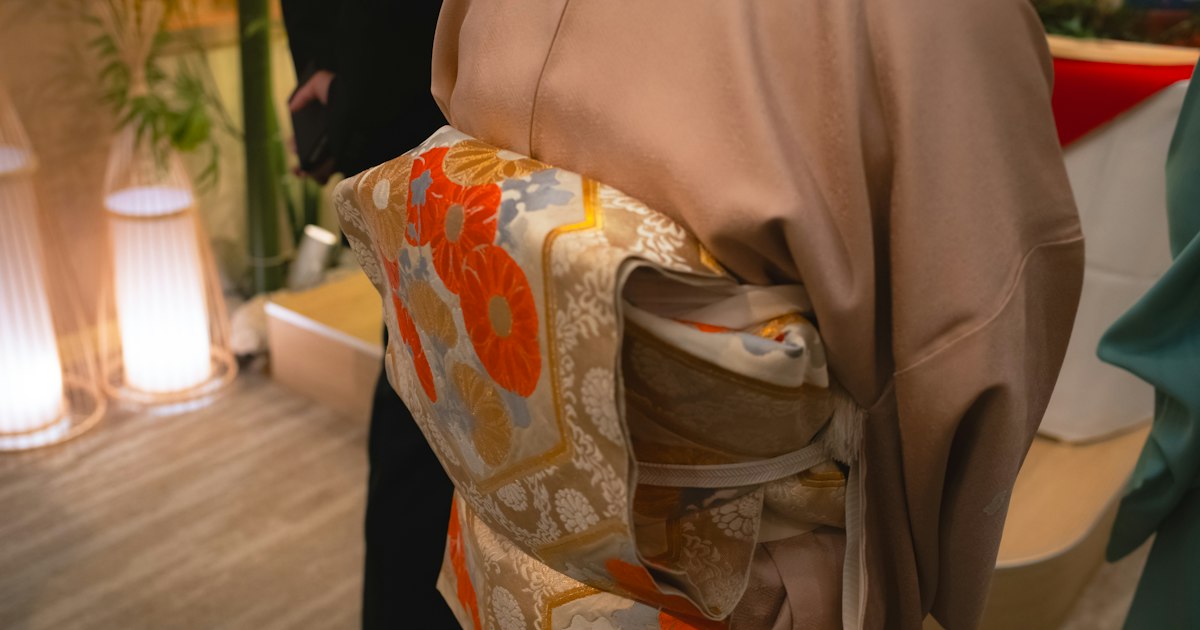
Photo by Karori Production on Unsplash
A snapped obi closure is one of those small disasters that only reveals itself right before you need to leave for a tea ceremony, a wedding, or a shrine visit in your rental kimono. The good news is that Tokyo has entire neighborhoods built around exactly this kind of problem. Whether your obi uses a hidden snap, a hook-and-eye clasp, or a zipper panel (common on pre-tied “tsuke obi” and budget rental sets), you can usually find the parts, the thread, and sometimes a shop clerk willing to point you to the right aisle within a single afternoon.
Why Obi Closures Break in the First Place
Most modern obi aren’t the fully hand-tied kind you see in period dramas. Rental shops and casual kimono sets increasingly use “tsuke obi” or “setai obi” — pre-shaped obi with the bow already formed, held in place around the body with a snap, a metal hook, or occasionally a short nylon zipper sewn into the waistband. These hardware pieces take a lot of tension, especially if the obi is cinched tightly over an obi-makura (bustle pad), and they’re usually the cheapest component on the entire garment. A loose stitch, a bent prong, or a zipper pull that catches on silk lining is extremely common after a few wears, particularly with rental pieces that have been used by dozens of previous customers.
Before you panic and buy a whole new obi, know that the fix is almost always a ¥300–¥1,500 notions purchase plus 20 minutes with a needle — not a trip to a kimono tailor.
Nippori Fabric Town: The Obvious First Stop
Nippori Sen’i Gai (Nippori Fabric Town), a five-minute walk from Nippori Station on the JR Yamanote and Keisei lines, is Tokyo’s best-known textile district, with roughly 80 shops stretched along a single main street. While most shops specialize in fabric by the meter, several carry a genuinely deep notions selection: snap fastener sets, metal hook-and-eye closures in multiple sizes, bias tape, and reinforcement interfacing that’s useful if the fabric around the old snap has torn. Tomato, the district’s largest shop, has a dedicated buttons-and-notions floor where staff are used to fielding exactly this kind of request even if your Japanese is limited — pointing at the broken part works fine.
Most shops here open around 10:00 and close by 18:00 or 19:00, and individual shops (not the whole street) take different days off, often Wednesdays, so it’s worth checking the shutter signage before making a special trip. Weekday afternoons are noticeably quieter than weekends, when the narrow street fills with sewing hobbyists and students.
Okadaya and Yuzawaya: Reliable Chain Alternatives
If you’re not near Nippori, Okadaya’s flagship store near Shinjuku Station’s east exit is a multi-floor haberdashery landmark that’s been outfitting Tokyo sewers for decades — one floor is almost entirely devoted to buttons, snaps, zippers, and trim, sold both pre-packaged and cut to length. Yuzawaya, a nationwide craft-and-notions chain with branches in Kichijoji, Ikebukuro, and several suburban shopping centers, is a more predictable bet if you’re staying outside central Tokyo — the layout is consistent store to store, and staff can usually match a broken snap against their stock samples. Both chains typically run from around 10:00 or 11:00 to 20:00, which matters if your obi problem surfaces in the evening before a morning event.
What to Buy and Roughly What It Costs
Bring the broken piece with you if you can — matching the prong width and snap diameter by eye is much faster than describing it. Typical price ranges:
- Snap fastener sets (metal or sew-on resin): ¥150–¥500 for a card of several, sized small to large
- Hook-and-eye closures (the type used on nagoya-obi and some tsuke obi): ¥200–¥600 per set
- Nylon zipper tape, cut to length: ¥150–¥300 per meter, plus a small cutting fee at some shops
- Heavy-duty thread and a sturdy needle (if you don’t already have a sewing kit): ¥300–¥700
- Fusible interfacing, if the fabric around the old closure has frayed: ¥200–¥400 per sheet
A full repair kit rarely exceeds ¥1,500, and many 100-yen shops (Daiso, Seria) carry basic snap sets too, though the sizing range is narrower than at a dedicated notions shop.
Doing the Repair: Steps and Common Mistakes
If the snap or hook simply popped its stitches but the hardware itself is intact, you can often just re-sew it in place using a doubled thread and a whip stitch through the existing holes — no new parts needed. If the hardware itself is bent or broken, remove the old piece entirely before attaching the replacement; sewing a new snap over the ghost of the old one creates uneven tension that will tear through again quickly.
The most common mistake visitors make is buying a snap that’s too large for the obi fabric. Obi fabric, especially the silk or silk-blend used in nicer sets, is tightly woven but not thick — an oversized metal snap will pucker the fabric and strain the stitching around it faster than a properly sized one. A second common mistake is sewing a zipper in with regular thread; obi closures bear real tension when the obi is cinched, so use upholstery-weight or buttonhole thread if the shop carries it, and stitch each side at least twice.
If you’re repairing a rental obi before returning it, check your rental agreement first — some shops would rather you report the damage and let them handle it than receive a DIY repair that doesn’t match their original stitching.
When to Skip the Notions Shop Entirely
Notions shops are the right call for hardware failures — a popped snap, a stuck zipper, a bent hook. They’re the wrong call if the fabric itself is torn, the lining has come loose, or the obi is a valuable fukuro-obi or maru-obi you plan to keep for years rather than return. In those cases, a proper arai-hari specialist who handles full cleaning, restoration, and re-stitching is worth the higher cost and longer turnaround — see our guide to where to get a kimono professionally cleaned, restored and re-stitched in Japan for how that process works and roughly what it costs. And if you’re not sure what formality level your obi and kimono combination calls for in the first place — which affects how much it’s worth investing in a repair versus just renting a replacement — our breakdown of kimono formality levels for formal events is a useful companion read before you commit to fixing versus swapping out the piece.
Either way, a broken obi closure the morning of an event is rarely the crisis it feels like. Tokyo’s notions shops exist precisely for this kind of small, urgent fix, and most problems are solved for well under ¥1,000 and a short train ride.