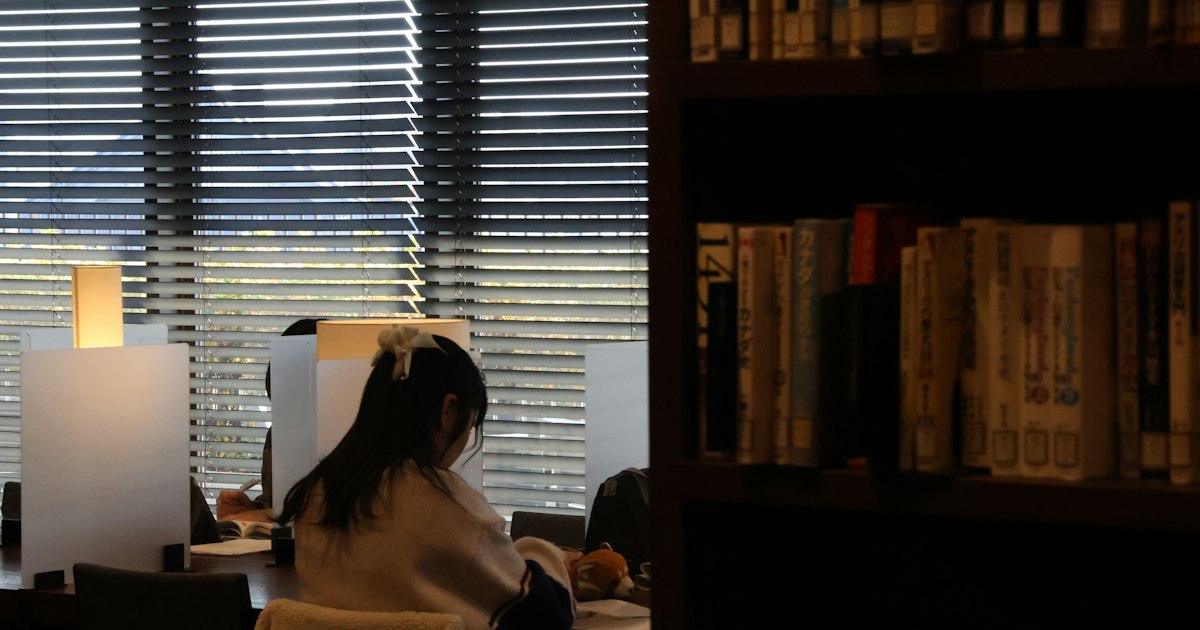
Photo by Yanhao Fang on Unsplash
Between temple-hopping and standing in ramen lines, a free, air-conditioned, dead-quiet room with clean toilets and a desk sounds almost too good to be true. Japanese public libraries offer exactly that, and nearly all of them will let a foreign tourist walk in and sit down without a card, a reservation, or a yen spent. The catch is that “day use” and “borrowing” are two completely different privileges, and the wifi situation is far patchier than most visitors assume. Here’s what actually works in Tokyo and Kyoto.
Reading vs. Borrowing: What Tourists Can and Can’t Do
Almost every municipal, city, and prefectural library in Japan operates on the same split rule: anyone can enter, sit, and read in-house for free, but taking a book home requires a library card, and a card requires proof you live, work, or study in that specific city or ward (a residence card, utility bill, or employee ID). As a tourist passing through on a hotel reservation, you will not qualify for a card at a Tokyo ward library, and staff will tell you so politely but firmly.
What this means in practice: come to read, study, charge a phone, or use a desk — not to check out novels. No ID is needed just to walk in. Bags are fine at your seat; very large suitcases are often restricted to a small coin locker area near the entrance, so bring a day bag rather than your full roller case if you’re stopping between hotels.
Tokyo’s Best Library Stops for Visitors
The Tokyo Metropolitan Central Library, inside Arisugawa-no-miya Memorial Park near Hiroo Station (Hibiya Line), is the most tourist-friendly big library in the city. It’s open to anyone for in-house reading, has large reference reading rooms with city views, and runs roughly Tuesday–Friday 9:30–19:00 and weekends/holidays 9:30–17:30, closed Mondays. No card is needed to read; borrowing is Tokyo-resident/worker/student only.
Chiyoda City Library, tucked inside Chiyoda City Hall near Kudanshita Station, is the one locals actually recommend to visitors — it stays open until 22:00 on weekdays (shorter on weekends), has a café, and is popular with remote workers and students because of the late hours and comfortable seating. It’s a five-minute walk from the Imperial Palace moat, so it slots easily into a sightseeing day.
If you’re traveling with kids, the International Library of Children’s Literature in Ueno Park (part of the National Diet Library system, closed Mondays) is free, beautiful, and has picture books in multiple languages — a good rainy-day detour from the nearby museums.
For researchers or anyone curious, the National Diet Library main building near Nagatacho/Kokkai-gijidomae Station is open to anyone 18 and over worldwide — bring your passport to register for a free library card on-site, which lets you request materials and photocopy pages (around ¥25–30 per page via staff). You cannot borrow anything to take out, and it’s closed Sundays, national holidays, and the third Wednesday of each month for inventory.
Kyoto’s Library Options
The Kyoto Prefectural Library, near Heian Shrine and the Okazaki museum cluster, is open to the public for in-house reading with no card required, roughly 9:00–19:00 on weekdays and shorter on weekends, closed Mondays. It’s a convenient, quiet stop if you’re already in the Nanzen-ji/Okazaki area and need a break between temples.
The Kyoto International Manga Museum isn’t technically a public library, but it functions like one for a flat admission fee (around ¥900 for adults, ¥300 for children) — you can sit and read from its enormous manga collection all day, which makes it a legitimate splurge option if the weather’s bad and you want guaranteed seating rather than a free civic library that might be full of exam students. It’s closed Wednesdays.
The Wifi and Power Reality
This is where expectations usually go wrong: free wifi is not universal. Newer or recently renovated libraries (including the Tokyo Metropolitan Central Library) offer free guest wifi with a simple on-screen registration, but many smaller ward and city branches still don’t provide it at all, and some only offer it in a lobby or café area rather than the quiet reading rooms. Don’t plan a library stop around needing internet — treat any wifi you find as a bonus.
Power outlets are even scarcer. Most general reading-room seats have none; outlets are usually limited to a handful of designated “PC corner” desks that fill up fast, especially during exam seasons (January–February, June) and summer break (July–August). The safer move is to top up your phone and laptop before you arrive — if you’re coming straight off the train, check which Shinkansen seats actually have working outlets so you walk in with a full battery rather than hunting for a library plug.
Quiet Study Etiquette
Japanese libraries take “quiet” more literally than most Western ones. Phone calls are not allowed inside reading rooms at all — step into the hallway or lobby. Talking, even in whispers, draws stares in the main reading areas. Eating is banned except in designated café or lounge zones, though a capped water bottle at your desk is universally fine. Typing on a laptop is generally accepted in general reading rooms, but in smaller “quiet study” sections even keyboard clatter can earn a disapproving look, so a silent keyboard or a tablet is worth considering if you plan to work for hours. Don’t leave your bag on a seat to “reserve” it while you go to lunch — unattended-seat etiquette is strict, and staff may clear your things.
Common Mistakes and Budget Tips
The three mistakes tourists make most often: assuming they can borrow a book with just a passport, assuming every branch has wifi, and showing up on a closing day without checking (most libraries close one fixed weekday plus national holidays plus occasional inventory days, so always check the specific branch calendar before crossing town). If you need to print or copy something — a reservation confirmation, a boarding pass, a document for an embassy visit — most libraries charge roughly ¥10 per page for black-and-white self-service copies, which is cheap, but hours are limited to opening times. For anything urgent outside those hours, a convenience store copier is the reliable backup; the same machines are what travelers use for printing visa and residence card photos, and they run 24 hours.
Traveling with a baby or toddler and need somewhere calmer than a library’s silent reading room? Libraries generally don’t have nursing or diaper-change facilities, so if that’s the priority rather than quiet desk space, an Akachan Honpo nursing and diaper-change lounge is the better stop.
Budget-wise, every option above except the Manga Museum is completely free, which makes libraries one of the few genuinely zero-cost ways to escape heat, rain, or crowd fatigue in both cities. Aim for a weekday morning right at opening if you want the quietest, emptiest room — weekends and school holidays bring local students in to study, and seating disappears fast.