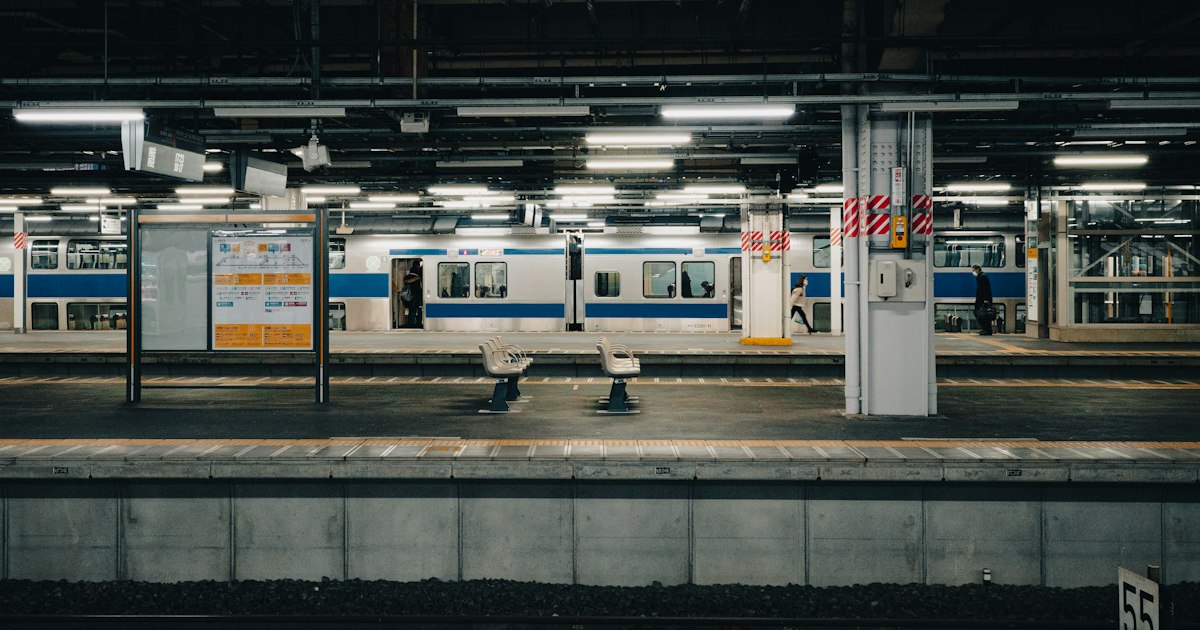
Photo by katsuma tanaka on Unsplash
Japan’s accessibility infrastructure for deaf and hard-of-hearing travelers is quieter and more improvised than, say, wheelchair access — there’s no single national standard, but there is a dense patchwork of writing boards, pointing cards, visual alarms, and apps that most visitors never hear about because no one tells them where to look. This guide covers the symbols to watch for, the tools locals actually use, and how to make sure you don’t miss a boarding call or a fire alarm.
The Ear Mark: Japan’s Signal for Hearing-Friendly Service
Look for a small sticker shaped like an ear with a slash or a red diagonal line, usually posted at bank counters, city hall windows, pharmacy registers, and some train station ticket offices. This is the mimi maaku (耳マーク), a symbol created decades ago by Japan’s hard-of-hearing advocacy groups and now recognized (if not universally displayed) at municipal and financial service counters nationwide. It signals that staff are prepared to communicate by writing, gesture, or a tablet rather than relying on spoken announcements over a counter window. If you don’t see the mark, most staff will still default to writing things down the moment you point to your ear and shake your head — it’s a widely understood gesture in Japan, no mark required.
Communication Cards, Pointing Books, and the UD Talk App
Japan Tourist Information Centers (the staffed desks run by JNTO, found at Narita and Haneda arrivals, Tokyo Station, Kyoto Tower, and other major hubs) stock free multilingual “pointing” communication sheets — grids of pictograms and short phrases for food, transport, and emergencies — designed originally for travelers with no shared spoken language, which makes them equally useful here. Ask at the desk for a “communication support sheet” if one isn’t already on the counter.
For anything more detailed, download UD Talk (UDトーク), a Japanese speech-to-text app that’s free to install and works well even for visitors who don’t read Japanese, since it can display a live transcript in English alongside the Japanese original. It’s used in Japanese courtrooms, lecture halls, and city offices, so don’t be surprised if a clerk already has it open on a tablet when you walk up — just hand them your phone or ask to use theirs. A low-tech backup that never fails: carry a small notepad for hitsudan (筆談), old-fashioned back-and-forth writing. Nearly every service worker in Japan will switch to this instantly and without awkwardness; it’s a completely normal way to communicate here, even between two hearing Japanese people in a noisy shop.
Airports and Train Stations Without Relying on Spoken Announcements
If you’re flying in or out, call your airline’s special assistance line (or request it when booking) at least 48 hours ahead and note that you’re deaf or hard of hearing — this flags your booking so gate staff know to notify you directly rather than over the PA, and at Narita and Haneda it gets you an escort who can walk you through security and bridge any gate changes. If you’re traveling with young children at the same time, the airport security process has its own quirks worth checking separately — see our guide on taking a baby or toddler through Japanese airport security.
On trains, Japan is unusually visual-friendly already: nearly every car has a scrolling LED or LCD display showing the next station, delays, and transfer information in Japanese and English, and station platforms post the same. Shinkansen cars increasingly carry seatback or overhead screens with the same information, so you rarely need to catch a spoken announcement — if you’re picking seats and want to know which rows also have power for charging your phone or transcription app mid-journey, check our row-by-row breakdown of Shinkansen charging outlets. At staffed ticket gates, look for an intercom button marked with a speech-bubble icon — pressing it alerts staff that you need text-based help rather than a voice response, and most stations will have someone come out with a notepad within a minute or two.
Vibrating and Flashing Alarms: What to Ask Your Hotel For
This is the single most important thing to arrange and the one most visitors never think to ask about: standard Japanese hotel fire and earthquake alarms are audio-only. Many business hotel chains (Toyoko Inn, APA Hotel, Super Hotel, and most larger international-brand hotels) keep a small stock of accessibility equipment behind the desk — a strobe light unit that flashes when the fire alarm sounds, and a vibrating pad or “bed shaker” you tuck under the pillow or mattress that activates on the same signal. These are loaned free of charge but are rarely offered proactively, so ask at check-in: “聴覚障害者用の警報装置はありますか” (Do you have an alert device for the hearing impaired?) or simply show a written note. Smaller ryokan and guesthouses are less likely to stock these, so if you’re booking somewhere rural or family-run, email ahead to ask, and build in flexibility — our guide to onsen ryokan cancellation policies is worth reading before you lock in a non-refundable booking somewhere that turns out not to have one.
Separately, Japan’s nationwide earthquake early-warning system (J-Alert) pushes a loud siren tone to every smartphone in range, but it also triggers full-screen flashing and strong vibration by default on both iOS and Android — you don’t need to configure anything, but do make sure your phone’s vibration and visual alerts are switched on rather than silenced, since some travelers turn those off by habit when going to Japan for jet lag reasons. If you’re staying in a hotel and worried about winter dryness interfering with sleep aids or CPAP-style equipment, our piece on what Japanese hotels actually provide for winter humidity covers the same “ask at check-in, don’t assume” approach that works for alarm equipment too.
Accessible Onsen, Attractions, and Sign-Language Support
Hot spring towns vary enormously in how they handle any kind of accessibility need, hearing included — staff may not expect a non-Japanese-speaking deaf guest and can default to over-explaining bathing rules verbally rather than with the posted pictogram signs already in most bathhouses. If accessible bathing is a priority on your itinerary, our rundown of onsen towns with wheelchair-accessible baths is a useful starting point, since towns that have invested in physical accessibility tend to have more accessibility-literate staff generally.
Theme parks including Tokyo Disney Resort and Universal Studios Japan issue an assistance pass for guests who can’t easily queue or hear ride safety instructions — request it at Guest Services near the entrance on arrival, no doctor’s note required, just a short conversation (written is fine). Sign-language-guided museum or city tours exist but are limited and need to be booked weeks in advance through local tourism boards or the Japan Federation of the Deaf’s regional chapters; they are not something you can arrange same-day, so if this matters to your trip, start emailing before you book flights.
Common Mistakes to Avoid
- Assuming convenience stores and restaurants have writing boards ready. Most don’t, but staff will improvise with a receipt and pen the moment you gesture — don’t wait for them to offer, ask directly.
- Not requesting hotel alarm equipment until the night you need it. Front desks often need to retrieve it from storage or a manager’s office; ask when you check in, not at 11pm.
- Relying only on spoken gate changes at smaller regional airports. Request assistance in advance everywhere, not just at Narita/Haneda — smaller airports have fewer staff who’ll think to flag you otherwise.
- Turning off phone vibration to save battery. It’s your main backup for emergency alerts in a country prone to sudden seismic warnings.
None of this requires special planning months out — a notes app, a charged phone, and the habit of asking directly for what you need will get you through almost any situation in Japan more smoothly than guidebooks suggest.