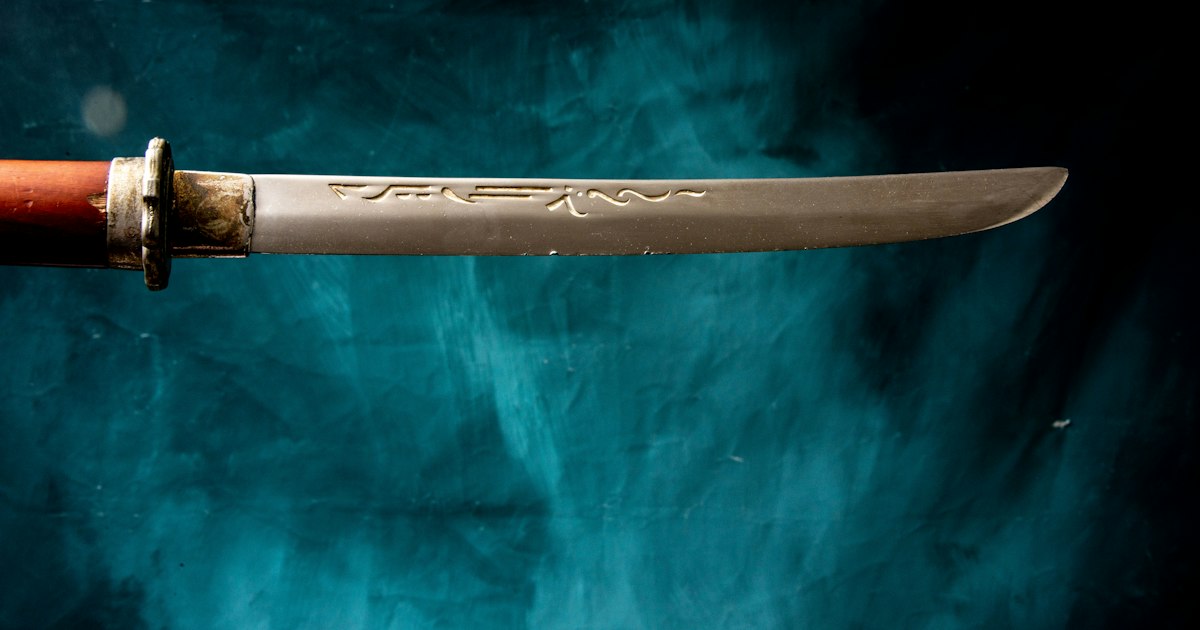
Photo by Carlos Felipe Ramírez Mesa on Unsplash
Most visitors to Tokyo see samurai swords only as blurry glass-case silhouettes in a castle museum or as souvenir letter-openers in a tourist shop. The Sword Museum (刀剣博物館, Token Hakubutsukan) is the corrective: a small, focused institution in Sumida run by the Society for Preservation of Japanese Art Swords (NBTHK), the organization that actually certifies and authenticates blades across the country. If you want to understand why a piece of folded steel can be a National Treasure, this is the place to do it.
What you’re actually looking at
The museum’s permanent and rotating exhibits focus on katana, tachi, wakizashi, and tanto, along with koshirae (mountings), tsuba (hand guards), and the tools of swordsmithing. Signage is bilingual, with English panels explaining forging techniques, blade anatomy (hamon, the temper line; jihada, the grain pattern in the steel), and the periods each piece comes from — Kamakura, Nanbokucho, Muromachi, and on into the Edo period.
Because the NBTHK runs the national certification system for sword appraisal, the museum periodically displays blades classified as Juyo Bijutsuhin (Important Art Object) or even Kokuho (National Treasure). Exhibits rotate every few months, so what’s on the wall in spring won’t be there in autumn — check the museum’s website before you go if a specific blade or swordsmith is the reason for your visit.
Hours, admission, and tickets
As of recent visits, the museum is open 9:30am–5:00pm (last entry 4:30pm) and closed Mondays (or the following day if Monday is a public holiday), plus a short New Year closure. Standard adult admission runs around ¥1,000–1,500 depending on the current special exhibition, with discounts for university/high school students and free or reduced entry for children. Prices tick up slightly when a major loan exhibition is running, so treat these as a baseline rather than an exact figure and confirm on the official site before you travel.
There’s no need to book ahead for a normal visit — same-day tickets at the counter are standard. If you’re combining this with other Tokyo museums that use multilingual handset guides, it’s worth knowing the general rules for that kind of rental across the city, which are covered in this guide to multilingual audio guide rentals at Japan’s temples and museums — the Sword Museum’s own English panels are thorough enough that most visitors won’t need one, but it’s a useful reference if you want narrated context on specific blades.
Getting there
The museum sits near the Sumida River, a short walk from Ryogoku Station — about 7–8 minutes on foot from the JR Sobu Line exit, or a similar walk from the Toei Oedo Line’s Ryogoku Station. Ryogoku is also sumo territory: the Ryogoku Kokugikan sumo stadium is a few minutes further on, so if a tournament is running (January, May, or September), you can realistically do both in one afternoon. The museum building itself is modern and purpose-built, with step-free access and an elevator, making it one of the more wheelchair- and stroller-friendly specialty museums in the city.
If you’re traveling with bulky medical equipment and worry about navigating smaller Tokyo museums, the practical logistics (security screening, storage, hotel considerations) are addressed in this guide on traveling with a CPAP machine or bulky medical equipment through Japanese airports and hotels — the Sword Museum itself poses no particular obstacle, but it’s a useful read for the wider trip.
Best time to visit and how long to budget
The museum is compact — most visitors move through the permanent collection and current special exhibition in 45–75 minutes. It rarely gets crowded; even on weekends you’ll usually have long stretches of time alone with individual cases, which is not something you can say about the Tokyo National Museum’s sword gallery. Weekday mornings right after opening are the quietest.
There’s no strong seasonal argument either way — it’s an indoor museum, so rainy days or the height of summer heat are actually good excuses to go. The one timing consideration is exhibition rotation: special exhibitions (tokubetsu-ten) often run for 2–3 months and sometimes feature loan items not normally on display, including works by specific named smiths. If there’s a particular sword tradition or region you care about, check the current exhibition title on the museum’s site before committing a travel day to it.
Common mistakes visitors make
- Confusing it with the old Shibuya location. The museum relocated to Sumida (Yokoami) some years ago. Old blog posts and guidebooks sometimes still list the former Yoyogi/Shibuya address — always verify the current Sumida address before you set out.
- Assuming it’s a sword-shopping venue. It isn’t. This is a certification body’s museum, not a dealer. You cannot buy an antique sword here. For legitimate purchases, authenticated dealers near Ginza and Ueno are the usual route, and any genuine antique blade needs an educational-value certificate to leave Japan — budget significant time and paperwork if you’re serious about buying one.
- Expecting a “touch and try” experience. Unlike some souvenir-shop sword demonstrations, this is a conservation-grade museum — blades are behind glass, and photography rules vary by exhibition (often no-flash is permitted for the permanent collection but restricted for loaned National Treasure items). Check signage room by room.
- Skipping the gift shop reference material. The small shop sells reasonably priced books and reproduction tsuba/fittings that make far more honest souvenirs than mass-produced “samurai swords” sold near tourist sites — worth a look if you want something tied to actual craftsmanship rather than decoration.
Budget, mid-range, and splurge ways to go deeper
Budget: A standard same-day ticket (roughly ¥1,000–1,500) and the free English signage is enough for most visitors to get real value in under an hour.
Mid-range: Time your visit to a special exhibition featuring a specific smith or school, and pair it with the sumo stadium or the nearby Edo-Tokyo Museum (also in Ryogoku) for a half-day Sumida itinerary.
Splurge: The NBTHK and several Tokyo dealers occasionally run lectures, appraisal events, or guided viewings for serious collectors — these aren’t always advertised in English, so if you have a specific interest (e.g., a particular era or swordsmith), contacting the museum directly ahead of your trip is worth the effort.
Practical notes for the rest of your trip
If a visit here sparks a broader interest in Japanese craftsmanship and you start buying more than postcards, remember that larger or more fragile purchases (lacquerware, large reproduction fittings, antique items) often need proper freight rather than checked luggage — the considerations are similar to those laid out in this guide to shipping antique furniture and large purchases home from Japan. And if your Tokyo itinerary includes a mix of niche museums like this one, pairing it with something equally offbeat — the city has no shortage of them, right down to the Meguro Parasitological Museum — is a very Tokyo way to spend a day.