Some links below are affiliate links. If you book through them, Japan Trove may earn a small commission at no extra cost to you.
Tokyo is amazing, but some of Japan’s best experiences are a short train ride away. These three day trips — Hakone, Nikko, and the Mt. Fuji area — are all doable as round trips and give you mountains, hot springs, and shrines without changing hotels.
Hakone — hot springs & Mt. Fuji views
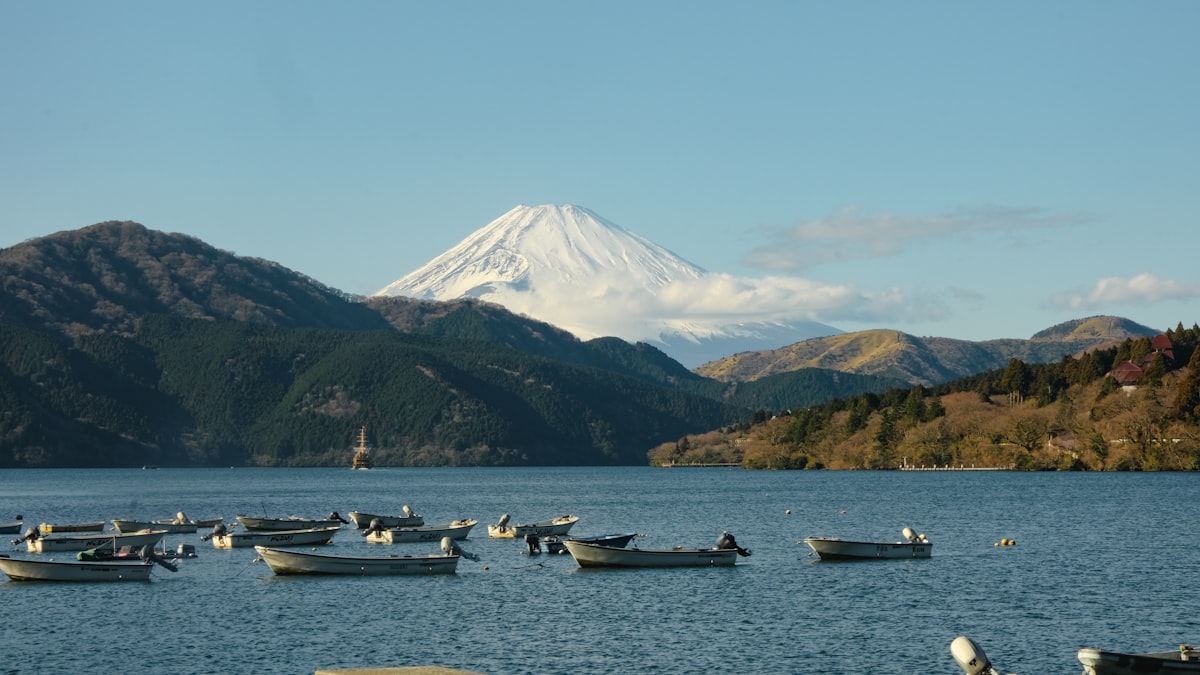
About 90 minutes from Shinjuku, Hakone is the classic onsen escape. Do the scenic “loop”: mountain railway, cablecar, a pirate ship across Lake Ashi, and (on a clear day) Fuji views. Soak in an onsen before heading back. The Hakone Free Pass covers most of the transport and is easy to buy in English on Klook .
Nikko — shrines in the mountains
Two hours north of Tokyo, Nikko is a UNESCO World Heritage town of ornate shrines set in cedar forest, plus waterfalls and a scenic lake up the mountain. Toshogu Shrine is the highlight. Best in autumn for the foliage.
Mt. Fuji area (Kawaguchiko) — the iconic view
For that postcard Fuji shot reflected in a lake, head to the Fuji Five Lakes (Kawaguchiko). Great for photos, a ropeway, and lakeside cafés. Note: Fuji is clearest in the colder months and early mornings; summer often hides it in cloud.
How to choose
- Want hot springs + Fuji + variety? Hakone.
- Love temples & nature? Nikko.
- Chasing the perfect Fuji photo? Kawaguchiko.
Tips
- Go early. First train out beats the crowds and the afternoon clouds.
- Check the pass math. Regional day passes usually beat singles — related: is the JR Pass worth it?
- Book guided tours if you want zero logistics; compare on GetYourGuide or Klook.
Fitting these into a week? See our 7-day Japan itinerary and sort your eSIM and Tokyo base first.
What each day trip costs
- The Hakone Free Pass runs about JPY 6,100 (2-day) from Shinjuku, covering round-trip transport plus unlimited use of the local loop — generally cheaper than piecing together individual tickets for the train, cablecar, ropeway, and boat.
- Nikko’s combined shrine ticket runs JPY 1,300-1,600 for the main three sites, plus JPY 1,150-1,700 each way for the bus up to Lake Chuzenji and Kegon Falls if you extend beyond the shrine complex.
- Kawaguchiko round-trip bus fare from Shinjuku runs about JPY 4,000-4,400, with the Kachi Kachi Ropeway (JPY 900-1,000 round-trip) as a worthwhile add-on for elevated lake views.
Common mistakes to avoid
- Trying to combine two of these three destinations in one day — each is a genuine day-trip commitment on its own; attempting Hakone and Nikko together, for instance, means rushing both and spending most of the day in transit.
- Choosing Kawaguchiko on a whim during summer haze season — Fuji’s visibility drops significantly in summer humidity; if seeing the mountain itself is the entire point, autumn and winter mornings offer far better odds.
- Underestimating Nikko’s UNESCO shrine complex as “just shrines” — Toshogu’s carvings and scale genuinely surprise many first-time visitors expecting a modest religious site rather than an elaborately decorated mausoleum complex.
Turning any of these into an overnight
All three destinations reward an overnight stay more than a rushed round trip — a Hakone or Kawaguchiko ryokan lets you soak in an onsen and catch an early clear-morning Fuji view, while Nikko’s highland lake area feels genuinely different once day-trippers have left for the evening.
Booking guided tours versus DIY
A guided day tour typically costs more than the equivalent regional pass and self-guided transport, but removes all logistics planning — a reasonable trade for travelers on their first trip or short on planning time, while the self-guided route rewards those comfortable navigating Japanese transport and wanting more flexibility over timing at each stop.