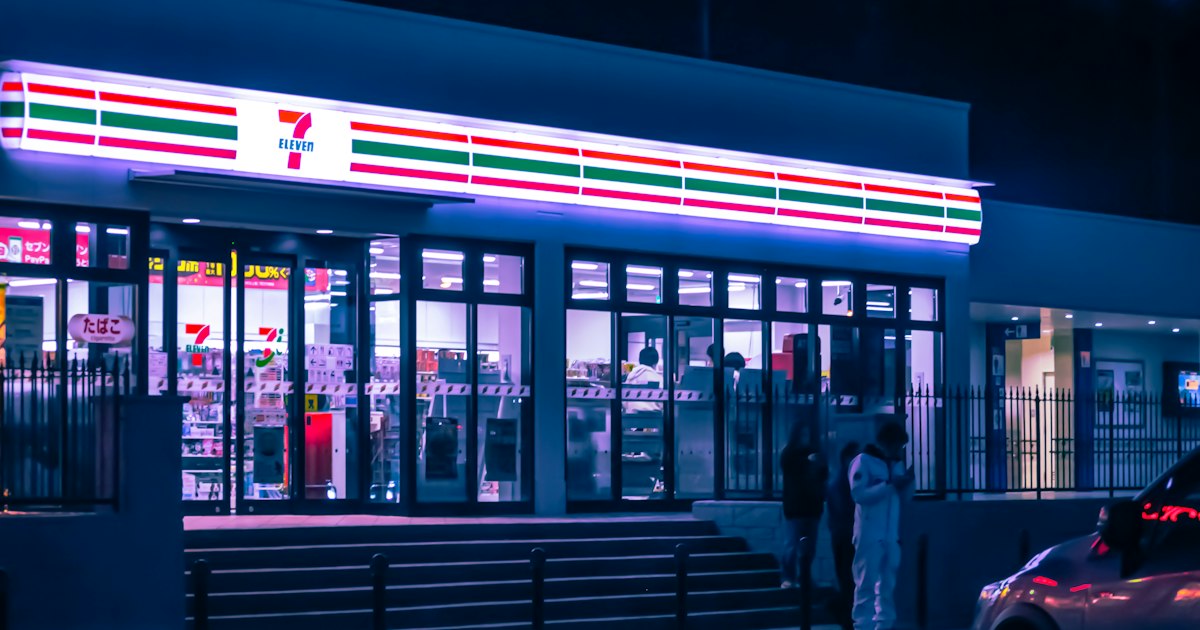
Photo by Md Samir Sayek on Unsplash
If you’ve never used one, the touch panel that pops up when you try to buy a can of beer or a pack of cigarettes at a Japanese convenience store can be genuinely confusing for a few seconds. There’s no scanner, no ID swipe, just a screen asking you a question in Japanese with two big buttons. Here’s exactly what it’s asking, what you should tap, and when a clerk might actually ask to see your passport instead of trusting the screen.
Why the panel exists
Japan’s legal age for both alcohol and tobacco purchases is 20, not 18 — this didn’t change when Japan lowered the general age of adulthood to 18 in 2022. Drinking and smoking ages stayed at 20 specifically. Because convenience stores (konbini) sell both around the clock, retailers are required to confirm the buyer is 20 or older at the point of sale, even if the cashier is confident you’re well into your thirties. Rather than making every clerk interrogate every customer, chains built a simple self-attestation step into the register system: a touch screen that asks you to confirm your age before the sale can go through.
This is different from the Taspo card system used at cigarette vending machines, which requires residents to register an IC card. At the register inside the store, there’s no card needed — just a tap.
What you’ll actually see on the screen
When an item like beer, chu-hai, sake, whisky, or cigarettes is scanned, the register’s monitor (or the self-checkout screen) typically flashes a message along the lines of “お客様は20歳以上ですか?” (Are you 20 years of age or older?) with two buttons: はい (yes) and いいえ (no). At some chains the wording is simplified to icons or a single large “20歳以上のお客様はこちらを押してください” (customers 20 or older, press here) button. You tap “yes,” the screen clears, and the transaction continues. That’s it — for the vast majority of purchases, this self-tap is the entire verification step, and no ID is actually checked.
At self-checkout kiosks — increasingly common at 7-Eleven, Lawson, and FamilyMart in bigger cities — the same prompt appears mid-transaction. If you’re bagging your own items at an unmanned register, don’t panic when the machine suddenly pauses; just tap the confirmation and continue scanning.
When staff actually ask for ID
The touch panel is an honor-system check, but it doesn’t override a clerk’s discretion. If you look visibly young, some staff — particularly at stores near universities or in areas with stricter store-level policy — will ask to see ID even after you tap “yes.” As a foreign visitor, that means showing your passport, since you won’t have a Japanese residence card or driver’s license. It’s worth having your passport on you (or at least a photo of the relevant page) if you plan to buy alcohol or cigarettes and you’re under, say, 30 and don’t want to walk back to your hotel to grab it.
A common mistake tourists make is assuming the touch panel is the full check and getting caught out without any ID when a clerk follows up. Unlike some countries where a screen tap is purely symbolic paperwork, in Japan it can be backed by a real ID request, and clerks are trained to decline the sale if they’re not satisfied — tapping “yes” yourself doesn’t obligate them to sell.
Prices you’ll actually pay
Konbini alcohol and tobacco pricing is fixed nationwide by the chain (no regional haggling), which makes budgeting easy:
- Budget: a 350ml can of standard lager (Asahi Super Dry, Kirin Ichiban) runs about ¥220–250; canned chu-hai (shochu highball) sits around ¥150–200.
- Mid-range: 500ml craft or premium beer cans run ¥300–400; a 300ml bottle of everyday sake is typically ¥500–900.
- Splurge: small bottles of better sake or a 180ml tasting bottle of premium whisky can run ¥1,000–3,000+, and these are often shelved separately near the register rather than in the main cooler.
- Cigarettes: a standard pack is around ¥500–600 depending on brand, with most domestic and international brands stocked behind the counter — you’ll point or name the brand rather than pick it off a shelf.
If you’re stocking a hotel room for an evening in rather than hitting a bar, this is almost always cheaper than a hotel minibar or convenience charges tacked onto accommodation — worth factoring in alongside costs like the hotel accommodation tax you’re already paying nightly.
Opening hours and timing
Most konbini — 7-Eleven, FamilyMart, Lawson — are open 24 hours, and the age-verification panel works identically at 3am as it does at 3pm; there’s no separate late-night restriction built into the touch-panel system itself. A small number of individual stores, particularly in residential areas or near schools, voluntarily stop alcohol sales late at night as a local policy, but this is store-specific rather than a nationwide rule, so don’t assume it everywhere. If a store does restrict it, the register will simply refuse the sale regardless of what you tap.
There’s no seasonal angle to the verification process itself, but demand (and sometimes shelf space) shifts around hanami season in spring and summer festival nights, when locals buy canned drinks to carry to parks — a good excuse to pair a cold can with a jagabata butter potato snack or a bag of daigaku imo from the same store.
Common mistakes to avoid
- Tapping “no” by accident. The buttons are usually labeled only in Japanese. はい means yes, いいえ means no — tap はい to confirm you’re 20+. Tapping the wrong one voids the item from the transaction and the clerk has to rescan it.
- Assuming you don’t need ID because you tapped the screen. As above, the tap is self-attestation, not proof. Carry your passport if there’s any chance you’ll be asked.
- Trying to buy for someone visibly underage. Clerks will refuse if it’s obvious the alcohol or cigarettes are for a minor standing next to you, touch panel or not.
- Expecting the self-checkout to skip the step. Self-checkout kiosks run the same age-verification logic as staffed registers — it’s a software rule tied to the item’s barcode, not the register type.
Once you’ve tapped through it once, the whole process takes about two extra seconds per transaction — it’s one of those small Japan-specific rituals that’s more notable the first time than every time after.