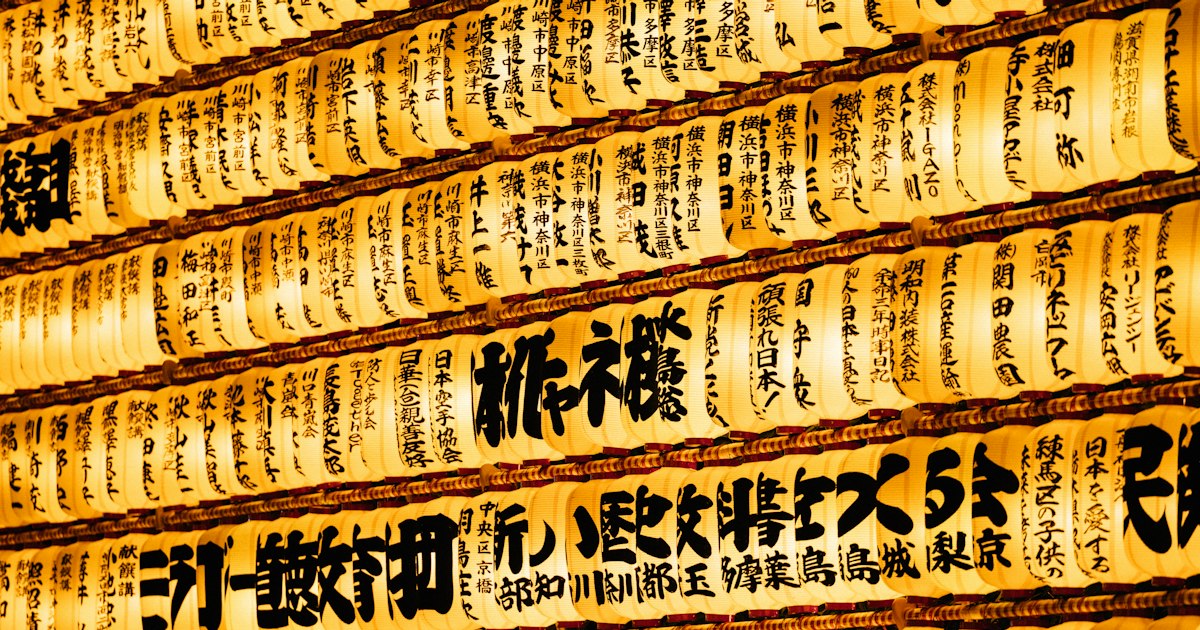
Photo by Tsuyoshi Kozu on Unsplash
Every August, the streets of Akita City fill with rows of towering bamboo poles strung with glowing paper lanterns, each one balanced on a single palm, shoulder, forehead, or hip by performers who make it look almost effortless. This is the Kanto Matsuri, one of the “big three” festivals of Japan’s Tohoku region, and it’s one of the most photogenic — and least crowded by foreign tourists — major festivals in the country. Here’s what you actually need to know to see it well.
What the Poles Represent
Kanto (竿灯) means “pole lantern,” and the design is deliberate: the arrangement of lit lanterns hanging in rows down a long bamboo shaft is meant to look like a heavy sheaf of ripened rice stalks bending under its own weight. The festival began as a prayer for a good harvest and for relief from the oppressive heat and drowsiness of midsummer — a theme it shares with Aomori’s Nebuta and Sendai’s Tanabata, the other two festivals in Tohoku’s “big three,” all held within days of each other in early August.
Poles come in four graduated sizes. The largest, the owakanto, stands about 12 meters tall, weighs roughly 50kg, and carries 46 lanterns arranged in nine tiers — these are reserved for adult performers only. Smaller chuwakanto and kowakanto scale down for teenagers and children, with tiny yowakanto for the youngest kids. Performers (called sashite) shift the pole between their open palm, shoulder, forehead, and lower back without using their hands to steady it once it’s up, often while the pole visibly flexes and sways. Watching a skilled sashite recover a nearly-toppling pole mid-performance is the single best photo moment of the night.
Dates and Daily Schedule
The festival runs every year on fixed dates, August 3 through 6, regardless of what day of the week that falls on — worth double-checking against the current year’s calendar before you book flights, since it doesn’t shift like festivals tied to the lunar calendar or a specific weekend.
The main event is the evening Kanto Odori, held on Chuo-dori, the broad avenue in front of Akita City Hall, starting in the early evening and running for roughly two hours into the night — exact start and end times are published a few weeks ahead on the official Akita Kanto Festival site and shift slightly year to year, so confirm before you go. During the day, there are smaller demonstration and practice sessions in the area around Senshu Park (the site of Akita’s former castle), where you can get much closer to the poles, take unobstructed photos, and in some years try lifting a small kowakanto yourself under a performer’s guidance — a good option if the evening crowds feel too dense for young kids.
Where to Watch
You have three practical options:
- Free standing viewing along the sidewalks of Chuo-dori. This is completely workable but arrive at least 45–60 minutes before the start to claim a spot with a clear sightline, and expect to watch from behind a rope line a few meters back from the performers.
- Paid reserved seating (yuusekiseki) — bleacher-style seats set up directly across from the main performance area. These typically run in the range of ¥2,000–3,000 per person for a single evening, sold in advance through the festival’s official channels and convenience-store ticket terminals; they sell out, often within days of going on sale, so buy as soon as the sale date is announced if you want a guaranteed seat.
- Daytime close-up viewing near Senshu Park, which is free and far less crowded, trading the dramatic night lighting for the chance to inspect the poles, lanterns, and bamboo joinery up close.
A common mistake is assuming this is primarily a daytime festival — it isn’t. The spectacle depends entirely on the lanterns glowing against the dark sky, so if you only have one evening in Akita, prioritize the night parade over the daytime demonstrations.
Getting to Akita and Where to Stay
Akita City is reachable by the Akita Shinkansen (“Komachi”) direct from Tokyo Station in about 3 hours 40 minutes, with one-way fares around ¥18,000–19,000 for a reserved seat (less with a Japan Rail Pass, if you’re traveling before or after the pass’s planned changes affect your route). From Akita Station, the festival street is roughly a 15-minute walk south, or a short ride on the city’s loop bus.
Book accommodation as early as you can — this is a four-night event that pulls in roughly a million visitors across its run, and Akita City’s hotel inventory is modest compared to Tokyo or Osaka. Budget travelers can find business hotels near the station from around ¥7,000–10,000 a night; mid-range options in the ¥12,000–18,000 range offer more space and better proximity to Chuo-dori. For a splurge, consider basing yourself an hour away at an onsen ryokan in the Nyuto Onsen area and making the festival a day trip — if you go this route, it’s worth reading up on how ryokan meal plans work before you book, since half-board timing can conflict with an evening festival schedule.
Common Mistakes to Avoid
- Confusing it with Nebuta or Tanabata. All three Tohoku festivals cluster in the first week of August but are distinct events in different cities (Aomori and Sendai, respectively) with different formats — lit floats versus hanging decorations versus balanced poles. If you’re festival-hopping Tohoku, map out travel time between cities carefully; they’re not a quick hop apart.
- Standing too close to the rope line. Poles do occasionally fall, and staff actively enforce a buffer zone for good reason — don’t lean past it for a photo.
- Showing up without a rain plan. Early August in Akita is hot and humid with a real chance of evening showers; the event can be shortened or adjusted for weather, so build a flexible evening into your itinerary rather than a single make-or-break night.
- Skipping the daytime viewing entirely. If you want photos of the lantern and bamboo construction detail, or want kids to try handling a small pole, the daytime sessions near Senshu Park are the only time to do it.
Pairing It With the Rest of Akita
Akita Prefecture is also one of Japan’s serious sake regions, home to respected breweries like Takashimizu in Akita City itself and Yuki no Bosha out in Yokote. If your trip timing doesn’t line up with the Kanto Matsuri, or you simply want to extend the visit, the region’s breweries are also worth it outside of festival season — for a sense of what a brewery visit actually involves, see our guide to visiting a working sake kura during winter brewing season. And if the balancing-pole spectacle has you hooked on Japan’s more physically intense festival traditions, Osaka’s Kishiwada Danjiri Matsuri in autumn is cut from similar cloth — our guide on how to watch Kishiwada’s cart-pulling festival safely covers the same kind of crowd-and-safety planning you’ll want here.
The Kanto Matsuri rewards visitors who treat it as a full evening rather than a quick photo stop — get there early for a spot, stay through the full parade to see the pole-recovery moments that don’t happen on cue, and if you can, carve out daylight hours beforehand to see the construction up close. It’s a four-day window once a year, and it’s genuinely one of the best festivals in the country to experience in person rather than on video.