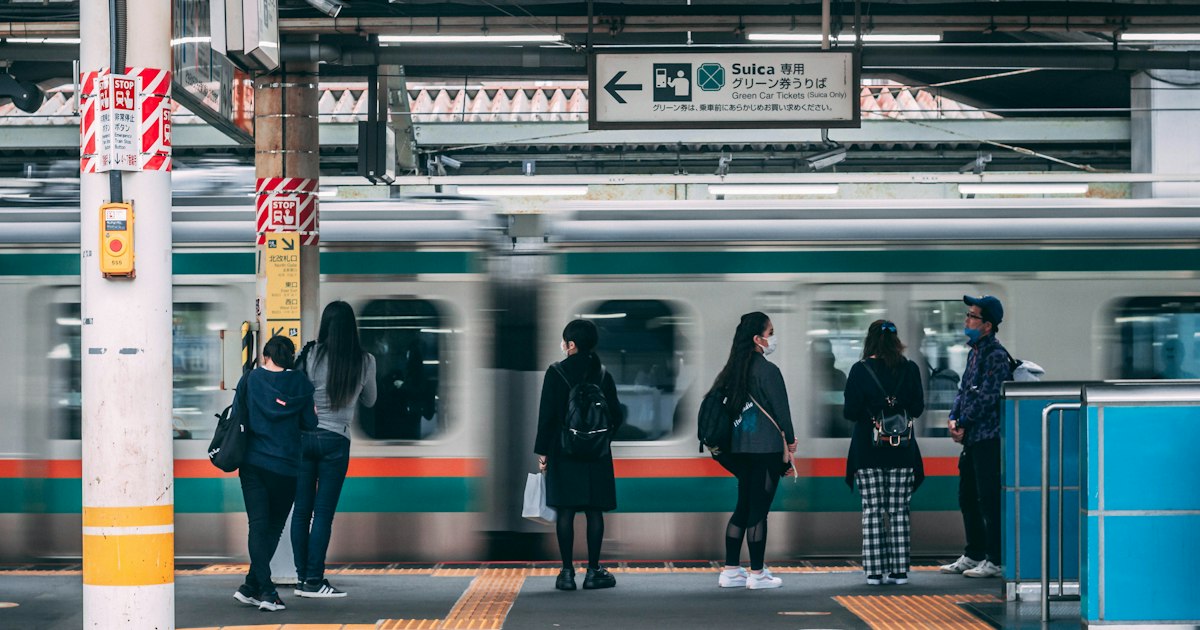
Photo by Kanchan Raj Pandey on Unsplash
Tokyo’s rush hour has a reputation that precedes it — white-gloved station staff, bodies pressed against glass, briefcases wedged into armpits. Most of that reputation is earned, but it’s also narrower and more predictable than people expect. If you know the exact windows to dodge and which lines are worst, you can spend your entire trip never once getting squeezed into a packed carriage with a suitcase.
Just How Bad Is It, Really?
Japan’s Ministry of Land, Infrastructure, Transport and Tourism tracks congestion rates on commuter lines every year, and Tokyo’s busiest stretches have historically run well over 150% of stated capacity — meaning passengers are shoulder-to-shoulder with no room to hold a phone up to read it. The Tozai Line between Kiba and Monzen-nakacho and the Denentoshi Line heading into Shibuya have regularly topped the rankings. Ridership has eased somewhat since the pandemic reshaped office attendance, so numbers on most lines now sit closer to 120–150%, but “less bad than before” still means genuinely uncomfortable for anyone carrying a bag, let alone luggage.
The Exact Windows Tourists Need to Worry About
On weekdays, the morning crush runs roughly 7:30–9:30, peaking hard between 7:50 and 8:30. The evening version is longer and a bit softer at the edges: 17:30–19:30, sometimes stretching toward 20:00 on Fridays as people stop for a drink before heading home. Weekends have nothing comparable on trains — the only “rush hour” equivalent is early-afternoon foot traffic in shopping districts like Shibuya or Harajuku. National holidays, Golden Week (late April–early May), Obon (mid-August), and the New Year stretch (December 29–January 3) all thin out commuter rush dramatically, even though tourist attractions get busier instead.
Stations and Lines to Avoid at Peak Times
If you’re moving through Shinjuku, Shibuya, or Ikebukuro stations between 7:30–9:30 or 17:30–19:30 on a weekday, expect to be swept along by the crowd rather than walking at your own pace — these are three of the busiest stations on earth, and all three sit on the Yamanote Line loop that most tourists rely on constantly. The Tozai, Denentoshi, and Chuo Lines are consistently named among the most crowded in the network. None of this is dangerous, but navigating it with a rolling suitcase or a stroller is miserable and genuinely unsafe for other passengers — station staff will visibly wince if you try.
Simple Timing Tricks That Dodge It Entirely
The easiest fix is just shifting your own schedule slightly later than you’d plan at home. Most museums, temples, and shops don’t open until 9:00 or 10:00 anyway, so starting your day at 9:30 means you’re moving through stations well after the morning peak has broken. For dinner, eat before 17:30 or after 19:30 — restaurants in Tokyo are happy to seat you at 17:00, and reservations after 19:30 are often easier to get too. If you’re heading to or from Narita or Haneda with heavy luggage, build your airport transfer around these windows deliberately; dragging suitcases onto the Narita Express or Keisei Skyliner during evening rush is avoidable with about ten minutes of schedule-checking the night before.
Day trips are the other common trap. If you’re coming back from somewhere like Kujukuri Beach or another easy escape from the city, time your return train to land in Tokyo before 17:00 or after 20:00 rather than walking straight into the evening squeeze with sandy bags and surfboards.
What to Do If You Can’t Avoid It
Sometimes a flight, a reservation, or a tour schedule just puts you on a train during peak hours. A few things help: tap your IC card smoothly and keep moving through gates rather than fumbling, since rush-hour crowds behind you won’t have anywhere to go. Position luggage between your feet or hold it in front of you rather than beside you. Avoid the very front and back cars on lines like the Yamanote, which tend to be marginally less packed than the middle. Some lines run women-only cars during the morning rush (clearly marked on the platform and train exterior) — these are reserved and off-limits to other passengers, so don’t board them by mistake. If your bags are genuinely too much for a packed train, a taxi is a reasonable splurge at this hour; fares run roughly ¥500–600 to start the meter, climbing quickly in traffic, but you buy back your sanity and avoid annoying 40 strangers.
Renting a bicycle for short hops is another underrated workaround, since it sidesteps train crowding entirely for trips under a few kilometers — just be careful where you park it, as Tokyo wards impound bikes left outside designated spots, which is covered in our guide to bicycle parking impoundment rules.
Building an Itinerary That Never Collides With It
The real fix is structural: don’t schedule train-heavy movement in the 7:30–9:30 or 17:30–19:30 windows at all. Front-load sightseeing that requires early arrival — fish markets, temple grounds, popular photo spots — to before 7:00, when you’ll beat both the rush and the daytime crowds. Save mid-morning for checking out of hotels and moving across town, since by 9:30 the trains have mostly cleared. If a theme park is on your list, note that queue management there runs on an entirely separate clock from train rush hour; our comparison of Universal Express Pass, Disney Premier Access, and Fuji-Q Fast Pass is worth checking so you’re not fighting two different kinds of crowds on the same day.
None of this requires obsessive planning — just treat 7:30–9:30 and 17:30–19:30 on weekdays the way you’d treat a predictable rainstorm. Plan around it, and Tokyo’s trains are actually one of the most pleasant, efficient ways to get anywhere in the city.