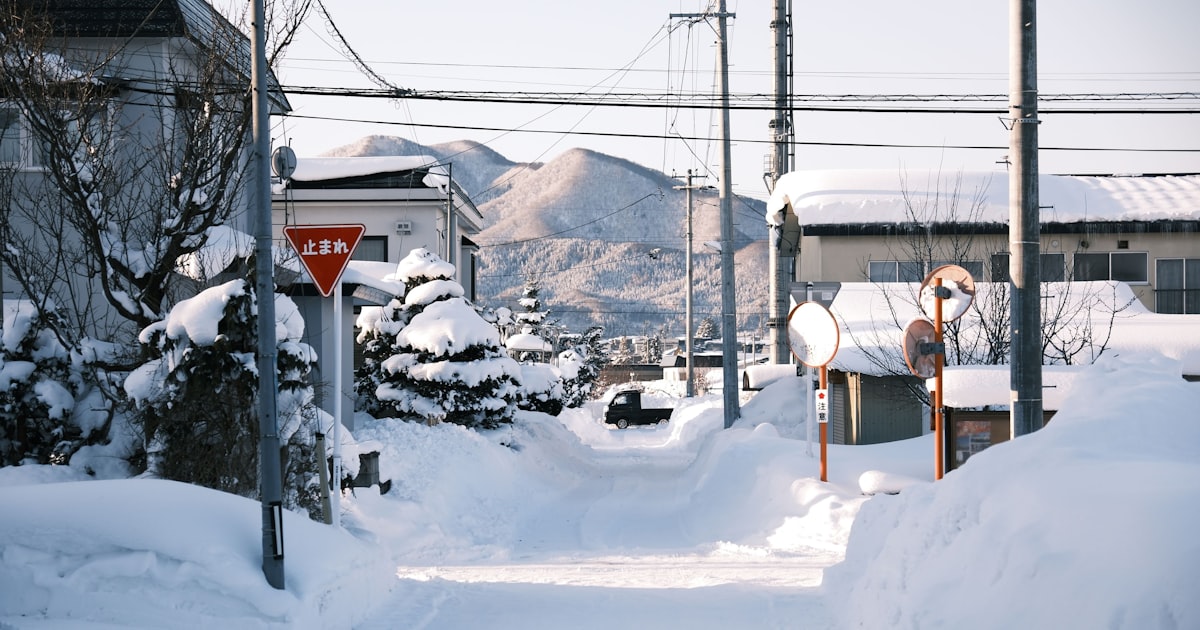
Photo by Seiya Maeda on Unsplash
Picture a narrow river gorge lined with three- and four-story wooden ryokan, gas lamps flickering on at dusk, and snow piling softly onto sloped roofs. That’s Ginzan Onsen, a small hot spring town tucked into the mountains of Obanazawa City in Yamagata Prefecture. It’s one of the most photogenic places in Tohoku, and unlike many “hidden gem” claims, this one earns it — provided you time your visit and plan the logistics correctly, since it’s genuinely remote and books up fast in winter.
What Makes Ginzan Onsen Special
Ginzan means “silver mountain,” named after the Nobezawa silver mine that operated nearby from the Edo period until the early 20th century. Once the mine closed, the town reinvented itself around its hot springs. A major flood in 1913 destroyed much of the original settlement, and the wooden multi-story ryokan you see lining the river today were largely rebuilt in the Taisho-era (1912–1926) style that gives the town its distinctive retro look — ornate balconies, latticed windows, and gas-style street lamps.
The town is frequently compared to the bathhouse town in Spirited Away. Studio Ghibli has never officially confirmed Ginzan Onsen as a direct inspiration, but the visual resemblance — especially at night with the lamps lit and snow falling — is strong enough that the comparison shows up in nearly every review and photo caption you’ll find.
Getting There
Ginzan Onsen has no train station of its own, so plan for a two-leg trip. The most common route from Tokyo is the Yamagata Shinkansen (Tsubasa) from Tokyo Station to Ōishida Station, a ride of roughly 2 hours 45 minutes costing around ¥11,000–12,000 one-way (unreserved). If you’re using a rail pass for the wider trip, check whether it covers this stretch — see this breakdown of regional JR rail passes covering JR East, since a Tohoku-area pass can offset the shinkansen fare if you’re combining Ginzan Onsen with other Yamagata or Miyagi stops.
From Ōishida Station, a local bus (operated by Hanagasa/Obanazawa community bus services) runs to Ginzan Onsen in about 40 minutes for approximately ¥1,100 one-way; buses run a limited number of times per day, so check the timetable before you leave Tokyo rather than assuming a bus is waiting. A taxi from Ōishida costs roughly ¥7,000–8,000 and takes about 30 minutes — worth it if you’re traveling with luggage or missed the last bus. If you’re driving, note that private cars are barred from the town’s main street during daytime hours (roughly 10am–5pm); you’ll park in a lot at the town entrance and either walk in (about 15–20 minutes) or catch the seasonal shuttle bus.
Best Time to Visit
Ginzan Onsen is beautiful year-round, but winter (mid-December through February) is when it earns its reputation. Fresh snow on the ryokan roofs combined with the gas lamps switching on around 5–6pm creates the scene everyone comes for. Late December through January typically has the most reliable snow cover. Aim to arrive by mid-afternoon and stay until after the lamps are lit — day-trippers who leave by 4pm miss the entire reason people come.
Autumn (late October–early November) brings good foliage color on the surrounding hillsides with far fewer crowds and easier ryokan bookings. Summer is cooler than most of Japan thanks to the elevation, but lacks the snow atmosphere. Whatever season, weekends and Japanese holidays (New Year, Golden Week, Obon) bring heavier crowds on the narrow main street — weekday visits are noticeably calmer.
Where to Stay: Budget to Splurge
Staying overnight is strongly recommended over a day trip, both because the lamplit evening is the highlight and because the last bus back to Ōishida runs relatively early.
- Budget: Simpler minshuku-style lodging in or near the town runs from around ¥10,000–15,000 per person per night with two meals. Rooms are basic but the location is the same.
- Mid-range: Standard ryokan with private or shared onsen bathing typically run ¥20,000–30,000 per person per night including dinner and breakfast — the most common bracket for the well-known riverside inns.
- Splurge: A handful of ryokan, including one renovated by a prominent contemporary architect, offer upgraded rooms and kaiseki dinners from roughly ¥40,000–60,000+ per person per night. These book out months in advance for winter weekends.
Book as early as you can — three to six months ahead for winter Friday/Saturday nights is not unreasonable, since the town has a genuinely small number of rooms.
What to Do Besides Soaking
If you’re not staying at a ryokan with its own bath, two public bathhouses — Shirogane-yu and Kajika-yu — let non-staying visitors bathe for around ¥500 each. There’s also a free footbath (ashiyu) near the central bridge, a good option if you just want to warm up while wandering rather than commit to a full bath. The town itself is walkable in under 15 minutes end to end, so budget your time for photography, browsing small craft and snack shops, and simply sitting somewhere with a hot drink as the lamps come on. Obanazawa City is also known for its local beef and soba, both worth trying at a town restaurant before you head back to the station.
If you pick up local crafts or snacks and don’t want to carry them for the rest of your trip, this guide to shipping souvenirs home from Japan covers post office and courier options — useful since Ginzan Onsen itself has no shipping counter, so you’d handle this from a larger town like Yamagata or Sendai.
Common Mistakes to Avoid
- Treating it as a quick day trip. The round-trip bus/train logistics from Tokyo eat most of a day; without an overnight stay you’ll likely miss the evening lamplight, which is the main draw.
- Booking too late. Winter weekend rooms sell out months ahead. If your dates are fixed, book as soon as you know them.
- Assuming you can drive right up to your ryokan. The daytime car ban means you’ll need to park outside town and walk or shuttle in with your luggage — pack light or confirm your ryokan offers luggage pickup from the parking area.
- Skipping the bus timetable check. Buses from Ōishida run infrequently; missing one can mean a long wait or an expensive taxi.
- Expecting nightlife or big dining variety. This is a small, quiet town — most visitors eat at their ryokan. Come for the atmosphere and the bath, not bars or shopping variety.
For a similarly historic but easier-to-reach hot spring town, Kansai travelers often compare notes with Arima Onsen near Kobe — useful context if you’re deciding which onsen town fits your itinerary better. Ginzan Onsen takes more effort to reach, but for snow-season atmosphere, it’s hard to match.