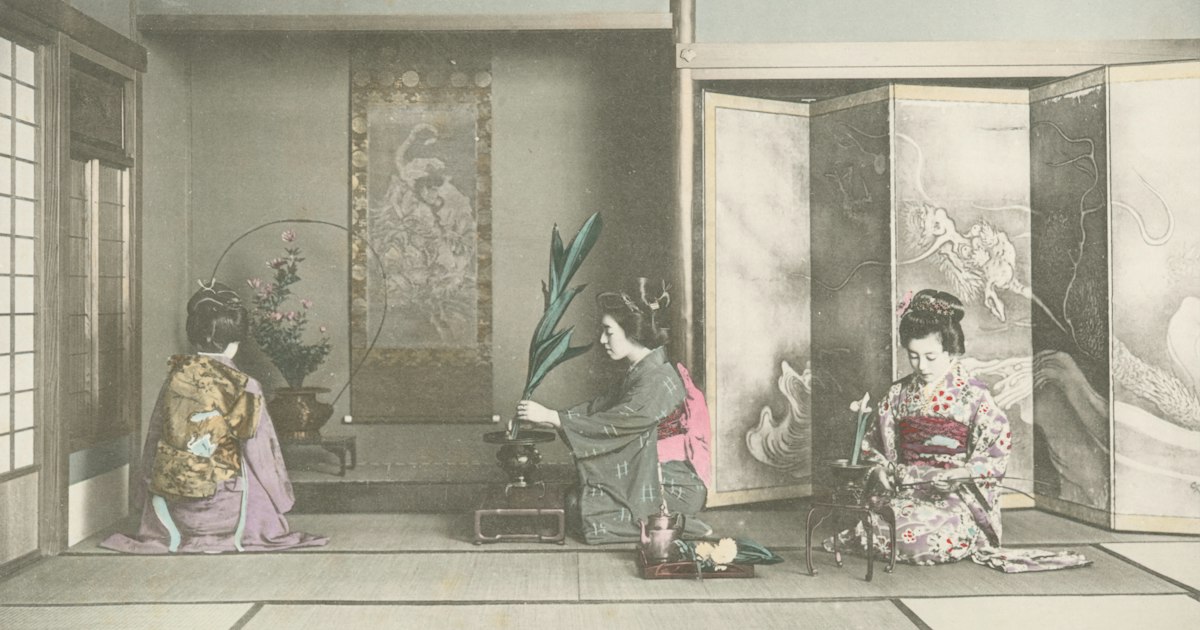
Photo by The New York Public Library on Unsplash
Ikebana, the centuries-old art of Japanese flower arranging, is one of the few traditional practices in Japan that welcomes total beginners into a real lesson rather than just a demonstration. You don’t need to speak Japanese, you don’t need prior experience, and most studios that cater to tourists can get you from “never touched a flower frog” to “took home an arrangement I made myself” in about 60-90 minutes. Here’s how to find a class that fits your schedule, budget, and interest level.
What Ikebana Actually Involves
Unlike Western flower arranging, which often aims for symmetrical fullness, ikebana is built around asymmetry, negative space, and a sense of line. The three main schools — Ikenobo (the oldest, based in Kyoto), Sogetsu (modern, freeform), and Ohara (known for landscape-style arrangements) — teach slightly different philosophies, but tourist-facing classes almost always use a simplified version of one school’s basics: how to secure stems in a kenzan (spiked flower frog), how to choose a focal branch, and how to think about the triangle of main stems that anchors most beginner arrangements.
A typical one-off tourist class runs 60 to 120 minutes, includes all flowers and tools, and lets you keep your finished arrangement — though if you’re mid-trip, ask whether the studio can box it for travel or if you should plan to leave it with a host, since cut flowers don’t survive long in a suitcase or hotel room without water.
Tokyo: The Most Options for Walk-Up Bookings
Tokyo has the deepest bench of English-friendly, single-session classes, many run specifically for tourists through small studios in Shibuya, Omotesando, and Asakusa. Prices generally run ¥4,000-¥8,000 for a one-time lesson including flowers, and ¥3,000-¥5,000 for shorter 45-minute “experience” sessions aimed at cruise-ship and day-trip visitors. Look for studios advertising “ikebana experience for tourists” or “English ikebana lesson” rather than long-term school enrollment pages, which are priced and structured for residents committing to months of study.
Most of these studios take bookings through their own websites or through activity marketplaces, and English ability varies — some instructors teach entirely in English, others use a translator app or a bilingual assistant. If you’re arranging this around a broader Tokyo itinerary that also includes a hands-on cultural activity like a dojo visit, see our guide to trying a martial arts class in Japan for a sense of how these drop-in cultural lessons are typically structured and booked.
Kyoto: Closer to the Source
Kyoto is the birthplace of the Ikenobo school and home to Ikenobo Headquarters (Ikenobo Kaikan) near Rokkaku-do temple in the city center, a short walk from Karasuma-Oike Station on the Tozai and Karasuma subway lines. The headquarters itself focuses on serious, ongoing instruction rather than casual tourist drop-ins, but several Kyoto studios and machiya (traditional townhouse) venues run one-time English-language sessions specifically pitched at visitors, often bundling the lesson with matcha or a kimono rental photo session for a half-day cultural package. Expect to pay ¥5,000-¥10,000 for a bundled experience versus ¥4,000-¥6,000 for ikebana alone.
If you’re building a Kyoto day around traditional crafts and want to go deeper than a single flower class, pairing it with a visit to see traditional tools in action rounds out the day — our piece on Japanese woodworking hand tools covers where craftspeople shop in a similar spirit of hands-on tradition. And if your Kyoto trip also involves a formal kimono portrait, see our comparison of Kyoto’s two top kimono photo studios, since several studios offer combined kimono-plus-ikebana packages.
Osaka and Beyond
Osaka has fewer dedicated tourist ikebana studios than Tokyo or Kyoto, but hotel concierge desks and cultural centers near Namba and Umeda can often arrange a private or small-group lesson on request, typically at a premium (¥6,000-¥12,000 per person for a private session). If ikebana isn’t available where you’re staying, some ryokan and glamping properties now offer it as an evening activity for guests — worth asking about if you’ve booked somewhere like the properties covered in our glamping in Japan guide, several of which layer in cultural programming alongside the outdoor stay.
Budget, Mid-Range, and Splurge Breakdown
- Budget (¥3,000-¥5,000): Group classes of 4-10 people, shared instruction, basic flower selection, 45-75 minutes. Good for a first taste; you won’t get much one-on-one feedback.
- Mid-range (¥5,000-¥8,000): Smaller groups (2-6 people), more flower variety, a full 60-90 minute lesson with individual corrections, often includes tea.
- Splurge (¥10,000-¥20,000+): Private one-on-one lessons with a senior instructor, sometimes conducted at a historic venue or combined with a kimono or tea ceremony package, with premium seasonal flowers like peony or cherry branches in spring.
Tool and flower costs are almost always bundled into the class price for tourist sessions — you won’t be asked to pay extra for the kenzan or shears, and most studios lend or give you basic clippers to keep.
Best Season and Timing
Ikebana is practiced year-round and classes run in every season, but the flowers on offer shift with what’s seasonally available in Japan, which is part of the point — ikebana traditionally responds to the time of year. Spring (March-April) classes often feature branches like cherry or quince alongside tulips; summer leans into iris and hydrangea; autumn brings chrysanthemum and maple branches; winter uses camellia, pine, and nandin berries. If you have a specific flower in mind, ask the studio in advance rather than assuming — availability depends on local flower markets, not a fixed curriculum.
Book at least a few days ahead for popular Tokyo and Kyoto studios, especially during cherry blossom season (late March-early April) and autumn foliage season (mid-November), when both cities see a spike in short cultural-experience bookings generally. Weekday morning slots are easiest to secure on short notice; weekend afternoons fill up fastest.
Common Mistakes First-Timers Make
- Treating it like Western flower arranging: The instinct to fill every gap with more flowers works against ikebana’s core idea of empty space as part of the composition. Instructors expect this and will guide you, so don’t fight the correction.
- Not asking about travel logistics beforehand: If you’re flying out in a day or two, your arrangement won’t survive packed in a suitcase. Ask the studio whether they can ship it (rare), whether a host family or hotel can display it for you, or simply plan to enjoy it and let it go — many visitors photograph the piece and leave it with the studio or a local friend.
- Booking a long-term course by mistake: Some studio websites list both single tourist sessions and multi-month enrollment courses on the same page. Double-check you’re booking the one-time “experience” rate, not a recurring class package.
- Wearing restrictive clothing: You’ll be leaning over a low table or sitting in seiza (kneeling) at some venues. Comfortable, loose clothing works better than anything tight-fitting, and skip clothes you’re precious about — stem sap and water splashes happen.
Ikebana classes are a low-commitment, high-reward way to spend an afternoon in Japan — cheaper than most structured cultural experiences, genuinely instructive, and a souvenir you make with your own hands rather than buy off a shelf.