Japan Trove

Category: Shopping

Honest guides to shopping in and buying from Japan — skincare and cosmetics, snacks and sweets, whisky and sake, hobby and character goods, kitchenware and homeware, and exactly how to ship it all home. We recommend what is genuinely worth it and flag the catches, from voltage and region locks to tax-free rules.

  • Japanese Folding Fans (Sensu): A Buying Guide & How to Use Them

    Japanese Folding Fans (Sensu): A Buying Guide & How to Use Them

    Photo by Jacek Dylag on Unsplash

    Every souvenir shop in Japan sells something folded and fan-shaped, but most of it is printed nylon on plastic ribs, made for a keychain rack rather than actual use. A real sensu — bamboo or wood ribs, paper or silk leaf, hand-finished — is a different object entirely, and buying one well means knowing what to look for and where to look. Here’s how to shop for a folding fan in Japan without overpaying for a souvenir or underpaying for a copy.

    Sensu vs. Uchiwa: Know What You’re Buying

    Japan has two distinct fan types and shops often mix them on the same shelf. A sensu (扇子) is the folding fan — ribs radiate from a rivet and collapse flat. An uchiwa (団扇) is the flat, non-folding paddle fan, traditionally given away free at summer festivals and by shops as advertising. If you want the classic pocketable fan to bring home, you’re looking for sensu specifically; uchiwa are fun but bulkier and usually cheaper, mass-produced items.

    Within sensu there are two main use-cases sold side by side: fans for cooling yourself (everyday sensu, men’s and women’s styles differ slightly in size and pattern) and fans for display or ceremony (maiko/geisha-style fans, tea ceremony fans, dance fans used in Noh and Japanese dance). Dance and ceremonial fans are not meant to be snapped open and shut for a breeze — the paper is more delicate and the price reflects craftsmanship, not durability for daily use.

    How to Tell a Real One From a Souvenir Fan

    A few quick checks work in any shop:

    • Ribs: Real bamboo ribs feel slightly warm and have faint grain variation; plastic ribs feel uniformly cool and perfectly smooth. Cheap fans use thin plastic that flexes and creaks.
    • Rivet (kaname): A well-made fan has a metal or bone rivet that holds tension without wobbling. Give it a gentle open-close — it should move smoothly, not gritty or loose.
    • Paper: Quality sensu use washi (Japanese paper) laminated over the ribs by hand, sometimes gilded or block-printed. Machine-printed nylon fans have a slight sheen and the pattern often looks slightly blurry up close.
    • Number of ribs: Everyday fans typically have 15–25 ribs; more ribs generally (not always) signals a finer, more expensive fan.
    • Smell: Real bamboo and washi have a faint natural, slightly woody smell. Synthetic fans smell like plastic or nothing at all.

    Look at the box, too — fans sold in a plain plastic sleeve at an airport are almost always the printed-nylon type; fans in a paper or wood box from a specialty shop are more likely handmade.

    Where to Buy: Kyoto, Tokyo, and Beyond

    Kyoto is the center of sensu production and the best place to buy seriously. Miyawaki Baisenan (宮脇賣扇庵), near Nijo Castle, has been making fans since 1823 and stocks everything from ¥1,000 everyday fans to museum-quality pieces; open roughly 9:00 to 18:00, closed some Wednesdays. Kyosen-do and shops along Shijo-dori and in the Gion area also carry hand-made fans, and several offer fan-painting or assembly demonstrations you can watch through a window.

    In Tokyo, Ibasen in Nihonbashi (founded in the Edo period) is the equivalent destination, known for ukiyo-e-style prints and both sensu and uchiwa; it’s a short walk from Nihonbashi Station and open daily except some holidays, roughly 10:00–18:00. Asakusa’s shopping streets near Senso-ji also sell decent mid-range fans, though quality varies stall to stall, so apply the checks above before buying.

    If your itinerary includes smaller craft towns, it’s worth asking at local pottery or craft shops too — the same browsing mindset used for Japan’s rustic pottery towns applies here: talk to the shopkeeper, ask what’s handmade versus imported, and don’t be shy about asking to see the ribs up close.

    Prices: Budget, Mid-Range, and Splurge

    Budget (¥1,000–3,000): Simple bamboo-rib, printed-paper fans in seasonal patterns (cherry blossoms, waves, bamboo) — a perfectly good everyday cooling fan and a reasonable gift.

    Mid-range (¥3,000–10,000): Hand-applied washi with block-printed or hand-painted designs, sometimes lacquered ribs, from a named workshop. This is the sweet spot for a self-purchase souvenir that will actually last years of summer use.

    Splurge (¥15,000–50,000+): Fully hand-painted fans, gold-leaf work, silk leaves, or fans by a named craftsperson. Ceremonial and maiko-style fans used professionally can run even higher. If you’re shopping in this range, buy from a specialty shop rather than a department store fan corner, and ask for a certificate or maker’s card.

    Best Time to Buy and Seasonal Notes

    Fans are sold year-round, but shops stock the widest selection from late spring through summer (April–August), when demand peaks and new seasonal patterns arrive. Buying in autumn or winter can actually work in your favor — selection is smaller but sales and clearance on the previous summer’s designs are common. If your trip coincides with a summer festival, note that street-stall fans sold near festival grounds are almost always the cheap uchiwa-style giveaway type, not something to buy as a serious souvenir.

    How to Use and Care for a Sensu

    Hold the fan by the outer guard rib (the thicker rib on one side) and open it with a light outward flick — resist the urge to force it fully open in one motion, which stresses the rivet over time. Fan yourself with a loose wrist motion rather than large arm swings; a folding fan moves a surprising amount of air with very little effort. To close, fold from the same guard rib inward, ribs meeting evenly — don’t slam it shut, which is the single most common way people crack the paper along a fold line.

    A few etiquette notes worth knowing: in formal settings (tea ceremony, some traditional restaurants) a closed fan is sometimes placed on the floor in front of you as a symbolic boundary marker rather than used for cooling — you won’t be expected to know this as a visitor, but it explains why you might see it. Store the fan closed in its box or a cloth sleeve when not in use, keep it away from humidity and direct sun (paper fans can warp or fade), and never force-dry a fan that’s gotten wet — let it air dry fully open, away from heat.

    Packing and Getting It Home

    A folded sensu is flat and slim enough to go in a jacket pocket or bag without any special packing, but for a good-quality or gilded fan, keep the original box — it’s sized to prevent the ribs from bending in transit. If you’ve bought several fans along with other fragile crafts and are worried about your luggage, it’s worth reading up on shipping souvenirs home from Japan, since post offices and couriers can box and send delicate items more safely than checked luggage. And if a fan feels like an easy, packable gift, it pairs naturally with other classic small crafts to bring home, like a printed tenugui hand towel — both fold flat, both hold up well as everyday souvenirs rather than shelf decorations.

  • Japanese Fountain Pens: Sailor, Pilot & Platinum — A Buyer’s Guide

    Japanese Fountain Pens: Sailor, Pilot & Platinum — A Buyer’s Guide

    Photo by Clark Young on Unsplash

    Japan is one of the last places on earth where the fountain pen is still a living, everyday tool — schoolchildren use dip-style calligraphy pens, office workers sign documents with gold nibs, and department store stationery floors stock more pen models than most Western cities have pen shops. If you’re even slightly curious about fountain pens, a Japan trip is the best pen-shopping opportunity you’ll ever get. Here’s how to navigate the “big three” — Sailor, Pilot, and Platinum — without overspending or buying the wrong nib.

    Meet the Big Three

    Pilot (founded 1918, Tokyo) is the largest and most internationally familiar, known for smooth, forgiving gold nibs and the retractable “Vanishing Point” (sold in Japan as the Capless). Sailor (Hiroshima, 1911) is the nib specialist — its “Naginata” and “Zoom” nibs are cut at unusual angles for calligraphic line variation, and it has a cult following among collectors for limited runs. Platinum (Tokyo, 1919) is the value-engineering brand: its “slip-and-seal” cap mechanism keeps ink from drying out even after a year of not writing, which makes its pens unusually forgiving for occasional users. All three sell pens ranging from ¥200 to well over ¥500,000, so knowing where your budget sits matters more than which brand you pick first.

    The Nib-Size Trap Almost Every First-Time Buyer Falls Into

    This is the single most important thing to know before you buy: Japanese nib sizing runs one to two steps finer than Western sizing. A Japanese “F” (fine) writes roughly like a Western extra-fine, and a Japanese “M” (medium) writes closer to a Western fine. If you normally write with a medium nib on a European or American pen, buy a Japanese “M” or even “B” (broad), not an “F.” This matters because Japanese nibs are engineered for vertical, dense kanji strokes, not looping Western cursive — a true fine nib here can feel scratchy and thin on lined notebook paper. Ask staff to let you test-write before buying anything above ¥5,000; nearly every specialty shop keeps testing sheets and loaner pens at the counter for exactly this reason.

    Budget Picks (Under ¥2,000)

    • Platinum Preppy (~¥220) — the pen most pen enthusiasts recommend as a first fountain pen anywhere in the world. Cheap, reliable, and it uses the slip-seal cap even at this price.
    • Pilot Kakuno (~¥1,100) — a slightly larger, ergonomic beginner pen with a smiley-face nib etching, popular as a gift for kids starting school.
    • Sailor Fude de Mannen (~¥1,650) — a bent, brush-like nib designed for bold, expressive strokes; genuinely different from anything sold outside Japan.

    These are widely stocked and make excellent, packable souvenirs — light, cheap enough to buy several, and not something customs will blink at.

    Mid-Range: The Sweet Spot (¥8,000–25,000)

    This is where Japanese pen-making genuinely shines and where most serious buyers should spend their budget:

    • Pilot Custom 74 (~¥12,000) — a 14k gold nib pen, smooth and reliable, often cited as the best value gold-nib pen made anywhere.
    • Platinum 3776 Century (~¥11,000–12,000) — the flagship demonstrating the slip-seal system, available in a wide range of nib grinds including specialty ones like the “UEF” ultra-extra-fine.
    • Sailor Pro Gear Slim (~¥15,000–18,000) — smaller-bodied, pocketable, and the easiest entry into Sailor’s famous nib line.
    • Pilot Custom 823 (~¥22,000) — a vacuum-filler with a large ink capacity, a favorite of people who write a lot in one sitting.

    Each brand uses its own proprietary cartridges and converters (they are not interchangeable across brands), so if you want to use bottled ink, buy the matching converter at the same time — staff will point you to the right one if you ask.

    Splurge: Collector and Maki-e Pens

    At the top end, Japanese pen-making shades into lacquer art. Sailor’s “King of Pens” (from around ¥90,000) is a large-format flagship with an oversized 21k gold nib. Platinum’s Izumo and Nakaya’s maki-e (gold lacquer) pens, hand-decorated by lacquer artisans, routinely sell for ¥150,000–500,000+ and are one-of-a-kind or limited to a handful of pieces. If this level interests you, treat it the way you’d approach fine jewelry shopping — our guide to buying Mikimoto and Akoya pearls has similar advice on verifying authenticity certificates and asking for detailed condition notes before committing to a big purchase.

    Where to Buy in Tokyo

    Itoya (2-7-15 Ginza, Chuo-ku; roughly 10:00–20:00 daily) is the best one-stop shop — twelve floors of stationery with a dedicated fountain pen floor stocking all three brands side by side, plus testing stations. Sekaido in Shinjuku (near the East Exit, open until around 20:00) has strong everyday stock and competitive prices. For collectors, Kingdom Note (locations in Shinjuku’s Odakyu Halc building and Marunouchi) specializes in limited editions, discontinued colors, and secondhand vintage pens you won’t find at general retailers — this is where serious enthusiasts go first. Most of these shops offer tax-free purchases for visitors spending over ¥5,000 in a single store; bring your passport and keep the pen in its sealed box until you’re through departure, as that’s typically a condition of the exemption.

    Common Mistakes to Avoid

    • Buying an “F” nib out of habit. As covered above, test before buying anything expensive.
    • Packing ink bottles in carry-on luggage. Bottled ink counts as a liquid under airline security rules; pack it in checked luggage or buy cartridges instead. If you’re shipping pens and ink home rather than carrying them, our guide to shipping souvenirs from Japan covers which couriers accept ink and how to pack fragile items safely.
    • Shopping during graduation and entrance-ceremony season (March–April). Fountain pens are a classic Japanese gift for new students and new employees, so popular models and gift-wrapping counters get busy and some colors sell out. Outside this window, shops are calmer and better stocked.
    • Missing seasonal ink releases. Sailor’s “Shikiori” and Pilot’s seasonal Iroshizuku colors are released and retired periodically, so a color you see in spring may be gone by autumn — buy it if you like it rather than waiting.

    If you’re building a full stationery haul, it’s worth pairing a pen-shopping afternoon with a browse through Jimbocho’s secondhand bookstore district, where several shops sell vintage paper and notebooks that pair well with a new nib. And if you want one more small, distinctly Japanese personal item to bring home alongside your pen, consider getting a hanko name stamp carved — it’s a similarly tactile, made-in-Japan souvenir that fits the same gift-shopping trip.

  • Gyomu Super & Local Supermarkets: A Visitor’s Guide to Grocery Shopping in Japan

    Gyomu Super & Local Supermarkets: A Visitor’s Guide to Grocery Shopping in Japan

    Photo by Joschka Silzle on Unsplash

    Skip the souvenir shops for an afternoon and walk into a Japanese supermarket instead. Between the frozen gyoza, the wall of instant ramen, and the seasonal fruit displays, you’ll get a more honest snapshot of daily life here than most museums offer — and you’ll walk out with snacks, cosmetics, and kitchen finds at a fraction of department store prices. Here’s how to shop them like someone who actually lives here.

    What Makes Gyomu Super Different

    Gyomu Super (業務スーパー, “business supermarket”) started as a wholesale supplier for restaurants and now has over 1,000 locations nationwide open to the public. The appeal is volume and price: 1kg bags of frozen mango or blueberries for around ¥500–700, blocks of cheese and butter at prices well below convenience stores, and imported goods (Thai curry paste, Italian pasta, Korean tteokbokki) that are hard to find elsewhere at this cost. Portions run large — many products are restaurant-sized — so it’s better for self-caterers staying a week or more, or for stocking a vacation rental kitchen, than for someone who just wants a single snack.

    Stores are usually plain, warehouse-style buildings with fluorescent lighting and stock piled on pallets rather than pretty shelving. Don’t expect English signage or tax-free service — Gyomu Super is a discount grocery chain, not a tourist shop, and that’s exactly why it’s worth visiting.

    The Other Chains Worth Knowing

    Gyomu Super is one piece of a much larger landscape. A few chains you’ll run into repeatedly:

    • Aeon / Aeon Style / MaxValu — Japan’s largest retail group, found everywhere from city neighborhoods to rural roadsides. Large Aeon Malls often have tax-free counters and English-speaking staff.
    • Life, Summit, Ito-Yokado, Maruetsu — mid-range regional chains, the equivalent of a normal neighborhood grocery store. Reliable, no-frills, good for produce and bento boxes.
    • Seijo Ishii — a step up in price and curation, popular for imported wine, cheese, and its own line of frozen gourmet meals (the frozen beef curry is a cult favorite among residents).
    • Don Quijote (“Donki”) — technically a discount variety store rather than a supermarket, but it stocks groceries, cosmetics, and snacks 24 hours a day and often has a tax-free desk, making it useful late at night when regular supermarkets are closed.

    If you’re road-tripping between regions, also keep an eye out for michi-no-eki roadside stations, which sell local produce and regional specialties you won’t find in city supermarkets at all.

    What to Buy

    Supermarkets are one of the best places to build a souvenir haul without spending much. Good picks: boxed matcha or hōjicha KitKats (¥300–500 for multi-packs, cheaper than airport prices), furikake rice seasoning packets, dashi packs, small bottles of soy sauce or ponzu, and regional instant ramen you can’t get at home. Prepared food counters are worth a look too — pick up an onigiri for a cheap, filling snack (typically ¥120–180), and in season, check the fruit section for a taste of Japan’s famous premium produce culture before splurging on a proper fruit sando at a specialty shop. Evenings are prime time for bento and prepared-food discounts, as stores mark items down 20–50% starting around 7–8pm ahead of closing — look for stickers reading 半額 (half price) or a percentage-off tag.

    Prices, Hours, and Getting There

    Most neighborhood supermarkets open around 9 or 10am and close between 9pm and midnight; Aeon and Donki locations are frequently open until midnight or 24 hours. Gyomu Super stores typically run 9am–8pm and are closed a few days per year around New Year’s. None of these chains cluster near train stations the way convenience stores do — they’re built for local residents doing a weekly shop, so they’re often a 5–15 minute walk from a station in a residential area, or reachable by the bicycles you can rent through Kyoto and Tokyo’s city bike-share systems. Search “Gyomu Super” or “業務スーパー” in Google Maps or Apple Maps and locations near your hotel will show up with hours and reviews.

    Budget travelers can realistically eat well on ¥1,500–2,000 a day buying breakfast and snacks from supermarkets rather than restaurants. Mid-range travelers might spend ¥3,000–4,000 on prepared meals, fruit, and drinks for two. If you want to splurge, department store basement food halls (depachika) sell beautifully packaged sweets and gourmet items at prices several times higher than a regular supermarket — worth it once for the presentation, not for everyday shopping.

    Checkout Etiquette and Common Mistakes

    A few things trip up first-time visitors:

    • Plastic bags cost extra — usually ¥3–5 — since a 2020 nationwide law. Bring a foldable tote or be ready to carry items by hand.
    • Bag your own groceries — the cashier scans and moves items to a tray or basket; you then carry it to a separate packing counter to bag things yourself. Don’t linger at the register once you’ve paid.
    • IC cards work at most chains — Suica, Pasmo, and Icoca are widely accepted, along with major credit cards, though small local shops may be cash-only.
    • Weigh-and-label produce at some stores requires using a self-service scale before checkout — look for signage or ask staff (店員, “ten-in”) if unsure.
    • No tax-free shopping at most standalone supermarkets, since groceries for immediate consumption don’t qualify the way department store souvenirs do; Aeon Mall and Donki locations with tax-free counters are the exception.

    Best Time to Go

    Any season works, but timing your visit around Japan’s produce calendar pays off: strawberries peak from December to April, cherries in June, peaches in July–August, and grapes and persimmons in autumn — all showing up in supermarket displays at a fraction of specialty fruit shop prices. Late December and early January are worth avoiding for Gyomu Super and smaller chains specifically, since many close for a few days around New Year’s, similar to closures you’ll see at other small retailers nationwide.

    Buying more than you can eat before flying home? A number of shelf-stable snacks, sauces, and seasonings travel well in checked luggage, but if you’ve gone overboard, it’s worth reading up on shipping souvenirs home from Japan before you start stress-packing at the airport.

  • Mashiko & Bizen: Japan’s Rustic Pottery Towns and Where to Buy

    Mashiko & Bizen: Japan’s Rustic Pottery Towns and Where to Buy

    Photo by Erik Mclean on Unsplash

    Japan has dozens of historic pottery-producing regions, but two stand out for visitors who want to see kilns, browse hundreds of independent studios, and bring home something no department store sells: Mashiko in Tochigi Prefecture and Bizen in Okayama Prefecture. They sit on opposite sides of the country and produce completely different-looking ware, but both are easy, rewarding day trips (or overnight stays) if you know when to go and how to get there.

    Two Very Different Clays

    Mashiko-yaki (益子焼) is thick, warm, folk-craft pottery — often finished in cream, brown, or “nuka” (rice-husk ash) glazes. It became internationally known through Shoji Hamada, a leader of the mingei (folk art) movement who settled here in the 1920s and helped turn a farming village into one of Japan’s biggest craft towns. Expect functional, everyday tableware: mugs, rice bowls, plates.

    Bizen-yaki (備前焼), from Imbe in Bizen City, is the opposite aesthetic: unglazed stoneware fired for one to two weeks in wood-burning kilns, where ash and flame create natural reddish-brown, mottled, or streaked surfaces (yohen). No two pieces look alike because nothing is painted or glazed on — the color comes entirely from the fire. Bizen is one of Japan’s “Six Ancient Kilns,” a group of pottery towns with continuous production traced back roughly a thousand years, and it’s especially prized for sake cups and tea ceremony ware because unglazed clay is said to soften the taste of drinks.

    Mashiko: Tokyo’s Easiest Pottery Day Trip

    Mashiko is about 90 minutes to 2 hours from central Tokyo, which makes it doable even on a tight itinerary. The town’s main pottery street, Jonaizaka, is lined with kilns, galleries, and shops, and the Mashiko Sankokan (陶芸メッセ益子 / Hamada Shoji Reference Collection Museum) preserves Hamada’s former home, workshop, and kiln — worth the roughly ¥800 admission if you want context before you start buying.

    Most shops are open daily from around 9:00 or 10:00am to 5:00 or 5:30pm, though many smaller studios close one day a week (often Tuesday or Wednesday) at owners’ discretion, so don’t plan a trip around a single shop without checking first. The town holds two major pottery fairs (陶器市) a year — around Golden Week (late April to early May) and in early November — when hundreds of extra stalls set up along the main road and prices drop on seconds and overstock. These fairs are also the town’s busiest days, so expect crowds and book accommodation early if staying overnight.

    Getting to and Around Mashiko

    The simplest route from Tokyo is the direct highway bus from Tokyo Station (Yaesu side) to Mashiko, which runs a few times a day and takes about 2 hours for roughly ¥2,500–3,000 one way. The train alternative is JR or Tobu to Utsunomiya, then a Mashiko-Ijichi line bus (about 1 hour, roughly ¥1,200) into town. Once there, everything of interest is walkable or a short taxi ride from the central bus terminal, and a few shops rent bicycles for exploring the outer studios. If you’re stringing together a Kanto rail itinerary, it’s worth checking the regional JR rail passes guide, since JR East coverage can shave the Utsunomiya leg’s cost if you’re already holding one.

    Bizen: The Six Ancient Kilns’ Rustic Heart

    Imbe, the historic core of Bizen ware, is a compact station town where the main street running from Imbe Station is packed with kiln shops, artist galleries, and the Bizen Ware Traditional Industry Center (備前焼伝統産業会館), a good one-stop shop with work from many different kilns and price points under one roof, open roughly 9:00am–5:30pm (closed Mondays if a holiday falls on Tuesday). Because Bizen firing is slow, fuel-intensive, and unpredictable, expect prices noticeably higher than Mashiko for equivalent-sized pieces — that scarcity and hand-labor is part of what collectors pay for.

    The Bizen Pottery Festival (備前焼まつり) takes place annually in mid-October, when kilns sell factory-second and discounted pieces directly, often at 20–50% off gallery prices — genuinely one of the best pottery-shopping days in Japan if your trip dates align. Outside festival season, Imbe is quiet and unhurried, closer to visiting artist studios than a tourist market.

    Getting to and Around Bizen

    Imbe Station is on the JR Ako Line, about 40–50 minutes from Okayama Station (transfer at Osafune or Nishi-Katakami depending on the service), with fares around ¥770. Okayama itself is a Shinkansen stop roughly 45 minutes from Osaka or 3 hours from Tokyo, which makes Bizen an easy add-on if you’re already routing through the San’yo corridor. Since you’ll likely be based in Okayama, it’s worth pairing the trip with the Kurashiki Bikan canal district, about 20 minutes from Okayama Station in the opposite direction, to turn a pottery day trip into a fuller regional loop. Imbe itself is entirely walkable — the shopping street is a five-minute walk from the station exit.

    What to Buy and How Much to Pay

    • Mashiko budget: mugs and small bowls from independent studios run ¥1,500–3,500; a full set of five matching rice bowls is often ¥8,000–15,000.
    • Mashiko mid-range/splurge: named-artist plates or serving dishes run ¥6,000–20,000+; pieces by well-known kilns connected to the Hamada lineage can go considerably higher.
    • Bizen budget: a guinomi (sake cup) typically starts around ¥3,000–5,000 even from lesser-known kilns — Bizen rarely dips below Mashiko’s entry price point.
    • Bizen mid-range/splurge: a tea bowl (chawan) with good yohen coloring commonly runs ¥15,000–50,000, and vases or works by designated Living National Treasures or their studios can reach six figures in yen.

    Common mistakes to avoid: don’t assume every shop takes credit cards — many smaller studios in both towns are cash-only, so carry enough yen. Don’t buy the first piece you like at the first shop; both towns have enough density that comparing five or six studios before committing is normal and expected. And don’t underestimate weight and breakage risk — a boxed dinner set is heavy and fragile in a suitcase. If you’re buying more than a piece or two, it’s worth reading the guide on shipping souvenirs home from Japan before you shop, since many pottery shops in both towns will pack and ship domestically or internationally for you at the counter, usually for a reasonable added fee.

    Best Time to Go

    For Mashiko, time your visit to the spring or autumn pottery fair if you want the widest selection and festival energy, or come on an ordinary weekday if you’d rather browse without crowds and get more attention from shop staff. For Bizen, mid-October’s pottery festival is the standout date for value, but any weekday outside of that is a calm, uncrowded way to see working kilns. Both towns are functional year-round destinations — pottery shopping doesn’t depend on cherry blossoms or foliage — so they’re a good fit for a rainy day or a shoulder-season itinerary when outdoor sightseeing is less appealing.

  • Tenugui: Japan’s Hand Towels and How to Use Them

    Tenugui: Japan’s Hand Towels and How to Use Them

    Photo by Heidi Fin on Unsplash

    Walk into almost any craft shop, department store basement, or festival stall in Japan and you’ll find stacks of thin, colorfully printed cotton cloths folded into neat squares. These are tenugui (手ぬぐい), and they’re one of the most useful — and most overlooked — souvenirs you can bring home. They cost less than a coffee at the low end, pack completely flat, and do far more than dry your hands.

    What Exactly Is a Tenugui?

    A tenugui is a rectangle of thin, plain-weave cotton, almost always about 35cm by 90cm (roughly 14 by 35 inches). Two things set it apart from a Western hand towel. First, the edges are left raw and unhemmed (a finish called kirippanashi) — this is deliberate, not a manufacturing shortcut, since raw edges dry faster and don’t harbor mildew the way a hemmed, looped-pile towel does. Second, traditional tenugui are made using a paste-resist dyeing technique called chusen, where dye is poured through the fabric so the pattern soaks all the way through and looks identical on both sides. That’s the quickest way to tell a “real” tenugui from a cheap printed one: flip it over. If the back is faded or blank, it was printed, not dyed.

    Cheap printed versions sell for as little as 110–330 yen at a 100-yen shop or drugstore. A genuine chusen-dyed tenugui from a craft shop typically runs 800–1,500 yen, and artisan or seasonal limited-edition designs from specialty makers go for 1,200–2,500 yen. Antique or collector’s tenugui can fetch 3,000–8,000 yen and up.

    How Japanese People Actually Use Them

    Historically, tenugui were the all-purpose cloth of daily life before Western towels arrived, and that versatility survives today:

    • Hand or face towel — the original use, still common in bathrooms and kitchens.
    • Dishcloth and place mat — the thin weave absorbs quickly and dries overnight.
    • Wrapping cloth — folded and knotted around a bottle, bento box, or gift, similar to furoshiki but smaller.
    • Headband (hachimaki) — tied around the head at festivals, by chefs, and by manual laborers to catch sweat.
    • Neck towel — draped over the shoulder in summer heat; sushi chefs and craftspeople often keep one tucked into an apron.
    • Wall art — many people buy seasonal-pattern tenugui purely to hang, using a simple wooden display rod called a tenugui-kake (1,500–3,000 yen at craft shops), swapping the design with the seasons.

    That last use is worth knowing about before you shop, because it explains why the patterns matter so much — cherry blossoms and pale pastels appear from February through April, morning glories, goldfish, and fireworks motifs dominate June through August, maple leaves show up in autumn, and pine, crane, and New Year motifs arrive in December. Shops rotate stock seasonally, so a design you love in spring may be gone by summer.

    Where to Buy Them in Tokyo

    The most reliable specialty shop is Kamawanu, founded in 1987, with a flagship near Omotesando/Aoyama and additional branches around the city (Kamawanu also has a shop in the Tokyo Solamachi complex at Skytree). Designs lean playful and contemporary — animals, food motifs, modern graphic patterns — priced around 900–1,300 yen. Most locations open roughly 11am–7pm.

    For a more old-school experience, head to Fujiya in Asakusa, on the covered street just south of and parallel to Nakamise-dori (Denboin-dori). It’s a small, long-running family shop specializing in hand-dyed tenugui with witty Edo-style graphics, and it’s an easy stop after visiting Sensoji — the shop is a short walk from Asakusa Station on the Ginza and Asakusa subway lines. Note that small specialty shops like this can have irregular closing days, so it’s worth checking ahead if this is your only reason for the trip.

    Where to Buy Them in Kyoto

    Kyoto’s textile heritage runs deep, and Eirakuya, founded in 1615, is the city’s best-known tenugui specialist. The main shop sits in Nakagyo-ku near the Karasuma-Oike subway station, with a smaller branch inside Kyoto Station, making it an easy add-on if you’re catching a train. Classic patterns — waves, checkerboards, stylized flora — run 1,000–2,500 yen. If you’re already exploring Kyoto’s old merchant quarters, this pairs naturally with a wander through the city’s traditional shopping streets the same afternoon.

    Budget, Mid-Range, and Splurge Picks

    For a cheap, functional souvenir to hand out to a group, the 100-yen-shop or drugstore printed versions are fine — just don’t expect the through-dyed color or soft hand-feel of a real one. For a genuine gift you’d be happy giving to someone with taste, a mid-range chusen tenugui from Kamawanu or a department store craft floor (Isetan, Takashimaya, and Daimaru all carry them) at 900–1,800 yen is the sweet spot. For a splurge, look for artisan-signed or historically patterned pieces at Eirakuya or a museum shop — some ukiyo-e-inspired designs pair nicely with a visit to a print specialist, if you’re already browsing Japanese woodblock prints on the same trip.

    Common Mistakes to Avoid

    Assuming the raw edges are unfinished and need hemming — don’t sew them; the fraying stops naturally after a wash or two and hemming defeats the fast-drying design.

    Using fabric softener — it coats the cotton fibers and kills the absorbency that makes tenugui useful in the first place. Wash in plain detergent, and wash a new one separately the first time since chusen dyes can release a little color.

    Buying at airport gift shops without comparing — the same designs, and often better ones, are usually cheaper at neighborhood specialty shops than at airport souvenir counters.

    Mistaking printed for dyed — if you want the real thing, check both sides of the cloth before you pay a craft-shop price for a machine-printed one.

    Overpacking them folded in a suitcase corner — they’re thin enough to roll instead, which avoids sharp creases in the dye and saves space.

    Packing and Bringing Them Home

    Tenugui are about as travel-friendly as souvenirs get: flat, light, and cheap to ship if you go overboard buying seasonal patterns. If you end up with more than fits in your bag, a small parcel of folded tenugui is exactly the kind of low-value, lightweight item worth mailing rather than hauling — our guide to shipping souvenirs home from Japan covers post office versus courier costs if you need to send a box ahead. And if you’re building out a shopping list of small, distinctly Japanese items beyond tenugui, traditional crafts like furin wind chimes and custom hanko stamps make good companions on the same shopping afternoon — all three are inexpensive, easy to pack flat or small, and hard to find outside Japan.

  • Hanko Stamps: Getting Your Name Carved as a Japanese Souvenir

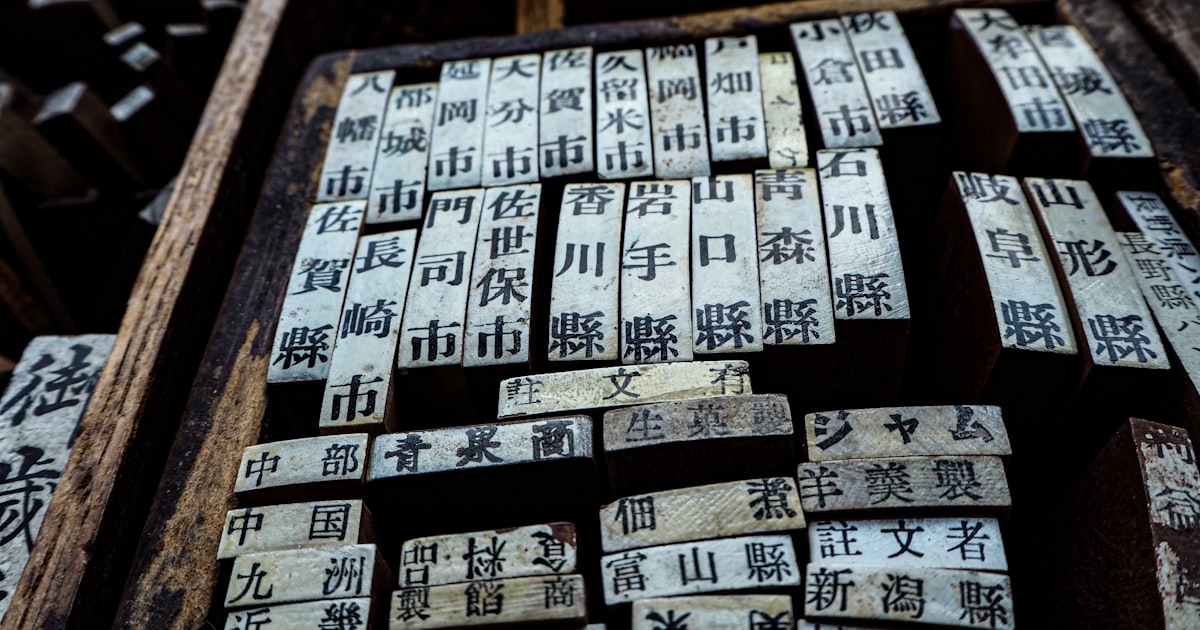
    Hanko Stamps: Getting Your Name Carved as a Japanese Souvenir

    Photo by kaori kubota on Unsplash

    In Japan, a hanko (also called an inkan or hanko-ya) is the small carved stamp people use instead of a signature — on bank forms, apartment leases, and even parcel deliveries. For visitors, it’s also one of the most personal souvenirs you can bring home: a stamp carved with your own name, in kanji or a phonetic Japanese script, that you can press into a notebook, letters, or a piece of art. Unlike a T-shirt or a keychain, no two hanko come out exactly alike, and the process of getting one made is itself a small cultural experience.

    What a Hanko Actually Is (and Isn’t)

    Hanko come in a few tiers of formality. A jitsuin is a legally registered seal used for major contracts like buying property; a ginkoin is registered specifically with a bank; a mitomein is the everyday casual stamp used for signing for packages or approving internal office documents. As a tourist, you’ll be ordering something closer to a mitomein — a decorative, personal stamp rather than a legally registered one. That’s fine: you’re not going to need it to buy a house, you’re buying it as a keepsake, a gift, or a fun way to personalize stationery and art prints, similar to how travelers pick up other hand-finished crafts like furoshiki wrapping cloth or Kutani porcelain.

    How Your Name Becomes a Hanko

    Japanese hanko traditionally carry kanji, so shops that cater to foreign visitors offer a few options for non-Japanese names. The most common is phonetic transliteration into katakana — “Sarah” becomes サラ, “Michael” becomes マイケル — carved either vertically or in a circular arrangement inside the stamp face. Some shops will also help you choose kanji that approximate the sound of your name or carry a meaning you like (this is more of a novelty exercise than a formal naming, since most foreign names don’t map cleanly onto kanji readings). A few higher-end carvers also offer classical seal-script (tensho) versions of your name, which look more like traditional Japanese hanko but take longer and cost more. Decide before you go which route you want, since it affects both price and turnaround time.

    Materials and Budget

    Price depends almost entirely on material and whether the carving is done by machine or by hand:

    • Budget (roughly ¥1,000–3,000): Machine-engraved stamps in plastic, acrylic, or basic wood. Many souvenir stalls near temple approaches offer these ready in 15–30 minutes.
    • Mid-range (roughly ¥3,000–10,000): Boxwood (tsuge) or buffalo horn (suigyu), hand-finished or hybrid machine-plus-hand-touch carving. This is the sweet spot most visitors choose — durable, a nice grain or sheen, and still same-day or next-day in many shops.
    • Splurge (¥10,000–30,000+): Crystal, agate, titanium, or fully hand-carved traditional seal script by an established craftsperson, often presented in a lacquered box with an ink pad. These can take several days to a few weeks if the shop is a genuine specialist rather than a tourist-facing kiosk.

    One material to be cautious about: ivory. Ivory hanko are still sold in Japan, and older, established seals in ivory are part of the domestic tradition, but importing ivory products into most other countries — including the US, EU, UK, and Australia — is illegal or heavily restricted under CITES rules, and customs will confiscate it. Unless you’ve specifically confirmed your home country’s rules, skip ivory and choose horn, wood, or crystal instead.

    Where to Get One Carved

    You don’t need to hunt for a hidden workshop — hanko carving is a normal retail service in both Kyoto and Tokyo:

    Kyoto: The Teramachi-Shijo covered shopping arcade (a short walk from Kawaramachi Station on the Hankyu line, or reachable by city bus from Kyoto Station) has several long-established stationery and seal shops among its stalls, some of which have served Kyoto’s traditional calligraphy and craft trade for generations. It’s an easy add-on if you’re already exploring central Kyoto’s shopping streets.

    Tokyo: Asakusa is the most tourist-friendly option — several shops along and just off Nakamise-dori and the surrounding lanes near Sensoji Temple offer while-you-wait carving aimed specifically at foreign visitors, with English menus showing katakana name samples. Ginza’s older stationery district also has hanko specialists that lean more traditional and formal, useful if you want a higher-quality piece rather than a quick souvenir. Large craft and lifestyle stores such as Loft or Hands (in Shibuya, Shinjuku, and other major stations) also run in-store or counter engraving services and are a reliable fallback if you can’t find a dedicated hanko shop nearby.

    Most hanko shops keep fairly standard retail hours, roughly 10:00 or 11:00 to 19:00 or 20:00, and many close for a few days around New Year (January 1–3), when much of Japan’s retail and craft trade shuts down. Confirm hours before a special trip, especially for smaller, one-person workshops.

    Timing: Don’t Leave It to Your Last Day

    Machine-engraved wood or plastic hanko in a tourist area are usually ready within 15 minutes to an hour — genuinely a walk-in, walk-out purchase. But anything hand-finished, in horn or crystal, or done in traditional seal script, can take anywhere from a few hours to several days depending on the shop’s backlog. If you want a higher-end piece and you’re travelling during a busy season (cherry blossom season in late March–April, Golden Week in early May, or autumn foliage in November), order it as early in your trip as possible rather than on your final day in Japan — a delay of even one day can mean missing your flight home with the piece still on the workbench.

    Common Mistakes to Avoid

    • Ordering on your last day. Build in a buffer of at least a day or two for anything beyond the instant machine-carved souvenir tier.
    • Assuming it works as an official signature at home. A tourist hanko is a keepsake, not a registered legal seal — don’t rely on it for anything requiring a certified signature.
    • Buying ivory without checking customs rules first. See above — it’s a real risk, not a hypothetical one.
    • Picking a script you can’t read. If you choose classical seal script over plain katakana, ask the shop to show you a proof or rubbing before they finalize the carving — the stylized characters can be hard to verify otherwise.
    • Not asking about the ink pad. A hanko needs its own red ink pad (shuniku) to use — some shops include a small one, others sell it separately for a few hundred yen. Confirm before you leave the shop.

    After You Get Home

    Store wood or horn hanko away from direct sunlight and humidity swings, which can crack or warp the material over time — the same care you’d give any hand-carved wooden souvenir. Keep the ink pad separate in a sealed bag so it doesn’t stain your luggage. Many travelers end up using their hanko less as a signature substitute and more as a personal mark for postcards, journals, or gift wrapping — a nice pairing if you’ve also picked up a woodblock print or two from a shop like the ones covered in our guide to buying ukiyo-e, since a small stamped mark in the corner makes a thoughtful, low-key way to sign off on a gift.

  • Furin: Japan’s Summer Wind Chimes and Where to Buy Them

    Furin: Japan’s Summer Wind Chimes and Where to Buy Them

    Photo by Geoff Oliver on Unsplash

    Walk through almost any Japanese neighborhood in July or August and you’ll hear it before you see it: a thin, glassy chirin-chirin drifting from a shop awning or an apartment balcony. That’s furin, Japan’s traditional wind chime, and it’s one of the most authentic, packable souvenirs you can bring home from a summer trip. Here’s how to buy one that’s actually worth carrying home, where to see the best displays, and the mistakes first-time buyers make.

    What Is Furin, and Why Do You Hear Them in Summer?

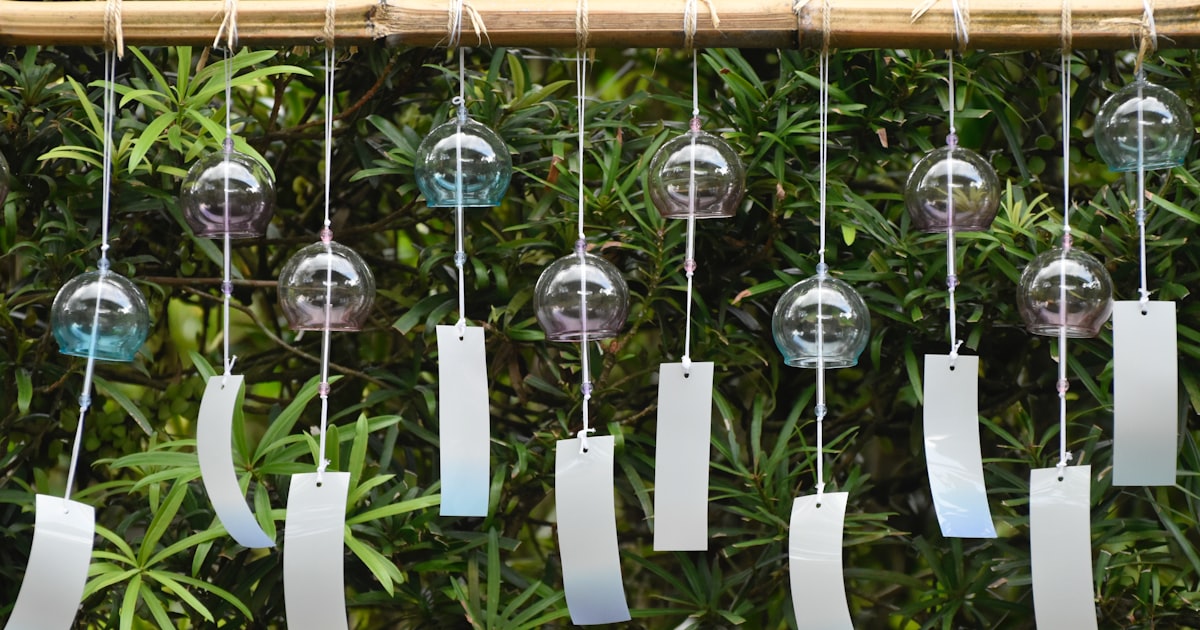
    A furin is a small bell, traditionally glass, iron, or ceramic, hung with a clapper and a dangling paper strip called a tanzaku that catches the wind and swings the clapper against the bell. In Japan, the sound is culturally coded as “cooling” — long before air conditioning, the high, thin ring was a psychological trick to make sweltering afternoons feel a few degrees lighter. That’s why furin appear everywhere from late June through late August and then quietly disappear once autumn starts: they’re a seasonal object (a kigo, in poetry terms), not a year-round decoration, and most Japanese people take theirs down once summer ends.

    The Main Types You’ll Find

    Not all furin sound or look the same, and knowing the differences helps you pick the right one:

    • Edo furin (江戸風鈴) — Hand-blown glass, made in Tokyo, with a deliberately rough, unground rim so the clapper produces a slightly irregular, higher-pitched ring. The inside is hand-painted with goldfish, morning glories, or fireworks motifs, applied from the inside of the glass so the color never rubs off. Expect ¥2,500–¥5,000 for a genuine hand-painted piece.
    • Nanbu tekki furin (南部鉄器風鈴) — Cast iron, made around Morioka and Oshu in Iwate Prefecture using the same technique as Nanbu ironware teapots. These have a deep, clear, bell-like tone that carries much further than glass, and they’re virtually indestructible. Prices run ¥3,000–¥8,000 depending on size.
    • Ceramic and Ryukyu glass furin — Ceramic ones (often from craft towns) have a duller, softer knock; Ryukyu glass furin from Okinawa are thicker, bubble-flecked, and colorful, with a lower tone than Edo glass. Both are typically ¥1,500–¥3,500.
    • Souvenir-grade furin — Mass-produced, machine-painted, sold for ¥500–¥1,500 in tourist shopping streets. Fine as a cheap gift, but the sound is thinner and the paint often sits on the outside, where it can wear off.

    Where to Buy Furin in Tokyo

    For the real thing, skip the airport gift shop and go to a specialist:

    • Shinohara Furin Honpo — A family workshop in Edogawa Ward (near Funabori Station on the Toei Shinjuku Line) that has hand-blown Edo furin since 1915. You can watch the glass-blowing and painting process, and during summer they often let visitors pick a blank bulb and watch it get painted to order. It’s a working workshop, not a polished retail store, so hours can be irregular — call ahead or check with your hotel concierge before making the trip.
    • Asakusa’s Nakamise-dori and side streets — The easiest option if you’re already sightseeing near Sensoji Temple. Quality varies from genuine Edo furin to cheap imports, so look for the painted-from-inside detail and ask if it’s hand-painted before paying mid-range prices.
    • Department store “furin ichi” fairs — Stores like Isetan Shinjuku, Nihombashi Takashimaya, and Mitsukoshi run temporary wind-chime fairs (usually on a rooftop or event floor) each June, gathering Edo, Nanbu, and Ryukyu furin from different regions in one place. It’s a good way to compare styles side by side before committing. Exact dates shift year to year, so check the store’s event calendar for the current summer.

    Kawagoe’s Wind Chime Festival: See Thousands in One Place

    If you want the full sensory experience rather than just a single chime, visit Hikawa Shrine in Kawagoe, a small city about 30–50 minutes from central Tokyo (Tobu Tojo Line from Ikebukuro, or Seibu Shinjuku Line from Seibu-Shinjuku Station). Each summer, roughly mid-July through mid-September, the shrine hangs around 1,700 to 2,000 furin from its walkways for the “Enmusubi Furin” display — a tunnel of chimes that ring in unison whenever the wind picks up. On weekend evenings the shrine strings paper lanterns among the chimes for an illuminated night version. Entry is free, and Kawagoe itself (nicknamed “Little Edo” for its preserved warehouse district) makes a pleasant half-day trip on its own, easily combined with a stroll through its old merchant street. Neither Kawagoe nor Morioka requires a rail pass for a single day trip, but if you’re planning a broader Kanto or Tohoku itinerary, it’s worth checking the Regional JR Rail Passes: JR East, JR West & Kansai Explained guide to see if a pass pencils out.

    Buying Nanbu Ironware Furin at the Source

    If cast iron is more your style, Morioka in Iwate is the source. Foundries there sell direct at their workshop shops, and the local craft center in central Morioka stocks pieces from multiple makers so you can compare tones before buying — the pitch varies noticeably between foundries and sizes. It’s a full-day trip from Tokyo via Tohoku Shinkansen, so it only makes sense if you’re already heading north; otherwise, look for Nanbu tekki furin at traditional craft shops in Tokyo or at the department store fairs mentioned above.

    Prices, Shipping, and Common Mistakes

    Budget: ¥500–¥1,500 for souvenir-grade glass, fine for gifts but skip if you want the authentic sound. Mid-range: ¥2,500–�¥5,000 for a genuine hand-painted Edo furin or a mid-size ceramic piece — this is the sweet spot for most travelers. Splurge: ¥6,000–¥10,000+ for a large Nanbu ironware furin or a named-artist Edo furin with detailed reverse-glass painting.

    The most common mistake is treating furin like a normal souvenir when packing. Glass ones are genuinely fragile — ask the shop to wrap it in bubble wrap and box it (most will, especially at specialist shops), and carry it in your hand luggage rather than checked baggage. Cast iron furin are heavy; factor that into your luggage weight if you’re checking bags for a flight home. The other mistake is losing or discarding the tanzaku paper strip: it’s not just decorative, it’s what catches the wind and makes the clapper move, so a furin without it will barely ring at all. If you’re already thinking about how to wrap and carry delicate purchases home, the same principles that apply to a traditional furoshiki wrapping cloth — snug wrapping, no loose rattling — work well for glass furin too.

    Finally, timing matters: shops sell down their furin stock through August and many stop restocking by early September since the item is explicitly seasonal, so if you’re traveling in autumn or winter, expect to find much thinner selection outside of a few year-round craft specialists. Furin pair naturally with other small, quintessentially Japanese purchases — if you’re already building a shopping list, guides on Japanese incense and Kutani ware porcelain cover two other traditional crafts that travel just as well.

  • Kutani Ware: Kanazawa’s Colorful Porcelain and Where to Buy

    Kutani Ware: Kanazawa’s Colorful Porcelain and Where to Buy

    Photo by Kazuo ota on Unsplash

    A Porcelain Style Born From Failure

    Kutani ware (九谷焼, Kutani-yaki) gets its name from Kutani, a small village in what is now the Kaga area of Ishikawa Prefecture, where kilns began firing porcelain around 1655. Production stopped abruptly roughly 70 years later — historians still argue over whether it was exhausted clay resources, financial collapse, or something else — and the kilns sat dormant for nearly 80 years. When production revived in the early 1800s under new kilns like Kasugayama and Yoshidaya, it kept the old name and the bold aesthetic that made the original ware famous. Today "Kutani-yaki" is produced across the wider Kaga region — Kanazawa, Kaga City, Komatsu, and Nomi — but Kanazawa, with its dense concentration of craft shops and easy access from Tokyo and Kyoto, is where most visitors will actually see and buy it.

    What to Look For: Five Colors and a Few Key Styles

    Kutani ware is instantly recognizable once you know the palette: gosai, the five colors of green, yellow, red, purple, and deep blue, applied in thick, glossy overglaze enamels that often cover almost the entire surface of a piece. This is a very different look from the airy blue-and-white porcelain of Arita — if you want a point of comparison, our guide to Arita & Imari covers Japan’s other major porcelain region, and seeing both styles side by side makes the difference click immediately. Within Kutani ware itself, dealers and collectors distinguish several sub-styles: Ao-Kutani (heavy on green and yellow, little to no red, from the original 17th-century kilns), the Yoshidaya revival style that echoes it, Iidaya (red-dominant with fine gold linework), and Shoza style, a Meiji-era export favorite dense with red and gold. None of this is essential to enjoy the ware, but knowing the terms helps you ask better questions in shops and understand why a similar-looking bowl can cost ¥3,000 in one store and ¥80,000 in another.

    Where to Buy in Kanazawa City

    You don’t need to leave central Kanazawa to find genuine, well-made pieces. A few reliable stops:

    • Ishikawa-ken Kanko Bussankan (Ishikawa Prefectural Products Center), right by the Ishikawa Gate entrance to Kenrokuen Garden. It’s a multi-floor showcase of regional crafts — Kutani ware, Wajima lacquerware, gold leaf — with clearly labeled kiln and artist names, generally open around 9:00–18:00 with no fixed closed day. It’s the easiest place to compare price points in one visit.
    • Kutani Kosen-gama, a working kiln and shop near Nomachi in central Kanazawa, where you can see pieces being painted and sometimes try hand-painting a small item yourself. Good for understanding how much labor goes into a single plate.
    • Higashi Chaya District, the old geisha quarter, has several craft boutiques mixing Kutani ware with gold-leaf goods; quality varies more here, so check for a maker’s mark before buying anything priced like a serious piece.
    • Kanazawa Station’s Rinto/Anto shopping arcades, useful for a last-minute purchase before your train — open into the evening, though selection leans toward smaller, giftable items.

    Day Trip to the Source: Kaga and Nomi

    If you have half a day to spare, the actual kiln towns are worth the trip. Nomi City has a cluster of studios collectively promoted as the Kutani Ceramic Art Village, plus a dedicated Kutani ware museum, while Kaga City (which includes the original Kutani village site) has working kilns that sell seconds and overstock at noticeably lower prices than city boutiques. Both are reachable by local train and a short bus or taxi ride from Kanazawa Station, but if you’re also planning to explore the wider Kaga countryside — hot spring towns, rural back roads — it may be worth reading our guide to renting a car in Japan and combining the pottery towns with a small road trip. Time it right and you can catch the Kutani Chawan Matsuri (Kutani Bowl Festival), an annual outdoor market held in early May in the Kutani area where kilns clear out inventory at a fraction of retail price — it’s popular with Japanese collectors, so go early in the day for the best selection.

    What to Expect to Pay

    Budget (under ¥3,000): chopstick rests (¥800–1,500), a single sake cup or guinomi (¥1,500–3,000), and small dishes make easy, packable souvenirs.

    Mid-range (¥3,000–15,000): a rice bowl, teacup, or small decorative plate typically runs ¥4,000–9,000; matched pairs or small sets push toward ¥15,000.

    Splurge (¥30,000+): artist-signed vases and large decorative plates from named kilns commonly sell for ¥30,000–150,000, and genuine antique Ko-Kutani or Yoshidaya pieces at specialist dealers can run well into six figures. Larger stores offer tax-free shopping on purchases over ¥5,000 (pre-tax) with your passport, which is worth asking about before you pay.

    Common Mistakes to Avoid

    Not everything colorful and floral in a Kanazawa souvenir shop is genuine hand-painted Kutani ware — cheaper transferware imitations exist, so flip a piece over and look for a kiln seal or maker’s mark, and don’t hesitate to ask staff whether a piece is tegaki (hand-painted) or printed. Second, porcelain is heavy and breakable: ask the shop for proper packing, or if you’re buying several pieces, ask about domestic courier (takkyubin) shipping to your next hotel or straight to the airport so you’re not carrying fragile boxes on trains. Third, heavily gold-decorated pieces are typically decorative only and shouldn’t go in a microwave or dishwasher, whatever the shop clerk may or may not mention. And finally, don’t leave your shopping until the last twenty minutes before a Shinkansen departure — station shops get crowded right before peak departure times, and careful gift-wrapping takes longer than you’d expect.

    Getting There and Practical Tips

    Kanazawa is about 2.5 hours from Tokyo on the Hokuriku Shinkansen, or roughly 2.5–3 hours from Osaka, Kyoto, or Nagoya via limited express trains. Local buses around the city accept regional IC cards — see our guide to IC cards beyond Tokyo if you’re not sure which one works where. There’s no strict best season for shopping itself, but pairing your visit with cherry blossoms at Kenrokuen in early April or autumn foliage in November makes for a prettier trip overall. If you’d rather wrap a delicate piece the traditional way instead of asking for plastic packaging, it’s worth picking up a furoshiki cloth beforehand — our guide to furoshiki wrapping covers a few knots sturdy enough for a boxed teacup.

  • Furoshiki: Japan’s Reusable Wrapping Cloth and How to Use One

    Furoshiki: Japan’s Reusable Wrapping Cloth and How to Use One

    Photo by freestocks on Unsplash

    Long before reusable tote bags became a global talking point, Japan already had one: the furoshiki. This square piece of cloth has been used for centuries to wrap, carry, and gift almost anything—bento boxes, sake bottles, gifts, even furniture. It folds flat into a pocket, costs less than a souvenir T-shirt, and doubles as a genuinely useful travel accessory. Here’s how to choose one, where to buy it, and how to actually use it once you’re home.

    What Is Furoshiki, and Why Should You Care?

    The word combines furo (bath) and shiki (to spread), a nod to its Edo-period use for bundling clothes at public bathhouses. Over time it became an all-purpose wrapping tool for merchants, gift-givers, and travelers, largely replaced by paper and plastic bags in the 20th century. In the last decade or two it’s had a genuine revival, partly on environmental grounds and partly because it’s simply elegant: one square of cloth, tied a few different ways, replaces gift wrap, a lunch bag, a wine carrier, and an emergency tote.

    For visitors, furoshiki make excellent souvenirs precisely because they’re light, flat, and useful the day you buy them—wrap your onsen toiletries in one, or use it to bundle up breakable souvenirs like Arita or Imari porcelain for the flight home.

    Choosing the Right Furoshiki: Sizes, Fabrics, and Prices

    Furoshiki are sold by size, measured in centimeters per side:

    • 45cm – the most common size, good for wrapping a small gift box, a bento, or a bottle of wine. Roughly ¥800–2,500 in cotton.
    • 68–70cm – wraps two bottles, a stack of books, or works as a small bag. Typically ¥1,500–4,000.
    • 90cm and up – large enough to use as an actual carry bag or to wrap bulky items. Often ¥3,000–8,000, more in silk.

    On fabric: cotton is the everyday choice—easy to wash, inexpensive, and fine for gifts or grocery-carrying. Rayon and chirimen (a crepe-textured synthetic or silk blend) have more drape, which matters for tying knots that need to hang nicely, like a bag handle. Pure silk furoshiki, often hand-dyed with traditional patterns, are the splurge option—expect ¥8,000–20,000 or more at specialty shops, and treat them as gift items or display pieces rather than daily carry cloths.

    Budget tip: 100-yen shops (Daiso, Seria) and Muji both stock simple cotton furoshiki for ¥300–1,500, which is plenty for practice and casual use. Save the specialty shops for a nicer pattern you’ll actually want to keep.

    Where to Buy Furoshiki in Japan

    Every department store in Japan (Takashimaya, Isetan, Daimaru) has a furoshiki section, usually near the gift-wrapping or tableware floor, with a wide range from ¥1,000 basics to museum-quality silk pieces. Kyoto is the spiritual home of the craft, thanks to the city’s textile history in the Nishijin district—look for small specialty shops selling hand-dyed cotton and chirimen furoshiki in traditional motifs like waves, cranes, and seasonal flowers.

    In Tokyo, old shitamachi neighborhoods are a good bet for traditional textile shops tucked between temples and old shopfronts—Yanaka in particular has small craft and textile stores worth a browse if you’re already there for the cats and senbei. If you’re shopping for kitchen-oriented cloths—large ones for wrapping food storage containers or bento—Kappabashi Kitchen Town carries practical cotton furoshiki alongside its restaurant-supply stock, generally cheaper than department store prices. Most independent shops open around 10:00 and close by 18:00–19:00; department store hours run later, typically to 20:00.

    Five Essential Furoshiki Wrapping Techniques

    You don’t need to learn dozens of knots—five will cover almost everything:

    • Otsukai-zutsumi (basic parcel wrap): Place the box diagonally in the center of the cloth, fold the near and far corners over the top, then tie the two side corners in a simple double knot on top. This is the default way to wrap a gift box or bento.
    • Bin-zutsumi (bottle wrap): Roll a bottle diagonally from one corner, then tie the two long ends around the neck with a bow. Makes a wine bottle look like an actual gift rather than something grabbed at the last minute.
    • Suika-zutsumi (round object wrap): Named for wrapping watermelons—gather the cloth around a round or irregular object and tie the four corners at the top, twisting the fabric taut as you go.
    • Kaban-zutsumi (bag knot): Tie two opposite corners together, then the other two, leaving one pair of knots longer to form a handle. With a 90cm cloth this becomes a genuinely usable tote.
    • Ichimai-zutsumi (flat wrap for books/laptops): Fold the cloth around a flat item like a book or tablet, tucking and tying at the ends—handy as an improvised padded sleeve.

    None of these require special skill; the whole point of furoshiki is that a few folds and one knot solve most wrapping problems.

    Common Mistakes First-Timers Make

    The most common issue is buying a cloth too small for the job—a 45cm furoshiki won’t wrap a bottle of sake comfortably, so size up if you’re unsure. The second is using slippery synthetic fabric for knots that need friction, like the bag handle knot; cotton or chirimen grips itself far better than smooth polyester. Finally, don’t over-tighten decorative bow knots meant to be untied by the recipient—Japanese gift-giving etiquette generally expects the cloth to be returned or reused, not kept wrapped around the item permanently.

    Best Season and Occasions to Use One

    Furoshiki have a natural place in Japan’s mid-year and year-end gift-giving seasons, ochugen (early-to-mid July) and oseibo (December), when boxed gifts of food or household goods change hands constantly—shops get noticeably busier with furoshiki and gift-wrap displays during these windows. Cherry blossom season is another good excuse: pack a bento in a furoshiki for a hanami picnic instead of disposable containers, a habit that pairs naturally with the general spirit of springtime outings described in our guide to Japan in spring. If you’re picking up sweets from a wagashi shop as a gift, ask to have the box wrapped in furoshiki rather than paper—it’s a small touch that locals notice, and pairs well with what you’ll learn in our beginner’s guide to wagashi.

    Bringing Furoshiki Home

    Pack a couple of cotton furoshiki in your suitcase before you fly home—they weigh almost nothing and can wrap fragile souvenirs, double as a laundry bag, or bundle up food picked up on a crawl through somewhere like Nishiki Market. Once home, a furoshiki makes a genuinely reusable gift wrap for birthdays and holidays, and it’s one of the few souvenirs from a Japan trip that gets more useful with time rather than sitting on a shelf.

  • Arita & Imari: Japan’s Historic Porcelain Towns and Where to Buy

    Arita & Imari: Japan’s Historic Porcelain Towns and Where to Buy

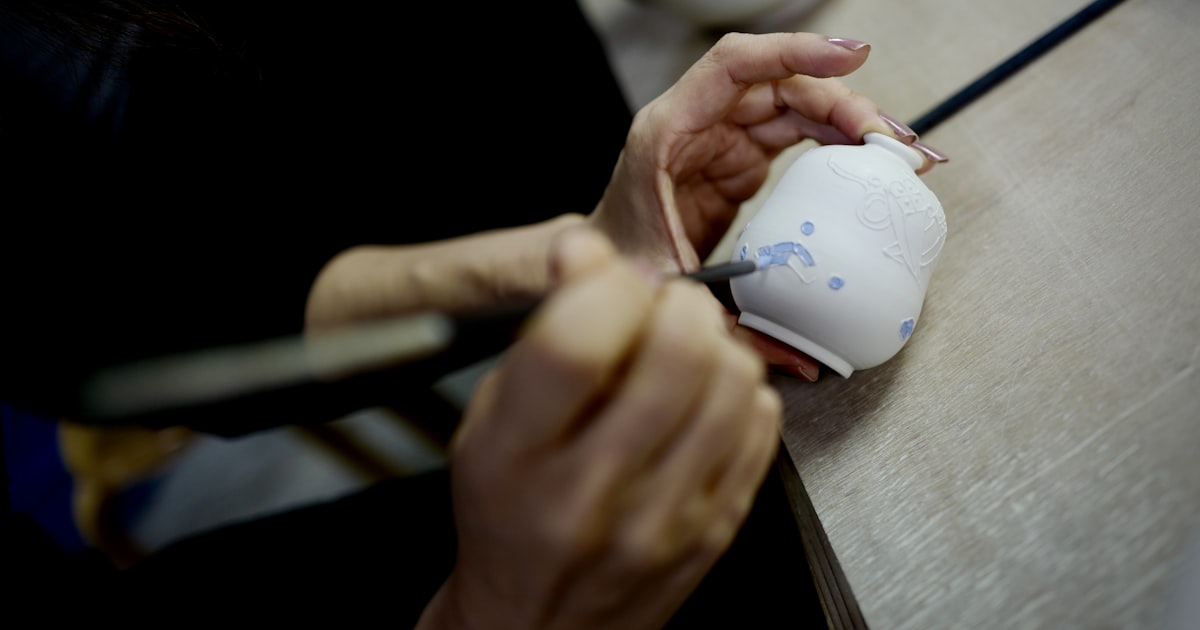
    Photo by Rob Maxwell on Unsplash

    Long before “Made in Japan” meant electronics, it meant porcelain. In the hills of Saga Prefecture on the island of Kyushu, the twin towns of Arita and Imari have been firing kilns since 1616, and the wares that came out of them once furnished the palaces of Europe. If you care about Japanese craft — the same instinct that draws people to wagashi or a well-poured hi-fi setup — this is one of the few places in Japan where you can watch a centuries-old industry still working at full speed, and buy directly from the kilns that make it.

    Why Arita and Imari Matter

    In 1616, a Korean potter working under the name Kanagae Sanbei (also known as Yi Sam-pyeong) discovered kaolin clay at Izumiyama, on the edge of what’s now Arita town. It was the first source of true porcelain-grade clay found in Japan, and it kicked off an industry that would dominate Japanese ceramics for the next four centuries. Arita became the production center; Imari, a port town a short distance away, became the shipping point. Dutch East India Company ships loaded Arita-made porcelain at Imari’s harbor and carried it to Europe, which is why the ware is still known internationally as “Imari ware” even though almost none of it was actually made in Imari itself.

    The most exclusive production happened at Okawachiyama, a small valley near Imari where the Nabeshima domain set up kilns making porcelain exclusively for the shogun and other daimyo. The valley was sealed off from outsiders, with guard posts at its entrance, to protect trade secrets — hence its nickname, the “secret kiln village.” That history is still visible today in the quality and formality of Nabeshima-style ware, which favors restrained, precisely painted designs compared to the more decorative Kakiemon and Imari-Nabeshima export styles.

    Getting There and When to Go

    Arita and Imari sit close together in Saga Prefecture, roughly 90 minutes from Fukuoka and about an hour from Nagasaki. From Hakata Station in Fukuoka, take a JR limited express (Kamome or similar) toward Sasebo/Nagasaki, then transfer to a JR Sasebo Line local train to Arita Station — the whole trip runs around 1.5–2 hours depending on connections. From Nagasaki, the trip is similar in length via the Sasebo Line. Imari is reachable from Arita by a short ride on the JR Sasebo Line or the private Matsuura Railway. If you’re travelling around Kyushu, a SUGOCA card covers all of these local trains — worth reading up on if you’re used to Tokyo’s Suica, since regional IC cards work a little differently; see IC Cards Beyond Tokyo for how they interoperate.

    Both towns are walkable once you arrive, but distances between kilns can be a few kilometers, so a rental bicycle (available near Arita Station for roughly ¥500–1,000 a day) or a short taxi hop is useful. Most kiln shops and galleries keep hours of around 9:00–17:00, and quite a few close one day a week (often Tuesday or Wednesday) — it’s worth checking a specific shop’s hours before making a special trip, since Arita is not a place where everything is open all the time. The single busiest week of the year is Golden Week (April 29–May 5), when the Arita Ceramics Fair takes over the town; if you want quiet browsing rather than crowds, aim for late spring or autumn outside that window. If your trip already lines up with cherry blossom season, our Japan in Spring guide has the broader timing context for late April travel.

    Arita: Shop Streets, Kilns and the Ceramic Museum

    Arita’s old shopping street, Uchiyama, runs along the former Nagasaki Kaido road and is lined with kiln shops, some in buildings over a hundred years old. Look for the tonbai walls tucked into side alleys — fences built from broken kiln bricks and discarded pottery shards, a distinctive bit of recycled architecture unique to this district.

    A few kilns worth prioritizing if you’re short on time:

    • Fukagawa Seiji — founded in 1894 and a longtime supplier to the Imperial Household; clean, formal designs, with a retail shop and small gallery.
    • Gen-emon Kiln — one of the oldest continuously operating kilns in Arita, known for indigo-and-white sometsuke patterns at relatively accessible prices.
    • Kakiemon Kiln — the home of the Kakiemon family’s signature milky-white nigoshide porcelain and overglaze enamel work; pieces here run from mid-range to serious splurge territory.

    For context before you shop, the Kyushu Ceramic Museum (Kyushu Toji Bunkakan), a short walk from Arita Station, has free admission and a strong permanent collection tracing the region’s ceramic history — closed Mondays. The Arita Ceramic Museum in the town center is smaller and charges a modest entry fee, but has good historical pieces if you want more depth. If you want a single, all-in-one stop, Arita Porcelain Park — a themed complex including a full-scale replica of Dresden’s Zwinger Palace — sells work from dozens of kilns under one roof, though prices there trend a bit higher than buying direct from individual kiln shops.

    Imari and Okawachiyama: The Secret Kiln Village

    Imari town itself is a working port with a pleasant riverside shopping arcade (Imari Otemon), but the real destination is Okawachiyama, about 15–20 minutes by taxi or local bus from Imari Station. This tiny valley of roughly thirty kilns still produces Nabeshima- and Imari-style ware, and it’s dense enough to explore entirely on foot in half a day. The valley is dotted with decorative ceramic-tiled lamp posts and gateposts made by local kilns — a nice reminder that this whole village is essentially a living showroom. An Okawachiyama Ceramic Museum near the entrance gives useful background on the domain-kiln system before you start browsing shops.

    Because Okawachiyama pieces historically served the shogunate, quality here tends to be high and prices reflect it — expect this to be your splurge stop rather than your bargain stop.

    The Arita Ceramics Fair: Japan’s Biggest Pottery Market

    Every year from April 29 to May 5, Arita hosts the Arita Ceramics Fair (Arita Tōki Ichi), a market that’s been running for well over a century. Roughly 4 kilometers of the main street fill with several hundred stalls from kilns and wholesalers across the region, and the crowds are enormous — this is one of Kyushu’s biggest annual events. The upside is pricing: because much of what’s sold is factory-direct or slightly imperfect stock (wake ari), you’ll find everyday tableware discounted well below gallery prices, sometimes to a few hundred yen per piece for seconds and overstock. The downside is that it’s crowded, hot, and not the setting for leisurely browsing of high-end pieces — if you want a calm, considered shopping experience with a kiln’s full range on display, visit outside the fair dates instead.

    What to Buy, What It Costs, and How to Ship It Home

    Budget (¥1,000–3,000): A single sake cup, small sometsuke (blue-and-white) dish, or chopstick rest from a mid-tier kiln shop. This is also the sweet spot for fair-week seconds.

    Mid-range (¥5,000–20,000): A rice bowl and matching dish set, a mid-size Gen-emon or Fukagawa Seiji piece, or a decorative sometsuke vase.

    Splurge (¥30,000 and well beyond): Kakiemon nigoshide ware, Nabeshima-style pieces from Okawachiyama, or signed work from a recognized kiln master — these can run into the hundreds of thousands of yen for museum-quality pieces, and some shops will happily show you what that tier looks like even if you’re not buying.

    Most established kiln shops in both towns are used to foreign visitors and can arrange international shipping for fragile purchases — ask before you buy, since packing porcelain safely in your own luggage is a real risk, not just a formality. Cash is still preferred at smaller family-run shops, though the bigger names accept cards. If you’re stacking a Kyushu itinerary, Arita and Imari pair naturally with a swing further south to the hot spring towns of Beppu and Yufuin.

    Common Mistakes to Avoid

    Don’t assume every shop is open every day — the smaller kiln-run shops especially keep irregular hours, and a wasted trip to a closed storefront is a common complaint from visitors who didn’t check ahead. Don’t try to see both Arita and Imari’s Okawachiyama district in a single rushed afternoon; budget a full day if you want to do both properly, since transfers between them eat more time than the map suggests. Don’t buy your only pieces during the Golden Week fair if you actually want to see a kiln’s full catalog — the fair is about volume and bargains, not curated selection. And don’t skip asking about shipping: porcelain is heavy and breakable, and a shop that ships regularly to the US or Europe will pack it far better than you can in a suitcase.