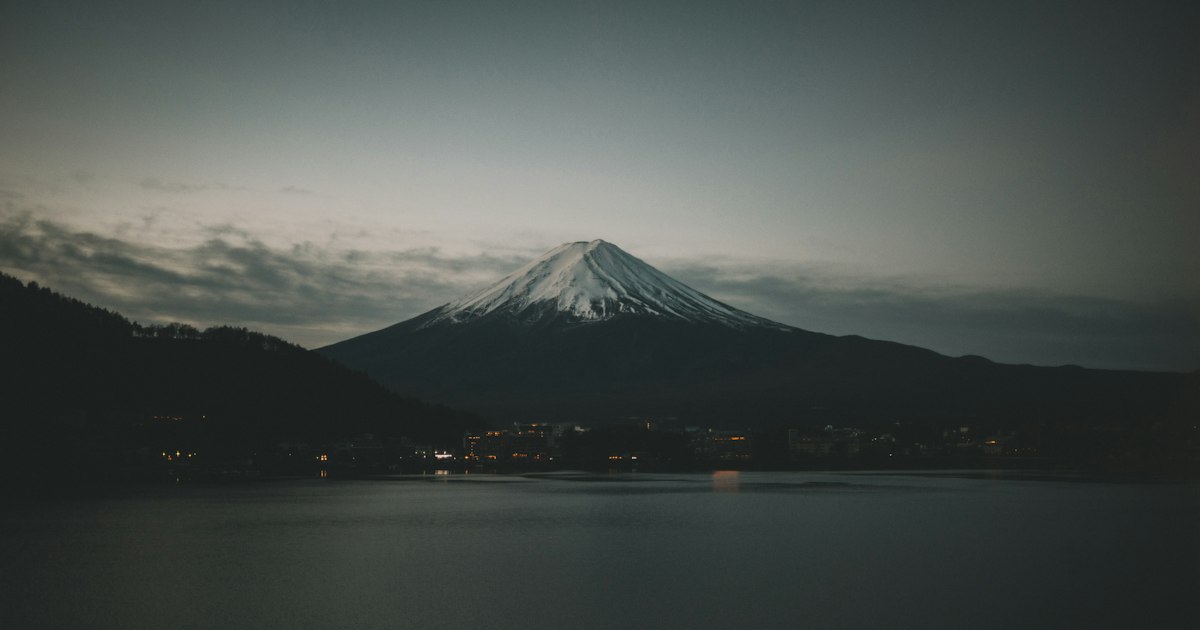
Photo by Clay Banks on Unsplash
Oshino Hakkai is a small farming village between Lake Kawaguchiko and Lake Yamanaka where eight spring-fed ponds sit scattered among thatched-roof houses, soba shops, and water wheels. On a clear morning, the ponds mirror Mount Fuji almost exactly, and the water itself — filtered through decades of volcanic rock — is cold, startlingly clear, and still used by the village for drinking, growing wasabi, and raising trout. It’s an easy half-day add-on to a Fuji Five Lakes trip, but the name trips people up: this isn’t one lake, it’s eight separate ponds spread across a village you walk between, and knowing that in advance changes how you plan the visit.
What Oshino Hakkai Actually Is
“Hakkai” means eight seas, referring to the eight ponds that are said to represent the eight peaks of Mount Fuji in miniature. The water originates as snowmelt and rain on Fuji’s slopes, sinks into the mountain’s layered lava rock, and resurfaces here decades later as spring water, filtered along the way. The ponds and the surrounding area are registered as one of the component sites of the Fujisan UNESCO World Heritage listing (the cultural site covering Mount Fuji and its associated places of worship and scenic spots), which is part of why the village has preserved its old farmhouses and water wheels rather than redeveloping around them.
The ponds themselves are not huge — some are little more than a clear pool a few meters across — but the clarity is the draw. Trout hover visibly in several of them, and on a still, cold day the surface reflects Fuji’s snow-capped peak directly behind the village rooftops.
Getting There from Tokyo and Kawaguchiko
From Tokyo, the most direct option is a highway bus from Shinjuku Bus Terminal (Busta Shinjuku) bound for Kawaguchiko or Yamanakako, which takes roughly 2 hours and costs around ¥2,000–2,500 one way; some routes stop directly at “Oshino Hakkai,” while others require continuing from Kawaguchiko Station.
From Kawaguchiko Station itself, local Fujikyu buses run toward Yamanakako and Gotemba and stop at Oshino Hakkai in about 20–25 minutes, for a fare of around ¥500 each way. Buses are not super frequent (roughly every 30–60 minutes depending on the season), so check the timetable at the station rather than assuming you can just show up. A rental car from Kawaguchiko takes about 20 minutes and gives you more flexibility, including continuing on to Lake Yamanaka afterward — useful if you’re also chasing viewpoints at different times of day.
Walking the Village and the Ponds
The ponds are spread across the village rather than clustered in one park, so plan on 45–90 minutes of walking if you want to see most of them. The busiest and most photographed is Waku-ike, right in the center near the main row of soba shops and souvenir stalls, where trout swim in a pool clear enough to see every scale. Okama-ike, a short walk further out, is often cited as the deepest and clearest of the eight and feels noticeably quieter than the central pond. Sokonashi-ike (“bottomless pond”) is smaller but popular precisely because of its name and the way its depth seems to disappear into the clarity of the water.
Most of the ponds and the paths between them are free to walk. A couple of spots inside private gardens or alongside shops charge a small entry fee, typically in the ¥200–400 range, often with a rule that you buy something (soba, a drink) in exchange for access — this is normal in the village and not a scam, just how small family-run plots have historically financed upkeep. There’s no single gate or opening hour for “Oshino Hakkai” as a whole since it’s a real village; individual shops and the small folk museum generally run from around 9:00 to 17:00, and the ponds themselves are viewable outdoors at any hour, though early arrival matters more for the view than for access (see below).
Best Time to Visit for the Fuji View
Mount Fuji is routinely hidden by cloud from late morning onward, especially in the warmer months, so arriving by 8:00–9:00 gives you the best odds of a clear view before haze builds up. Winter mornings (December–February) tend to have the sharpest, clearest air and the best chance of seeing the full snow-capped peak, though it’s cold enough that gloves and a proper coat matter. Spring brings cherry blossoms to parts of the village, and mid-to-late autumn (roughly late October through mid-November) adds red and gold foliage around the ponds, which photographs well against the water. Summer gives you the most lush green scenery but the lowest odds of an unobstructed Fuji view and the highest heat — if you’re visiting then, the arm covers and cooling towels guide is worth a look before a day of walking between ponds with no real shade.
Common Mistakes
- Expecting one lake. First-time visitors sometimes arrive expecting a single scenic lake and are confused to find a working village with ponds tucked between shops and private land. Budget time to walk, not just stand and look.
- Arriving at midday. This is the single biggest reason people leave without a Fuji photo — by 11:00 or noon, cloud cover frequently rolls in around the peak, especially from spring through autumn.
- Skipping the outer ponds. Most tour buses only stop long enough for visitors to see Waku-ike in the village center. If you have your own transport or extra time, Okama-ike and Deguchi-ike are quieter and worth the short additional walk.
- Not checking bus return times. Local buses thin out in the afternoon and on weekdays; confirm your return bus time before you start wandering so you’re not stuck waiting an hour longer than planned.
Food, Souvenirs, and Combining the Trip
The spring water feeds the local soba shops directly, and a bowl of hand-made soba here (roughly ¥900–1,400) is a reasonable lunch stop built around the same water that fills the ponds. Some shops also serve nijimasu (rainbow trout) grilled with salt, and fresh wasabi grown using the cold spring water shows up in a few restaurants nearby — a milder, grated version rather than the paste most visitors know. For souvenirs, look for local honey, pickles, and small ceramic or woodcraft items sold by the shops lining the main path; prices for small items generally run ¥500–1,500.
Because Oshino Hakkai sits between Kawaguchiko and Yamanaka, it pairs naturally with a longer Fuji Five Lakes day: ponds in the morning, then Lake Kawaguchiko’s ropeway or Lake Yamanaka’s lakeside views in the afternoon. If you’re staying overnight near Kawaguchiko to catch sunrise views the next day, it’s worth reading up on what a traditional ryokan breakfast actually includes if your lodging serves one, and packing a sleep mask and earplugs, since many lakeside guesthouses in this area are small, older wooden buildings with thin walls.
On cost: a budget visit (bus both ways, free ponds, one bowl of soba) runs under ¥3,000 per person. A mid-range day adds a paid pond or two, the small folk craft museum, and a trout lunch, landing around ¥4,000–6,000. A splurge version swaps the bus for a private taxi or car rental from Kawaguchiko (roughly ¥8,000–10,000 one way for a taxi), letting you time your arrival for sunrise and linger at the quieter outer ponds before the day-trip crowds arrive.