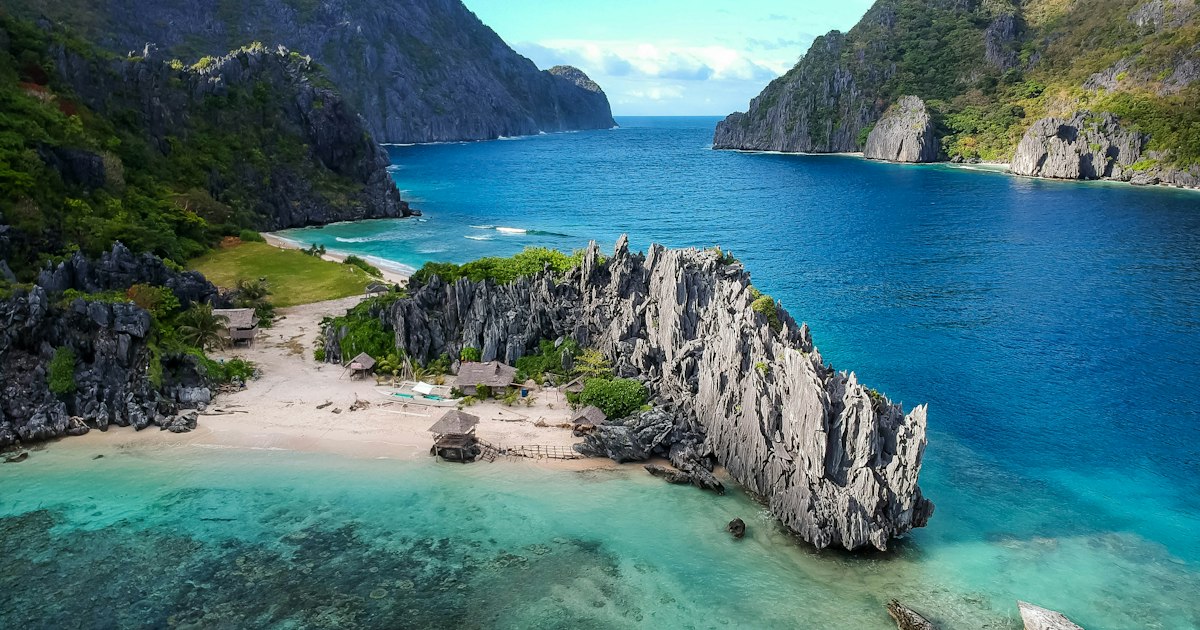
Photo by Cris Tagupa on Unsplash
Technically, Kozushima is part of Tokyo. Practically, it feels like a different country: a volcanic cone rising out of cobalt-blue water, a few hundred fishing boats, and almost no tourists. It’s one of the farthest-flung of the Izu Islands, reached by overnight ferry or a tiny propeller plane, and the payoff for the extra travel time is free open-air hot springs, water clear enough to see 20 meters down, and beaches that stay nearly empty even in August. If you’ve already done Tokyo, Kyoto, and Osaka and want something that still feels undiscovered, this is it.
Where Is Kozushima and Why Go
Kozushima sits roughly 180 km south of Tokyo, past Izu Oshima and Niijima in the Izu Islands chain. It’s small — about 18 km of coastline and a resident population under 2,000 — and dominated by Mount Tenjo, an 572m extinct volcano whose obsidian deposits are rare enough in Japan that the island has built a small museum around them. The appeal isn’t a checklist of sights; it’s the combination of free coastal hot springs, swimmable water the color of a postcard, and a slow pace that’s hard to find anywhere this close to central Tokyo.
Getting There
There are two realistic options, and both require planning ahead because this isn’t a same-day trip.
- Overnight ferry: Tokai Kisen runs large ferries from Takeshiba Pier in Tokyo, departing around 22:00 and arriving at Kozushima the next morning after calling at other Izu islands along the way. The trip takes roughly 9-10 hours. Second-class (unreserved floor space) fares run around ¥9,000-11,000 one way; private cabins cost more. Check the Tokai Kisen schedule before booking anything else — sailings aren’t daily year-round, and services to Kozushima are among the first to be cancelled when seas are rough, since it’s one of the more exposed islands on the route.
- Flight: New Central Airservice flies small propeller planes from Chofu Airport in western Tokyo to Kozushima in about 50 minutes. One-way fares are typically in the ¥18,000-20,000 range, flights are limited to a few per day, and baggage allowance is tight on these small aircraft. Weather cancellations happen here too.
Either way, build in a buffer. If rough seas or fog cancel your return sailing or flight, you may be stuck an extra day — travel insurance that covers trip disruption is worth having for this one.
Free Hot Springs You Can Soak In Anytime
This is Kozushima’s signature feature: several open-air hot spring baths on the coast that cost nothing to use. The best known is Akazaki Yuhodo Onsen, a rotenburo built into the black volcanic rock on a walking path at the island’s southern tip, with the ocean essentially as your view. There’s also a free bath near the port at Mamashita, convenient if you want a soak right off the ferry.
A few things catch first-timers off guard. These are public, mixed-gender, outdoor baths, so swimsuits are required — leave the full-nude bathing etiquette for a conventional ryokan onsen. Soap and shampoo are not allowed since the water drains straight back into the sea. And there’s no staff on site, so bring your own towel and expect basic, unheated changing areas rather than a spa experience. Akazaki in particular is best visited in daylight; there’s no lighting at night, and the rocks are uneven.
Beaches and the Island’s Famously Clear Water
Kozushima’s water visibility is the reason local dive shops get repeat customers from mainland Japan. Maehama, the main beach near the port, has pale, fine-grained sand and shallow turquoise water that’s calm enough for casual swimming. Some visitors do find small amounts of star-shaped shell fragments mixed into the sand on quieter coves — nowhere near the volume you’d see on Okinawa’s famous star-sand beaches, but a fun detail if you’re looking closely.
The more striking sight is Tataki, a narrow sandbar connecting the main island to a small rocky islet, with water so clear and blue it looks tropical rather than 180 km from Tokyo. Snorkeling gear is worth packing or renting locally; several operators also run half-day boat trips, and if you want to fish rather than just look at the water, the kind of small-boat charter covered in this guide to booking a local fishing boat charter is exactly the setup you’ll find around Kozushima’s port.
Sun exposure on the water is intense with little shade on the beaches, so the kind of UV arm covers and cooling towels described in this guide to Japan’s anti-sunburn gear are genuinely useful here, not just a city-street accessory.
Best Time to Visit
June through September is swimming and diving season, with the warmest water and the best visibility. August is also typhoon season for the Izu Islands, which is when ferry cancellations are most frequent — if your schedule is tight, early-mid summer or September tends to be more reliable than peak August. Spring (April-May) and autumn bring fewer crowds and pleasant hiking weather on Mount Tenjo, and the free hot springs are arguably at their best in cooler months, when sitting in warm water with an ocean view is a genuine contrast rather than just a hot day made hotter. Winter is quiet and cold-feeling, but the baths stay open and sailings, while less frequent, still run in calmer stretches.
Common Mistakes to Avoid
- Treating it as a day trip. Between the overnight ferry schedule and limited flights, most itineraries need at least two nights to make the travel worthwhile.
- Not checking the sailing schedule for cancellations. Kozushima is one of the farther islands on the route and gets cancelled first in rough weather — have a backup plan or flexible return date.
- Forgetting a swimsuit for the free baths. Unlike most onsen, these are not nude bathing, and there’s nowhere to buy one on short notice outside the port area.
- Relying on cards. Cash is still the safer bet for minshuku, small restaurants, and scooter rentals; ATMs are limited to the post office and a couple of spots near the port.
- Driving without knowing the rules. If you rent a scooter or kei car to reach Akazaki or Tataki, the same regulations apply as anywhere in Japan — it’s worth a quick read of this rundown on speed cameras and fines for foreign drivers before you set off on unfamiliar island roads.
Where to Stay and What It Costs
Lodging is almost entirely small, family-run minshuku rather than chain hotels. Budget travelers can expect around ¥8,000-10,000 per person per night including two meals — often featuring the day’s catch. Mid-range options are small pensions or guesthouses with private bathrooms and sometimes an ocean view, running ¥12,000-18,000 per night. There’s no real luxury resort tier on the island; the closest thing to a splurge is chartering a dive boat or fishing trip for the day, or booking a room with a private outdoor bath. Scooter or small-car rental runs roughly ¥3,000-5,000 per day and is the most practical way to reach the free onsen and farther beaches, since public transport is minimal.
Since you’ll likely be on an overnight ferry at least one way, and minshuku walls can be thin, it’s worth packing the kind of sleep mask and earplugs covered in this guide to sleeping better in Japanese accommodation — the ferry’s shared floor seating and small-town quiet both benefit from a bit of extra sound and light control.
Kozushima won’t suit travelers who want convenience stores on every corner or a packed sightseeing itinerary. What it offers instead is a free hot soak with an ocean view, water clear enough to forget you’re in Tokyo at all, and the kind of quiet that’s increasingly rare anywhere within reach of the capital.