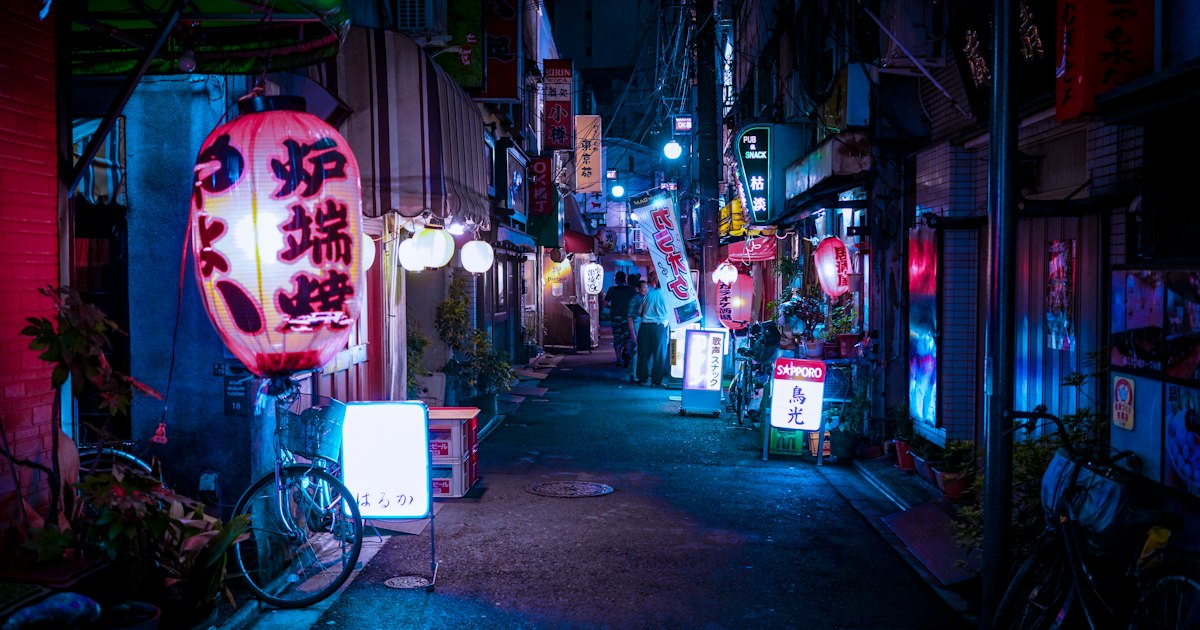
Photo by Alex Knight on Unsplash
Walk into almost any small bar district in Japan after dark and you’ll hear it before you see it — the rapid-fire plastic clatter of soft-tip darts hitting a lit-up electronic board, followed by a synthesized voice calling out a score in Japanese or English. Electronic darts is one of Japan’s biggest low-key nightlife hobbies, and unlike a lot of “local culture,” it’s genuinely easy for a visitor to walk in off the street and play a game with strangers tonight. Here’s how the scene actually works and how to get a board.
Why Electronic Darts Took Over Japan’s Bars
Steel-tip darts never really caught on in Japan, but soft-tip electronic darts exploded in the 2000s once networked machines arrived. The boards are segmented plastic (not bristle), scored automatically by sensors, and connected online so every throw gets logged to your personal rating. That rating system is the whole reason the hobby is social rather than solitary — regulars check their rank, challenge people a level above them, and bar staff will often pair up two strangers who are hovering near the same machine. It’s one of the few nightlife activities where showing up alone is completely normal.
DARTSLIVE vs. PHOENIX: The Two Networks
Nearly every machine in the country runs on one of two competing networks, DARTSLIVE or PHOENIX. Functionally they’re similar: you tap or insert a membership card (sold at the counter for roughly ¥300–500), and the machine tracks your “rating” across every bar in Japan using that network. You don’t need a card to play — paying per game in cash works fine — but if you think you’ll play more than once during your trip, buying a card is worth it since it also unlocks English-language menu screens on most newer cabinets. Standard game formats are “01” (usually 501 or 301, reduce your score to zero) and “Cricket” (close out numbers 15–20 and the bullseye). Staff will usually set the machine to English rules on request.
Where to Find Dart Bars
Tokyo’s densest concentrations are in Shibuya, Shinjuku (especially around Kabukicho), Roppongi, and Ikebukuro — small bars, often one flight up or down a narrow building, with one to four machines. Osaka’s equivalent districts are Namba and Umeda. The fastest way to find one on the ground is to search “dart bar” or the Japanese term ダーツバー on Google Maps for your neighborhood; look for a signboard listing drink prices with a small dartboard icon.
If you’d rather skip bar etiquette entirely, two chains make it foolproof. Round1 Stadium, a nationwide amusement complex with bowling, karaoke, and arcade games, has dart machines in most locations, pays per play with coins or a prepaid card, and needs zero Japanese — just point at the machine. HUB, the British-style pub chain with branches across Tokyo, Osaka, and Yokohama, has dart boards in many of its locations and a drinking culture that welcomes solo foreign customers; it’s a gentle entry point before you try a smaller independent bar.
What It Actually Costs
Budget venues (HUB, chain izakaya with a dart corner): drinks run ¥500–800, and dart play is often free or a flat ¥100–200 per game loaded via coin slot.
Mid-range independent dart bars: expect a table or seat charge of ¥500–1,000 per person (sometimes waived if you order within the first 30 minutes), plus ¥100–200 per game, plus drinks at standard bar prices. Many run a one-drink minimum rather than a strict cover.
Splurge: dart bars with private VIP booths or late-night “deep night” charges (after 1am or so) can push the per-person cost to ¥2,000–3,000 for a few hours including drinks — still cheap compared to a night out in most Western cities.
Round1 is the exception to all of this: pure pay-per-play, roughly ¥100–300 per game, no cover, no drink minimum.
How to Actually Join a Game
The social mechanics are simpler than they look. If a machine is free, you can just walk up and play solo — nobody will bother you. If you want to join locals, the easiest opening is to stand near an occupied board, watch a round, and ask “ご一緒にどうですか?” (go-isshoni dō desu ka — “want to play together?”) or just a friendly “one more?” in English — darts terminology is almost entirely English loanwords (bull, ton-eighty, bust), so the language barrier during actual play is minimal. Staff behind the counter are usually happy to broker an introduction if you tell them you’re new to a venue, especially on a quieter weeknight when regulars are more likely to be standing around waiting for a fourth player.
There’s no tipping — don’t try, it just confuses people. Buying a round of drinks for the group you played with is the polite way to say thanks if you had a good game.
Best Timing and Common Mistakes
Weeknights (Monday–Thursday), especially 7–9pm before the after-work crowd peaks, are the easiest time for a visitor to get a board without waiting and to find locals willing to slow down and explain the scoring. Weekend nights are livelier but many bars run informal weekly leagues — if you walk in and a whole bar is quietly focused on a tournament bracket on a screen, that’s a league night, and it’s polite to ask before claiming a machine rather than assuming it’s open play.
A few other things that trip up visitors:
- Bars serving alcohol require everyone present to be 20 or older — bring ID, even if you look well past it.
- Steel-tip darts from home won’t work on these boards; the tips need to be soft plastic or they’ll damage the sensors (and staff will stop you).
- Some smaller, older dart bars still allow smoking, grandfathered under Japan’s 2020 indoor smoking law for small existing venues — worth checking a bar’s signage if you’re sensitive to it.
- Don’t assume play is free just because the bar charges a seat fee; ask “ダーツは一回いくらですか?” (how much per game?) before you start running up a tab on a shared machine.
Bringing the Hobby Home
If you get hooked, a basic soft-tip dart set (board-compatible tips, shafts, flights) costs ¥2,000–5,000 at sporting goods stores or electronics chains, and most airlines treat a boxed set as normal checked or carry-on luggage. If you’d rather order gear before you fly out and have it waiting at your hotel, the Rakuten Ichiba guide for overseas shoppers covers how to navigate checkout and shipping as a non-resident. And if darts bars are turning your evening into a wider “weird Japanese games” crawl, the traditional beanbag game covered in our otedama guide is a nice daytime contrast, while Street Kart Tokyo makes a fun same-night pairing if you want more adrenaline before you settle into a bar stool. If rain catches you between venues, remember you can grab a cheap umbrella on the spot through iKasa rather than buying one you’ll never use again.