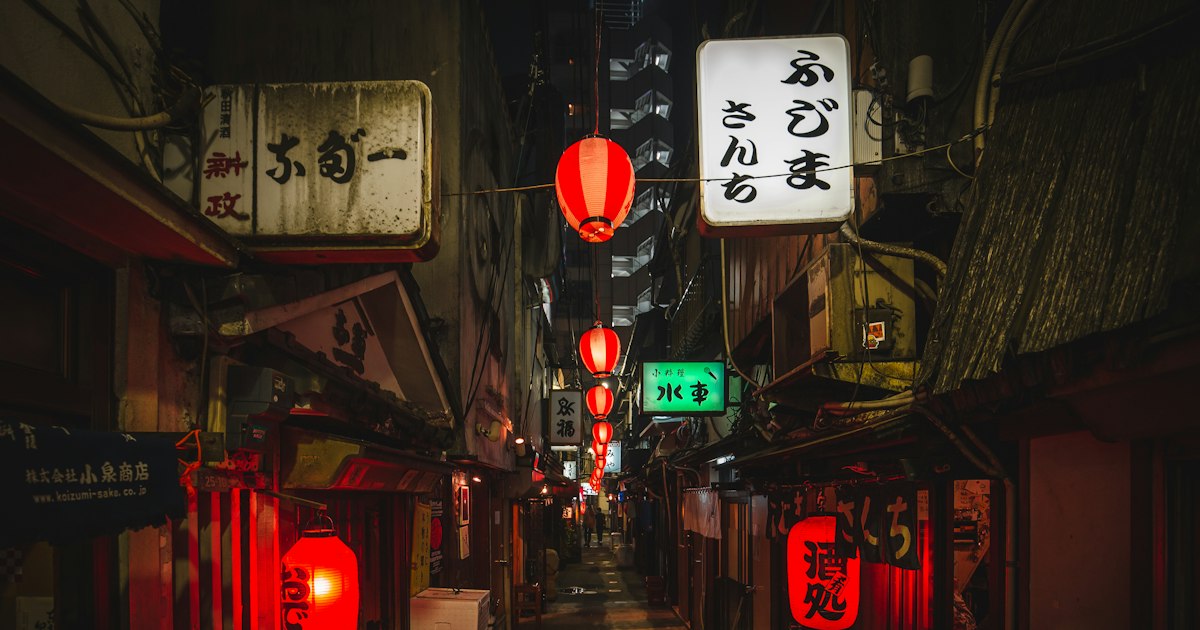
Photo by Denys Nevozhai on Unsplash
For years, “Robot Restaurant” was the single most-asked-about night out in Tokyo — a strobe-lit, taiko-drumming, neon-robot spectacle in the back alleys of Kabukicho that showed up on every “weird Japan” listicle. If you’re planning a trip and have that exact show on your list, there’s some bad news and some good news: the original venue is gone, but Tokyo’s appetite for over-the-top theatrical dinner shows very much isn’t. Here’s what actually happened, what’s still running, and how to pick an experience that’s worth your yen.
What happened to the original Robot Restaurant
The Robot Restaurant that opened in 2012 in Shinjuku’s Kabukicho district — the one with the oversized LED robots, taiko drums, and bikini-clad dancers riding dinosaurs — shut its doors for good in the years following the pandemic. It never fully recovered from the 2020–2021 closures, and the venue has not reopened under that name. If you see a site offering “Robot Restaurant Tokyo tickets,” treat it with caution: it’s either reselling tickets to an unrelated show, listing a venue that no longer exists, or trying to capture search traffic from the old brand’s fame. Always check a venue’s official site and recent reviews (within the last few months) before paying for anything labeled “Robot Restaurant” — don’t rely on a listing’s photos alone, since many still use old publicity shots.
This matters because Kabukicho is also Tokyo’s densest nightlife touting zone. Street staff offering to walk you to a “robot show” or “bar with a show” are almost always commission-based touts, and some have led tourists into bars with inflated bills. The rule in Kabukicho is simple: never follow someone who approaches you on the street with a show or bar offer, no matter how official their lanyard looks.
What’s still running: Tokyo’s current theatrical dinner shows
The closest thing to that same “loud, costumed, only-in-Japan” energy today is the ninja-themed restaurant chain with locations in Akasaka and Shinjuku. Staff dressed as ninja perform tableside sleight-of-hand (coin and card tricks, small “magic” flourishes before your dishes arrive), the interior is built like a dim stone maze with hidden doors, and the food is a genuine multi-course dinner rather than a snack box — expect course menus in the roughly ¥8,000–15,000 per person range, before drinks. Reservations are essential, especially for Friday/Saturday evening slots and parties of 4+; same-day walk-ins can usually only be fit in on weeknights.
A second category worth knowing about is the fantasy/anime-adjacent themed restaurants (Alice in Wonderland-style interiors, costumed staff, elaborate plated desserts) scattered around Shinjuku, Ginza, and Omotesando. These lean more “immersive themed dining” than “stage show,” with no fixed performance time — you’re paying for the room and the photo ops as much as the food, with set courses typically in the ¥4,000–7,000 range. They’re a good lower-stakes option if a full-blown show isn’t your priority.
For something more purely theatrical with less emphasis on the meal, look at dinner-cruise shows on Tokyo Bay and hotel dinner shows (often jazz, magic, or variety acts paired with a set dinner) — these rotate seasonally and are usually booked through the hotel or cruise operator’s own site rather than general ticket resellers.
How the format actually works
Whichever venue you choose, the shape of the evening is fairly consistent: you check in 15–30 minutes before your reserved slot, are seated at communal or semi-private tables, and the show runs in waves between courses rather than as one continuous performance — so there’s usually a 60–90 minute total runtime once you include the meal. Photography without flash is almost always allowed and even encouraged (staff will often offer to take your photo), but video with flash or using tripods/selfie sticks is commonly restricted because it blocks other guests’ sightlines in small rooms. Alcohol is typically available but not always included in the course price — check this before you order, since drink packages can add ¥2,000–4,000 per person.
Budget, mid-range, and splurge options
- Budget (~¥4,000–6,000): Themed cafés and fantasy-restaurant lunch sets — lighter on spectacle, but a real taste of Tokyo’s costumed-dining culture without a dinner-show price tag.
- Mid-range (~¥8,000–12,000): Standard ninja-restaurant dinner course, or a hotel dinner show with a set menu and a 45-minute variety act.
- Splurge (¥15,000+): Premium course menus with private-room options, Tokyo Bay dinner cruises with a full show, or add-on experiences like a personal ninja “lesson” before the meal.
Across all tiers, book 1–2 weeks ahead in peak travel seasons (late March–April for cherry blossoms, July–August summer break, late December–early January); weeknight slots in quieter months (June, September, February) are far easier to get same-week and sometimes slightly cheaper.
Common mistakes first-timers make
The biggest one is booking “Robot Restaurant” tickets from a third-party site without checking whether the venue still exists — read the most recent reviews, not just the star rating, since defunct listings can sit online for years. The second is underestimating travel time within Kabukicho or Akasaka: these districts are a maze of narrow streets and basement entrances, and Google Maps pins can be off by a block, so budget an extra 10–15 minutes to find the actual door. Third, people often skip eating beforehand assuming the “dinner” course will be filling — portions at theatrical dinner shows are usually modest since the point is the performance, so eat a proper meal earlier if you’re hungry. Finally, don’t assume every show is kid-friendly; some ninja and fantasy-restaurant shows involve loud noise, strobe lighting, or mildly suggestive theming, so check the venue’s own age guidance if you’re bringing children.
Getting there and timing your visit
Akasaka is served by the Akasaka or Akasaka-mitsuke stations (Chiyoda, Ginza, and Marunouchi lines), a short walk from most venues; Shinjuku locations are a 5–10 minute walk from Shinjuku Station’s east exit through Kabukicho. Both areas are safe to walk through in the evening but busy and bright — if you need a restroom before or after the show, train stations and konbini are your most reliable option in these districts, and it’s worth knowing the general tactics for finding one in Japan before you’re stuck between stops. Evening shows typically run two or three seatings between 5:30pm and 9:30pm, so if you’re also sightseeing that day, plan the show as your last stop rather than squeezing it between other activities — rushing from a shrine visit across town rarely leaves enough buffer once trains and check-in time are factored in.
If the robot-and-neon aesthetic was the actual draw for you rather than the dinner format, it’s worth noting that Tokyo’s tokusatsu and kaiju fandom runs much deeper than one restaurant — there’s a whole retail and collectible side to that world worth exploring, covered in our guide to hunting Ultraman, Kamen Rider, and Godzilla merch in Japan. And if you want a different kind of immersive, participatory Tokyo night out that doesn’t involve food at all, Japan’s real-life escape room craze scratches a similar “only in Japan” itch and is easy for English-speaking tourists to join.