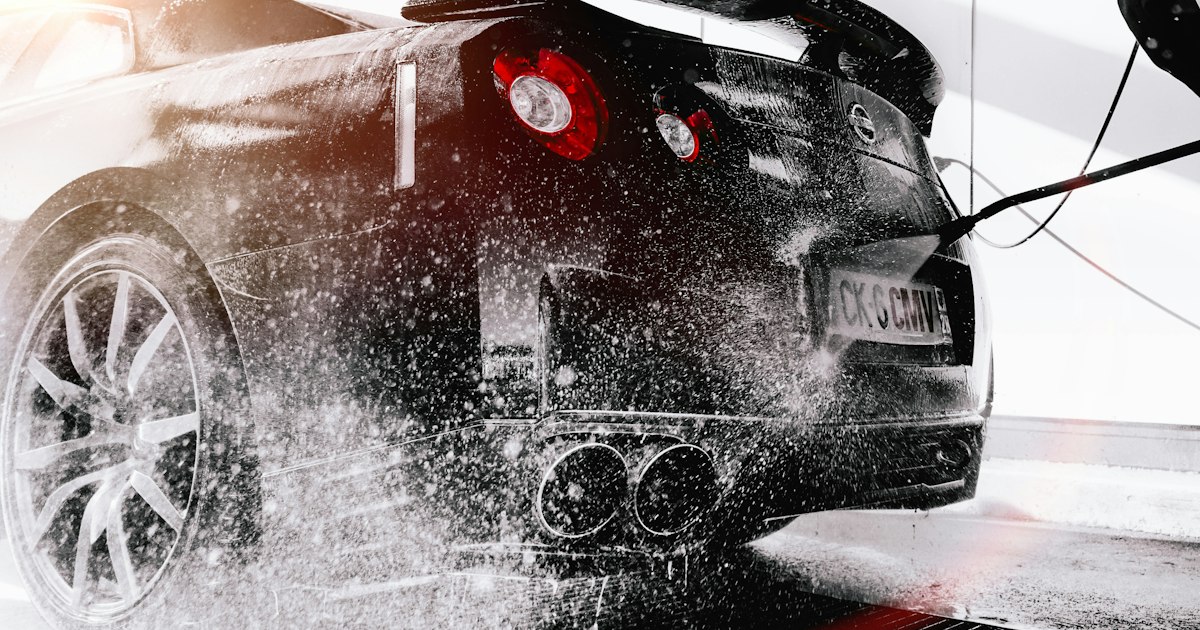
Photo by Clément M. on Unsplash
If you’ve rented a car in Japan for a road trip through the countryside, you’ve probably spotted them: small, unmanned concrete lots with a row of hoses, a coin slot, and a lot of kanji you can’t read. These are koin sensha-jou (コイン洗車場), Japan’s ubiquitous self-service coin car washes, and they’re one of the most useful — and most confusing — pieces of roadside infrastructure for a foreign renter. Here’s how to actually use one without wasting coins or your rental return time.
What a Coin-Operated Car Wash Actually Is
Unlike the drive-through tunnel washes common in North America, Japanese coin car washes are DIY bays you pull your car into and operate yourself with 100-yen coins. Each bay typically has a wall-mounted control panel with buttons for different functions — high-pressure rinse, foam shampoo, wax/coating, and sometimes an undercarriage spray — plus a separate coin-operated vacuum unit nearby for the interior. There’s no attendant, no reservation, and usually no English signage, but the process is mechanical enough that you can figure it out on sight once you know what to look for.
They’re almost always open 24 hours, since there’s no staff to schedule. You’ll find them standing alone on suburban roads, attached to gas stations, and occasionally at highway rest stops (SA/PA) on long-distance routes.
Finding One as a Renter
Coin car washes are rare in dense city centers — Tokyo’s 23 wards or central Osaka — simply because there’s no space for the bays, which is the same reason street parking barely exists there either (see our guide to coin parking in Japan for the bigger picture on how space-constrained Japanese cities handle cars). You’ll have much better luck once you’re outside the city: along national highways (kokudo), near interchanges, and in suburban and rural areas where land is cheaper.
The easiest way to find one is Google Maps — search “コイン洗車” (koin sensha) or just “car wash” and switch to Japanese results if nothing shows up in English. Maps will show you distance, and most listings include a small photo so you can preview the bay layout before you arrive. If you’re already driving and see a sign with the kanji 洗車 (sensha, “car wash”), that’s your cue — it’s usually blue-and-white signage visible from the road.
Step-by-Step: How to Use the Bay
- Pull all the way in — pull forward until your front tires line up with the floor markings, leaving room behind you for the hose to reach every panel.
- Read the panel before inserting coins — buttons are usually labeled with pictograms (a spray nozzle for rinse, bubbles for shampoo, a shiny car for wax) even where the text is Japanese-only. Figure out which button you want before you pay, because the timer starts the moment you insert a coin.
- Insert 100-yen coins — most machines only take ¥100 coins, not ¥500 or bills, and each coin buys roughly 60–90 seconds depending on the function selected. Higher-priced functions like foam wax eat time faster per coin.
- Work quickly and keep feeding coins — the hose cuts off abruptly when time runs out, often mid-rinse, so have a stack of coins ready rather than running back and forth to a change machine.
- Finish with the vacuum — the coin-operated vacuum is usually a separate unit at the edge of the lot, also ¥100 per few minutes, with an air blower option for dashboard and vents.
What It Actually Costs
Budget (¥300–¥500): A quick high-pressure rinse to blast off mud or dust — two or three ¥100 coins, no soap.
Mid-range (¥600–¥1,000): Full cycle — foam shampoo, rinse, and a basic wax — plus a few minutes of vacuuming. This is the realistic cost for cleaning a rental before a return.
Splurge (¥1,200+): Adding undercarriage spray (useful after driving snow-country roads where salt has been laid down) and a glass-coating wax option, which some machines offer as a premium button.
Bring at least ten ¥100 coins (¥1,000) if you’re doing a full wash — running out mid-cycle with wet soap on the car and no change machine nearby is a common and avoidable frustration. A growing number of newer machines accept IC cards (Suica/Pasmo) or PayPay, but don’t count on it; coins are still the universal fallback.
Best Times and Seasons to Go
Spring (March–May) is peak pollen (kafun) season in much of Japan, and cars parked outside overnight pick up a visible yellow-green dust — a quick rinse makes a real difference if you’re returning a rental that’s been sitting. Early summer brings the rainy season (tsuyu, roughly June into mid-July), when mud splash from wet roads accumulates fast on wheel arches and lower panels. If you’ve driven through a ski region in winter, road salt on the undercarriage is worth rinsing off before a long return drive, both for your own view out the windshield and because salt residue is one thing rental staff do sometimes flag.
Avoid weekend late mornings near popular rural tourist routes — that’s when coin wash bays near highway interchanges get a short queue of locals doing their weekly wash. Weekday mornings or evenings are nearly always empty.
Common Mistakes Renters Make
- Not scouting the panel before paying — accidentally mashing the wax button when you only wanted a rinse burns through coins fast.
- Standing the nozzle too close to the car — the pressure is genuinely strong; holding it too near the glass or body panels can streak or even chip old paint/stickers. Keep it roughly arm’s length away.
- Forgetting the vacuum is a separate machine — don’t assume the wash bay cleans the interior; the vacuum unit is a different coin slot entirely, usually a few meters away.
- Blocking the bay — these are single-car stalls with no waiting area; if someone’s parked outside scrolling their phone, they’re probably waiting for you to finish.
- Bringing your own car shampoo — these machines dispense their own soap through the hose; outside products won’t work with the equipment and can clog the nozzle.
Do You Even Need to Wash Before Returning a Rental?
For most Japanese rental companies (Toyota Rent-a-Car, Nippon Rent-a-Car, Times Car, and similar), a normal amount of road dust or light rain spatter is completely fine and does not need to be washed off before return — it’s priced into the rental the same way minor wear is. Where a coin wash genuinely earns its ¥500–¥1,000 is after driving on unpaved forest roads, through heavy mud, after a day at the beach (sand and salt air), or through snow country with road salt — visibly dirty cars, especially ones returned muddy or with interior sand, can occasionally trigger a cleaning fee that costs more than the wash itself would have. When in doubt, a quick ¥300 rinse ten minutes before you drop the car off is cheap insurance, and it’s a far less stressful errand than, say, hunting for a public restroom on the same road trip — both are unmanned, self-serve, and far more common once you know the signage to look for.