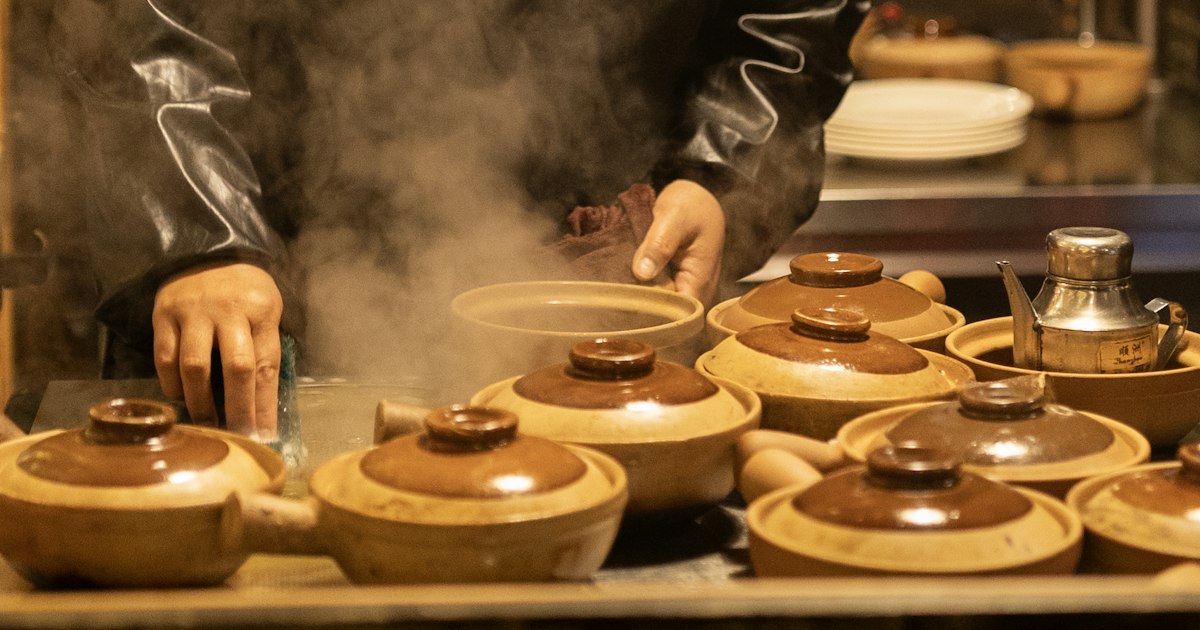
Photo by Alien eyes on Unsplash
If you’ve eaten nabe hot pot at a Japanese inn or watched rice steam under a heavy lid at a countryside restaurant, you’ve already met a donabe. These thick-walled clay pots are one of the most useful souvenirs you can bring home from Japan — not a decorative trinket, but a cooking tool you’ll actually reach for every winter. Here’s how to pick the right one, what it should cost, and where to buy it without getting stuck with a cracked pot or an unusable one back home.
What Is a Donabe, Exactly?
Donabe (土鍋, literally “earth pot”) are unglazed or partially glazed stoneware pots fired from clay that’s specifically chosen for its heat resistance and micro-porosity. That porous clay body is the whole point: it heats slowly and unevenly absorbs moisture, which is why donabe-cooked rice and hot pot broth taste rounder and less harsh than the same dish made in metal. The two most famous production regions are Iga, in Mie Prefecture, where the local clay contains ancient diatomaceous (fossil-shell) deposits that make it exceptionally heat- and shock-resistant, and Mashiko, in Tochigi Prefecture, known more broadly for folk-craft (mingei) pottery. You’ll also see Banko-yaki from Yokkaichi, which specializes in kyusu teapots and donabe alike.
Shapes fall into a few categories: round nabe pots for hot pot and soup, donabe rice cookers with a tight-fitting lid and steam vent (sold under names like Nagatani-en’s “Kamado-san”), and smaller individual-serving pots used for things like clay-pot rice similar to what you’d find in a kamameshi ekiben box.
Budget, Mid-Range, and Splurge: What to Expect to Pay
Prices vary by size and region, but as a rough guide:
- Budget (¥2,500–¥5,000): Small 1–2 person nabe pots, often mass-produced Banko-yaki, sold at department store kitchen floors or Kappabashi shops. Fine for solo cooking or a starter pot.
- Mid-range (¥6,000–¥15,000): Genuine Iga-yaki or Mashiko-yaki pots in the 3–4 person size, including well-known rice-cooking donabe like the Nagatani-en Kamado-san (around ¥10,000–¥14,000 depending on size).
- Splurge (¥18,000–¥40,000+): Large family-size hot pot donabe from established kilns, artist-signed pieces, or sets with matching individual serving bowls. Some double-walled “flameproof” Iga pots designed for direct open-flame searing fall in this range too.
A useful rule: if a donabe at a souvenir shop costs under ¥2,000, it’s likely decorative earthenware, not built for repeated direct-flame cooking. Ask explicitly whether it’s for “chokka kanetsu” (direct heat) use before buying.
Where to Buy in Tokyo: Kappabashi Kitchen Town
The easiest place for visitors to buy a quality donabe is Kappabashi Dougu Street (合羽橋道具街) in Asakusa, Tokyo’s wholesale kitchenware district. It’s a 5-minute walk from Tawaramachi Station (Ginza Line) or about 7 minutes from Asakusa Station. Most shops open around 9:30am–6pm and many close on Sundays, so check before a weekend trip. Look for Nitten or Kamata Kougei, both of which stock Iga-yaki and Banko-yaki donabe in multiple sizes and will let you compare lid fit and wall thickness in person — something you can’t judge well online. Staff are used to tourists and many stores will pack pots for flight travel on request.
While you’re in the kitchenware mindset, it’s worth pairing a donabe purchase with other traditional cooking gear sold in the same district, like binchotan charcoal for tabletop grilling, or browsing a broader home and kitchen buying guide if you’re furnishing a kitchen rather than just adding one pot.
Buying Direct From the Source: Iga and Mashiko
If you have time for a day trip, buying from the kiln town itself gets you better selection and sometimes factory-outlet pricing. Nagatani-en in Iga City, Mie Prefecture, runs a showroom and shop near its kilns (access: Kintetsu line to Iga-Kambe, then the Iga Railway to Uenoshi Station, roughly 2.5–3 hours from Osaka or Nagoya). Mashiko, Tochigi, is reachable by a direct highway bus from Tokyo (Asakusa/Tokyo Station area, roughly 2 hours, around ¥2,600 one-way), and its main shopping street, Jonaizaka, is lined with independent potters’ shops where prices and styles vary store to store. Mashiko also hosts large pottery markets in early May and early November, when hundreds of kilns set up stalls with discounted seconds and one-off pieces — the best time to visit if price matters more than brand.
Seasoning and Caring for Your Donabe (Common Mistakes)
The single biggest mistake first-time owners make is skipping “metsuke” — seasoning a new, unglazed donabe before its first real use. Fill it with water (or thin rice-starch water, left over from rinsing rice) up to about 80% full, bring it very slowly to a simmer over low heat, and hold it for 20–30 minutes before letting it cool completely. This seals the porous clay and significantly reduces the chance of cracking later. Other common errors:
- Thermal shock: Never add cold ingredients or water to an already-hot pot, and never set a hot donabe directly on a cold or wet countertop — the sudden temperature change is the most common cause of cracks.
- Storing it wet: Unglazed clay absorbs moisture; dry the pot fully (air-dry for several hours, not just toweling it) before storing, or it can develop musty odors or mold.
- Assuming it works on induction: Most traditional donabe are gas/direct-flame only. If you cook on an induction stove at home, look specifically for IH-compatible donabe (Ginpo is a well-known brand that makes these) or buy a separate induction converter plate.
Fine surface crackling (called “kanyu”) in the glaze is normal and not a defect — it’s part of how these pots age.
Best Time to Buy and Use One
Donabe season in Japan runs roughly October through March, when hot pot (nabe) is on every izakaya menu and department stores roll out seasonal displays, making it the easiest time to find a wide selection. It’s also when you’re most likely to actually eat from one — many minshuku guesthouses serve dinner hot pot tableside in a donabe set over a portable burner, which is a good way to handle one before committing to a purchase.
Getting It Home Safely
Donabe are heavy and genuinely fragile in transit. For checked luggage, wrap the pot in clothing inside its box and pad the lid separately, since lids are the most common casualty. Many Kappabashi and kiln-town shops offer international shipping (EMS or a forwarder) for a fee, which is worth paying for anything over the mid-range price point rather than risking it in a suitcase.