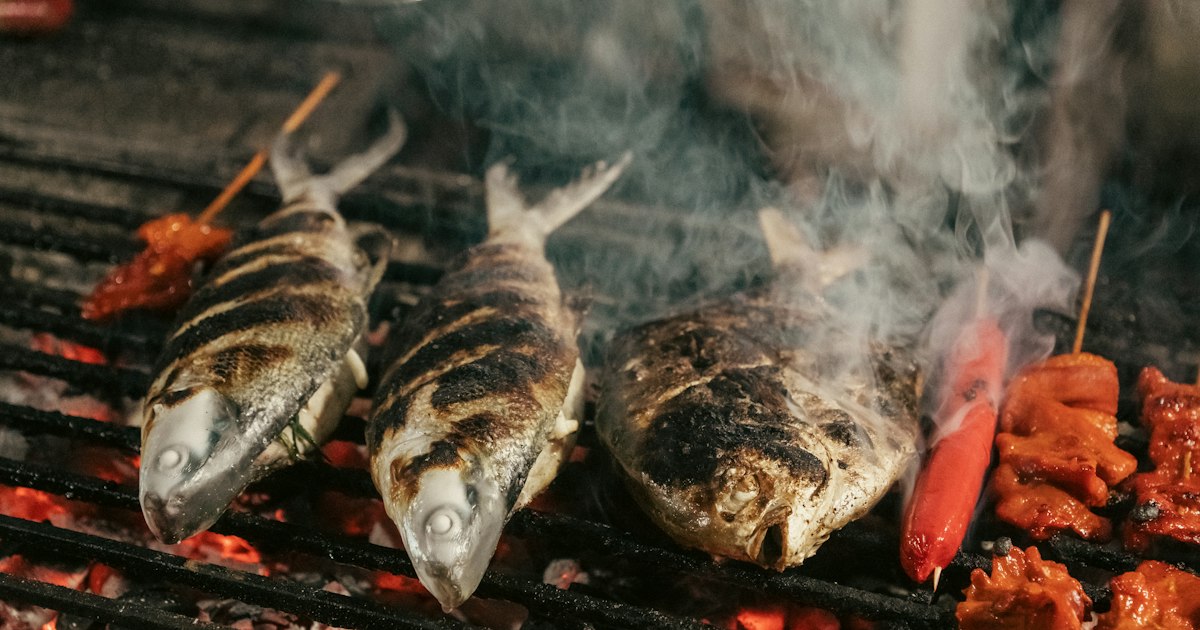
Photo by Jan Ledermann on Unsplash
Every September, something shifts on Japanese menus: whiteboards outside izakaya start advertising “sanma” in thick brush strokes, supermarket fish counters pile up silver, torpedo-shaped fish on ice, and the smell of charcoal smoke drifts out of narrow backstreet grill restaurants. Sanma — Pacific saury — is one of Japan’s most anticipated autumn foods, prized less for rarity than for its brief, perfect window of fattiness. If you’re visiting Japan between late summer and early winter, it’s one of the easiest, cheapest ways to eat like a local.
What Is Sanma and Why Autumn Is Its Season
Sanma (秋刀魚, literally “autumn sword fish”) is a slender, silver-skinned fish related to mackerel, caught in the cooler waters off Japan’s Pacific coast as it migrates south in autumn. The fish fattens up considerably as it prepares for its migration, so sanma caught from roughly late August through October is noticeably oilier and more flavorful than sanma caught earlier or later in the year. Peak quality is generally considered to be September into early October, though it stays on menus into December.
It’s worth knowing that sanma catches have declined sharply over the past decade due to changing ocean conditions and increased fishing by other countries along its migration route, so prices have risen and portions sometimes shrunk compared to what older guidebooks describe. A single fresh sanma at a supermarket might run anywhere from 250 to 500 yen depending on the year’s catch, noticeably more than the under-100-yen prices it once had. It’s still good value — just don’t expect the rock-bottom prices of the past.
How It’s Traditionally Served
The classic preparation is shioyaki — salted and grilled whole over charcoal or a gas grill until the skin blisters and crisps. Traditionally this is done over binchotan charcoal, the same long-burning, high-heat charcoal used across Japanese grilling; if you’re curious about the fuel itself, our guide to binchotan charcoal covers why it’s prized for yakitori and fish alike. The fish is served whole, head and tail on, usually with a mound of grated daikon radish (daikon oroshi) and a wedge of sudachi or lemon. You squeeze the citrus over the fish, dab a little soy sauce onto the daikon, and eat the flesh off the bone in sections, working from the back toward the belly, where the richest, fattiest meat sits near the dark-colored innards.
A genuine point of debate among locals is whether to eat the innards (harawata). They’re bitter and slightly metallic, closer to the taste of good dark chocolate or strong coffee than to typical fish liver — many sanma enthusiasts consider them the best part, but it’s completely normal to leave them if you’d rather not. No one will think less of you either way.
Common Mistakes Visitors Make
The biggest mistake is ordering sanma out of season expecting the same experience — a sanma teishoku (set meal) in April or May will be a thinner, blander fish, often frozen from the previous autumn’s catch. Another common misstep is trying to fillet the whole fish with a knife and fork; sanma is meant to be eaten by hand or with chopsticks, lifting the top fillet off the central bone in one motion, flipping, and repeating on the other side. Don’t be shy about asking staff for a demonstration — it’s a common enough question that most servers at traditional restaurants are used to it. Finally, many visitors skip the grated daikon, but it’s there to cut the fish’s oiliness, not just as decoration — use it.
Where to Try Grilled Sanma
Budget (900–1,500 yen): Teishoku-ya (set-meal diners) and casual izakaya are the easiest and cheapest places to try sanma shioyaki, usually served with rice, miso soup, and pickles. Chains and neighborhood diners across Tokyo and other cities put it on the autumn menu without much fanfare — look for handwritten signs reading 秋刀魚 or さんま outside storefronts from September onward.
Mid-range (1,500–3,000 yen): Izakaya specializing in robata-yaki (fireside charcoal grilling) will often grill sanma to order in front of you, sometimes offering it alongside other seasonal autumn fish, paired well with a glass of shochu — if you want to go deeper into that pairing, our guide to Kagoshima’s shochu culture explains the regional spirit many izakaya pour alongside grilled fish.
Splurge (4,000 yen+): Kappo-style restaurants and kaiseki courses in autumn frequently feature sanma as a seasonal course — sometimes simmered in soy and ginger (tsukeni) rather than grilled, or served as sashimi/tataki when the fish is fresh enough, a preparation rarely offered outside sanma season.
Festival sanma (often free, but expect lines): Several Tokyo neighborhoods hold sanma festivals in early September, most famously around Meguro, where tens of thousands of fish — often donated by fishing towns in Iwate and Miyagi — are grilled over open charcoal braziers on the street and handed out, frequently free of charge, to anyone willing to queue. Lines can form hours before grilling starts, so arrive early and expect the smoke and crowds to be part of the experience rather than an inconvenience.
Tohoku’s Sanma Ports
If you’re traveling in the Tohoku region during autumn, towns like Kesennuma and Ofunato in Iwate and Miyagi prefectures are historically among Japan’s biggest sanma landing ports, and local market restaurants there serve it about as fresh as it gets. If your itinerary has you anywhere near Japan’s autumn holiday travel window, it’s worth checking our guide to Silver Week, since the crowds and train congestion of that holiday cluster often overlap with peak sanma season and are worth planning around.
A Related Seasonal Fish
If grilled whole fish turns out to be your thing, sanma isn’t the only seasonal catch worth seeking out — in summer, river restaurants across Japan serve ayu (sweetfish) in a very similar salt-grilled style. Our guide to grilled ayu and the riverside restaurants that serve it is a good next stop if you’re building a trip around Japan’s seasonal grilled-fish calendar rather than just its autumn stretch.
Sanma rewards timing more than hunting down a specific famous shop — if you’re in Japan between September and November, you’re very likely to come across it without even trying. The better goal is simply ordering it when you see it, rather than waiting for a “best” version that mostly comes down to how recently the fish was caught.