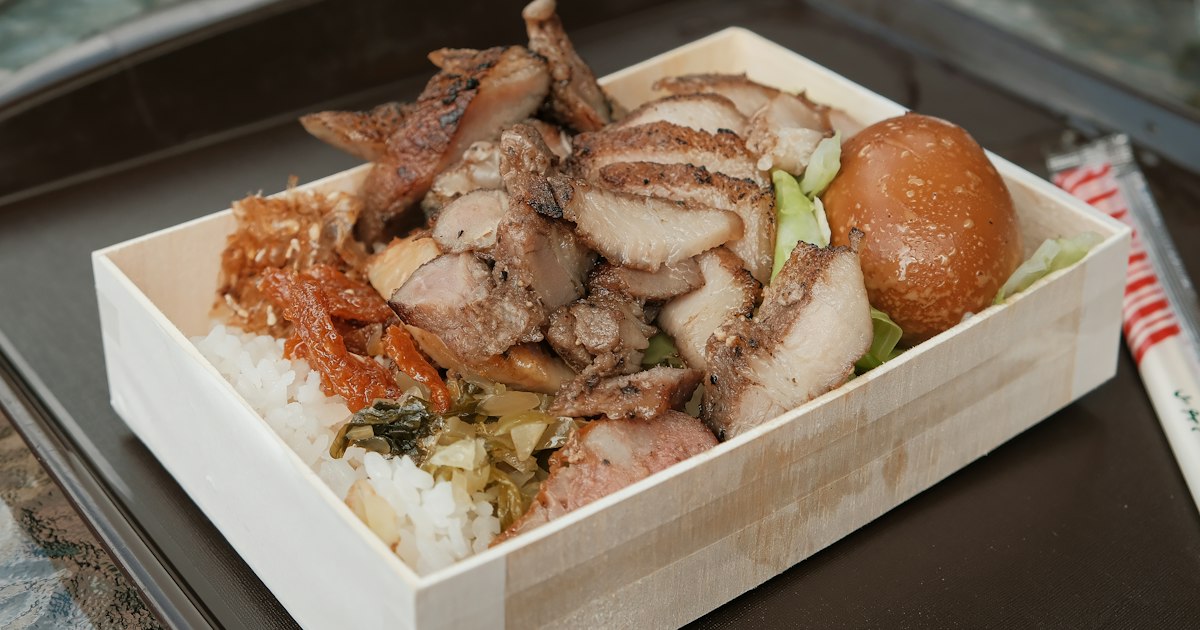
If you’ve ever walked a Japanese train platform and seen someone carrying a small ceramic jar wrapped in a furoshiki cloth, you’ve spotted kamameshi — rice cooked and served in a miniature clay pot, usually topped with chicken, mushrooms, bamboo shoots, or seasonal mountain vegetables. Unlike most ekiben (station bento), which come in disposable trays, kamameshi comes in a real earthenware pot you can take home. That single detail turned a regional specialty into one of the most collected souvenirs on Japan’s rail network, and a handful of stations have built their reputation on it for decades.
What Kamameshi Actually Is
Kamameshi (釜飯) means “rice cooked in a kama,” the traditional iron or clay cooking pot. The ekiben version is a single-serving clay jar, usually unglazed on the outside and lined with rice that’s been steamed with dashi, soy sauce, and mirin, then layered with toppings — chicken and shiitake, scallop, eel, chestnut, or whatever the region is known for. The rice at the bottom often has a light scorched layer (okoge), which is considered the best part by regulars. It’s eaten cold or at room temperature, straight out of the pot, with the disposable wooden spoon tucked under the lid.
The appeal isn’t really the flavor alone — it’s the ritual. You buy it from a platform vendor or station shop minutes before departure, settle into your seat, and the pot is still faintly warm. It travels well, doesn’t leak, and the clay container means the rice stays more textured than anything packed in plastic.
The Station That Started It: Yokokawa
Oginoya’s kamameshi at Yokokawa Station in Gunma Prefecture, on the old Shin’etsu Main Line, is the one that made the dish famous nationwide. It launched in 1958 as a way to give travelers something substantial during the long, slow climb over the Usui Pass before the bullet train era. The line itself was eventually truncated and the steep mountain section closed, but Oginoya kept selling the kamameshi, and it’s now sold at the Usui Pass Railway Heritage Park (the old Yokokawa Station site), at several service areas along the Kan-etsu and Joshinetsu expressways, and in department stores around Tokyo and Gunma. A standard chicken kamameshi runs about ¥1,080–¥1,200. If you’re driving between Tokyo and Nagano, the Yokokawa service area on the Joshinetsu Expressway is the most reliable place to get one hot off the shelf, typically available from around 8:00 am to 7:00 pm, though hours vary by outlet.
Other Stations Worth Seeking Out
Kamameshi culture spread well beyond Gunma, and each region has its own version:
- Takasaki Station (Gunma) — also an Oginoya stronghold, with platform kiosks selling the same chicken kamameshi for Shinkansen travelers connecting from Tokyo.
- Yokawa and Karuizawa — smaller vendors near the old Usui Pass route sell seasonal variations, including mountain vegetable and matsutake mushroom versions in autumn.
- Toyama Station — famous for masu (trout) and shirami kamameshi using Toyama Bay seafood, priced around ¥1,300–1,500.
- Yonezawa Station (Yamagata) — beef kamameshi made with locally raised Yonezawa beef, a splurge option at roughly ¥1,500–¥1,800.
Most of these are sold from platform kiosks (often open only around peak departure times, roughly 7:00 am–8:00 pm) or from the station’s ekiben corner inside the ticket gates, which usually keeps standard station hours.
How to Buy and Eat It Without Fumbling
Ekiben vendors move fast and lines form right before popular limited-express and Shinkansen departures, so the easiest approach is to buy 15–20 minutes before your train rather than racing the platform at the last minute. Most kamameshi are sold already assembled and ready to eat cold, so there’s no heating step to worry about — just peel back the paper or cloth wrap, lift the lid, and the wooden spoon is usually tucked inside or taped to the side.
Common mistakes:
- Assuming it’s reheated on board. It isn’t. Kamameshi is designed to be good at room temperature; don’t go looking for a microwave.
- Tossing the pot. The clay container is reusable — people genuinely wash and keep these for soup, rice storage, or as a small planter. If you’re flying home, wrap it well; it’s heavier than it looks and the lid can chip.
- Buying right as the train pulls up. Popular flavors (chestnut and seasonal mushroom versions in particular) sell out before the last departures of the day.
- Expecting it everywhere. Kamameshi isn’t a universal ekiben — it’s concentrated in Gunma, Nagano, Toyama, and Yamagata. Don’t expect to find it at, say, a Kyushu station.
Best Season and Timing
Kamameshi is sold year-round, but autumn (late September through November) is the best window because that’s when mushroom and chestnut toppings appear — the mountain vegetable and matsutake versions are seasonal limited editions at several Gunma and Nagano outlets. Winter versions sometimes feature root vegetables and heartier broths. If you’re building an autumn itinerary around food, it pairs naturally with other seasonal trips — plum and foliage-season day trips like Dazaifu’s plum blossom season follow the same logic of timing travel around what’s in season, and if you’re traveling during Japan’s autumn holiday cluster, it’s worth checking Japan’s Silver Week guide since stations get noticeably busier and ekiben sell out faster.
Budget, Mid-Range, and Splurge Picks
For a quick comparison while planning a rail itinerary:
- Budget (~¥900–¥1,100): Standard Oginoya chicken kamameshi at Yokokawa service area or Takasaki Station — the most widely available version.
- Mid-range (~¥1,300–¥1,500): Toyama’s seafood kamameshi, worth the stop if you’re already changing trains there en route to Kanazawa.
- Splurge (~¥1,500–¥1,800): Yonezawa beef kamameshi, a reasonable one-time treat if you’re passing through Yamagata on the Yamagata Shinkansen.
None of these require a reservation — they’re grab-and-go purchases, which makes them one of the easiest “real” regional meals to work into a tight train-transfer schedule. If you’re stringing together a food-focused rail trip, it’s worth pairing a kamameshi stop with other portable regional specialties, the same way grilled ayu sweetfish is tied to specific riverside towns rather than available everywhere.
Getting There
Yokokawa and Takasaki are both reachable from Tokyo via the JR Joetsu Shinkansen and local lines (Takasaki is about 50 minutes from Tokyo Station on the Shinkansen; Yokokawa requires a further local transfer or a short drive). Toyama is about 2 hours from Tokyo on the Hokuriku Shinkansen. Yonezawa is roughly 2 hours from Tokyo on the Yamagata Shinkansen. All of these are easily added as a stop on a longer Tohoku, Hokuriku, or Nagano-bound itinerary rather than a dedicated day trip — the kamameshi is meant to be bought on the way through, not the sole reason for the detour.