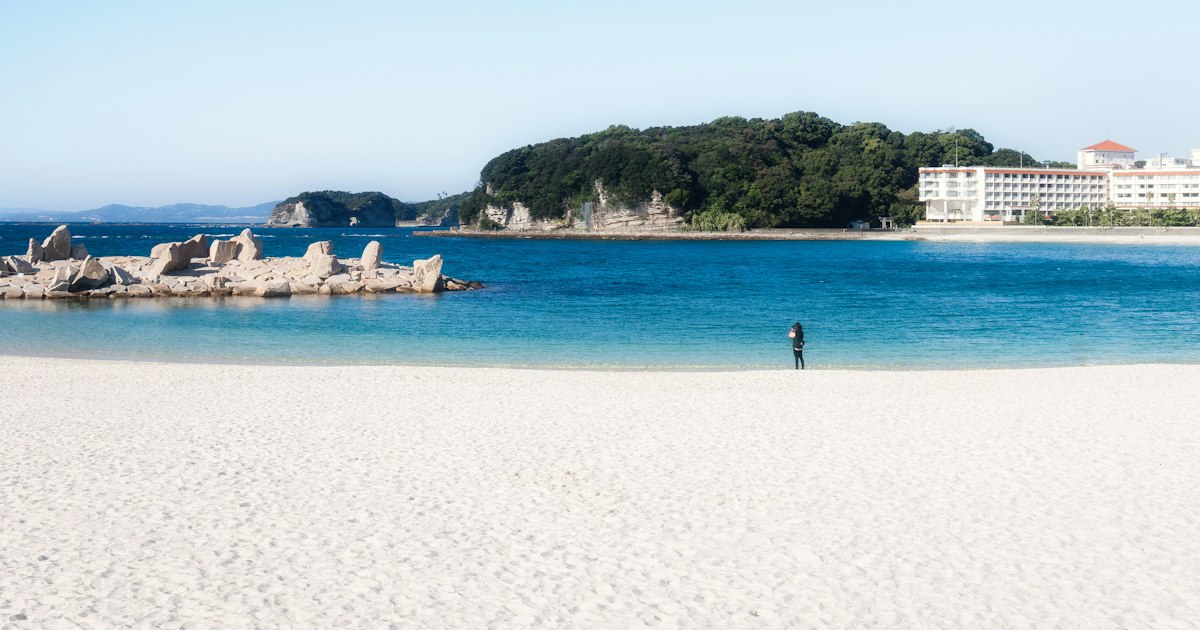
Photo by Jaipreet Singh on Unsplash
Most visitors picture Japan’s beaches as an afterthought to temples and neon cities, but Shirahama (白浜) in Wakayama Prefecture flips that script. It pairs a genuinely white-sand beach with one of the country’s three oldest hot spring towns, dramatic sea cliffs, and a front door to the Kumano Kodo pilgrimage trails further down the Kii Peninsula. It’s close enough for a day trip from Osaka yet feels like a proper coastal escape once you’re there.
Why Shirahama Is Worth the Trip
Shirahama’s onsen (Nanki-Shirahama Onsen) is recorded in the 8th-century Nihon Shoki chronicle alongside Dogo Onsen in Ehime and Arima Onsen near Kobe, making it one of Japan’s oldest documented hot spring sources. Unlike many onsen towns tucked into mountains, Shirahama’s baths sit right on the Pacific coast, so you can soak while looking directly out at the ocean. Add a bright white beach, a safari-and-aquarium park, and rugged cliff scenery, and you get a resort town that works for families, couples, and solo travelers equally well.
How to Get There
By train: take a JR Kuroshio limited express from Shin-Osaka or Osaka Station directly to Shirahama Station — about 2.5 to 3 hours one-way, with fares typically in the ¥6,000–¥7,500 range depending on reserved vs. unreserved seating. If you’re coming from further afield, you’ll likely connect through a Shinkansen to Shin-Osaka first; it’s worth knowing the booking systems in advance, which is covered in Booking Shinkansen Tickets Online: Smart EX, EX App & Ekinet Explained. From Shirahama Station, local buses run to the beach, onsen district, and Adventure World (about 10–25 minutes, ¥220–¥470 depending on stop).
By air: Nanki-Shirahama Airport has a handful of daily JAL flights from Tokyo Haneda (roughly 70 minutes), which is the fastest option if you’re based in Tokyo and only have a few days. The airport is about 10 minutes from the beach by taxi or bus.
By car: Shirahama sits just off the Kinki Expressway, about 2.5 hours from Osaka — convenient if you plan to continue south toward Kushimoto, Nachi-Katsuura, or the Kumano Kodo trailheads, since public transit thins out quickly past Shirahama.
Best Time to Visit
July and August are peak beach season — warm water, full facilities, and the busiest crowds and hotel prices. Late April through June and September through early November offer mild weather, thinner crowds, and lower rates, with the onsen and cliff scenery just as enjoyable without swimming. Winter is quiet and cool but the baths stay open year-round, and a hot outdoor soak with a sea breeze is arguably at its best in December and January. Typhoon season (roughly August–September) can disrupt the Kuroshio train line, so build in flexibility if you’re traveling then.
Shirarahama Beach and the Sand That Isn’t Local
The main beach, officially Shirarahama, is the reason for the town’s name — “shira” (white) + “hama” (beach). The sand is strikingly pale and fine, but much of it isn’t originally from Japan: decades of erosion led the city to import replacement sand from Western Australia starting in the 1980s to keep the beach intact. It’s a detail most visitors never learn, and it doesn’t make the beach any less pleasant — just a fun bit of trivia while you’re lying on it. Swimming season runs roughly early July to the end of August, with lifeguards, showers, and rental huts (parasol and chair sets run around ¥2,000–¥3,000 per day) only operating in that window. Outside summer, it’s still a nice walk, just not a place to swim.
Soaking in Japan’s Ancient Onsen
The must-do bath is Saki-no-yu, an open-air rotenburo built directly into the rocks at the ocean’s edge — waves sometimes splash near the lower pools at high tide. Entry is about ¥500 for adults, and it’s open roughly 8:00 am to 5:00 pm (extended in summer), with irregular closures for maintenance, so check the current schedule before heading over. It’s a public bath with minimal privacy screening, so go in with realistic expectations — it’s about the view and the history, not luxury fittings. Most hotels and ryokan in town also pipe in the same onsen water for private or indoor baths if you’d rather skip the open-air crowd. As with any onsen town, pack or buy a light cotton robe for lounging between soaks — the same kind of garment covered in Jinbei: Japan’s Traditional Summer Loungewear and Where to Buy It is commonly worn by guests walking between their ryokan and the baths in summer.
Beyond the Beach: Cliffs, Islands, and Pandas
Sandanbeki is a line of sheer cliffs about 50 meters high on the town’s west side; an elevator (around ¥1,300 round trip) drops you into a sea cave once used to hide pirate boats, with walkways out to the cliff base. Nearby, Engetsu-to is a small island with a natural circular hole worn through its center — best seen at sunset, and free to view from the shore. For families, Adventure World is a combined safari park, aquarium, and amusement park about 15 minutes from the station by bus, known for its giant panda breeding program (Shirahama has bred more pandas than almost anywhere outside China); a one-day adult pass runs in the ¥4,500–¥5,500 range, so check the official site for current pricing before you go. Toretore Market, a large seafood market near the airport, is a good stop for a cheap, fresh lunch — grilled seafood sets commonly run ¥1,000–¥2,000.
Shirahama as a Gateway South
Shirahama’s real strategic value is its position on the Kii Peninsula. From here, local trains and buses continue toward Kushimoto (the Hashigui-iwa rock formations) and Nachi-Katsuura, home to Nachi Falls and the Kumano Kodo pilgrimage network — a UNESCO World Heritage trail system with a completely different pace and scenery from the coast. If you’re building a longer Kii Peninsula itinerary, Shirahama makes a natural first or last stop: relax at the beach and onsen, then head inland or further south for shrines and waterfalls, or reverse the order on the way back to Osaka.
Common Mistakes and Budget Tips
Don’t assume you can swim at the beach outside July–August; the sand is still worth seeing, but lifeguard season is short. Don’t skip booking the Kuroshio limited express seat in summer or around holidays — it sells out, and the local-only alternative adds well over an hour. Budget travelers can day-trip from Osaka for well under ¥10,000 round-trip train fare plus a few hundred yen for Saki-no-yu; mid-range visitors should budget one night in a seaside ryokan (roughly ¥15,000–¥25,000 per person with dinner and breakfast); splurge travelers can book an oceanview room with a private in-room onsen bath, often ¥30,000+ per person at the nicer properties. Whatever your budget, it’s worth having travel insurance for Japan sorted before you go, and knowing what to do if you get sick in Japan — Shirahama is a resort town, not a major city, so medical options are more limited than in Osaka or Tokyo.