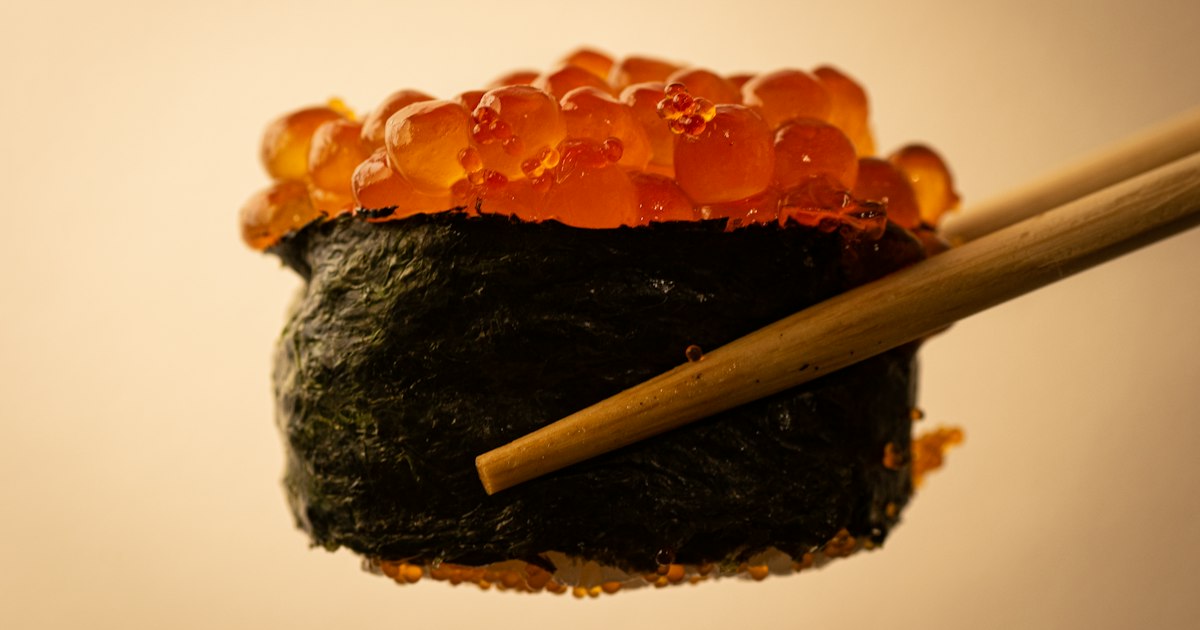
Photo by blackieshoot on Unsplash
Walk into any souvenir shop in Hakata Station and you’ll see the same bright orange-red packages stacked by the thousands: mentaiko, the spicy marinated cod roe that put Fukuoka on Japan’s culinary map. It’s salty, faintly fiery, deeply savory, and nothing like the bland tarako (plain cod roe) you might have tried elsewhere. If you’re flying through Fukuoka or routing a Kyushu trip around food, mentaiko deserves a dedicated stop—here’s how to buy it, eat it, and get it home without ruining your suitcase.
What Mentaiko Actually Is
Mentaiko is the roe (egg sac) of Alaskan pollock, cured in a brine of salt, chili pepper, and seasonings like sake or kombu dashi. The name comes from “mentai,” the Korean word for pollock, and the technique traces back to Korean-style spicy pollock roe (myeongnan jeotgal) that migrated to Japan through Fukuoka’s long trading ties with the Korean peninsula. A Fukuoka shop owner adapted the recipe to local Japanese palates after World War II, and the rest of the country fell in love with it over the following decades.
Texture-wise, think of a sac of tiny, slightly chewy orange eggs that pop between your teeth, releasing a briny, spicy-umami hit. It’s sold raw (namamentaiko, kept chilled) or lightly grilled (yaki mentaiko), and quality varies enormously by grade—larger, unbroken sacs with even color command much higher prices than broken or smaller roe sold at a discount.
Fukuya: The Shop That Started It All
Credit for popularizing mentaiko goes to Fukuya, founded in 1949 by Toshio Kawahara near Hakata Station. Fukuya never patented its recipe, which is partly why dozens of competing mentaiko makers—Fukutaro, Yamaya, Kanefuku, Hakata Mentaiko Honpo, and others—now operate across the city, each with slightly different spice blends and marinating times. Fukuya’s main store and several branches are still in central Fukuoka (Chuo-ku), typically open from around 9:00 to 18:00; staff can vacuum-seal purchases for travel on request. Because so many brands compete side by side, it’s worth tasting before you commit—most shops offer small sample pieces at the counter.
Where to Buy It in Fukuoka
Budget: The basement food halls inside JR Hakata Station (Hakata 1-Bangai and the Hakata City building) stock nearly every major mentaiko brand under one roof, with travel-sized vacuum packs starting around ¥1,000–¥1,500 for 100g. This is the easiest option if you’re short on time before a train or flight—Hakata Station connects directly to Fukuoka Airport by subway in about 11 minutes.
Mid-range: A standard 200g pack of good-quality karashi mentaiko from a named brand like Fukuya or Yamaya runs roughly ¥1,500–¥2,500. Gift boxes with multiple sacs packed in branded tins, aimed at omiyage-giving, land in the ¥3,000–¥6,000 range depending on grade.
Splurge: Premium, large-grain roe sold as a gift set (ichiban-grade, sometimes labeled “tokusen” or “koku-ichi”) can run ¥8,000–¥12,000 or more for a kilogram box—these are the sacs with the least breakage and the most even color, often bought as formal gifts.
For something more experiential, Kanefuku runs Mentai Park in Itoshima, a free-admission factory outlet about 40 minutes by car from central Fukuoka. You can watch roe being processed through viewing windows, get a free grilled mentaiko onigiri sample, and buy direct-from-factory packs at a discount in the attached shop. There’s no train station nearby, so go by rental car or taxi.
How to Eat Mentaiko Like a Local
- On rice: The simplest preparation—a spoonful of raw or lightly grilled mentaiko over hot white rice, sometimes with a pat of butter melted in.
- Mentaiko pasta: A Japanese-Italian “yoshoku” staple found on cafe menus nationwide: spaghetti tossed with mentaiko, butter, and a little cream or mayonnaise, often finished with shredded nori. If you enjoy Japan’s Western-inspired comfort dishes, it sits in the same lineage as omurice.
- Mentaiko onigiri: Sold at every convenience store in Fukuoka and increasingly nationwide—a safe, cheap (around ¥150–¥200) way to try it without committing to a full pack.
- Ramen topping: Several Hakata tonkotsu ramen shops offer a mentaiko option, stirred into the rich pork-bone broth for extra umami depth—a dashi-adjacent flavor boost if you’re into Japan’s broth culture (see our dashi guide for the science behind why this works).
- Izakaya style: Grilled whole and served with a wedge of lemon, or folded into a fluffy tamagoyaki (rolled omelette)—common on izakaya menus throughout Nakasu and Tenjin.
Best Timing and Common Mistakes
Mentaiko is sold year-round and isn’t seasonal in the way produce is, but freshness matters more than timing: raw mentaiko is highly perishable and should be eaten within a few days unless frozen. A few mistakes to avoid:
- Buying it too early in your trip. If you’re traveling onward for days before flying home, raw mentaiko in a hot bag won’t survive. Buy it near the end of your trip, or choose a frozen/vacuum-sealed pack specifically marketed for travel (“okurimono” or “oみやげ用” packs sold with a cold pack).
- Confusing mentaiko with tarako. Tarako is the same cod/pollock roe without the chili marinade—plain, salty, and much milder. If you want the spicy version, look for “karashi mentaiko” or “pepper mentaiko” on the label.
- Expecting intense heat. Mentaiko’s spice is subtle compared to Southeast Asian chili pastes—it’s more of a warm tingle than a burn. Don’t be scared off, but also don’t expect fireworks.
- Not checking refrigeration needs before flying. Vacuum-sealed, unopened mentaiko can usually go in checked luggage with an ice pack for a same-day domestic flight, but for international travel, check your destination country’s customs rules on seafood products before packing it—some countries restrict raw roe, others allow small quantities for personal use if commercially sealed.
- Overpaying for the omiyage wrapping. Elaborate gift boxes with ribbons and tins cost more for the same roe inside. If you just want to eat it yourself, ask for the simpler vacuum pack—staff are used to the request.
Getting There
Hakata Station is the obvious hub: it’s a single subway stop from Fukuoka Airport’s domestic terminal (about 5 minutes) or a short walk/taxi from the international terminal, and the station’s basement food halls mean you can buy mentaiko minutes before boarding. If you have half a day free, pair a mentaiko shopping trip with nearby Fukuoka crafts—the city’s Hakata ningyo clay dolls make a nice non-perishable souvenir to pick up on the same outing, since you won’t have to worry about keeping them cold on the flight home.