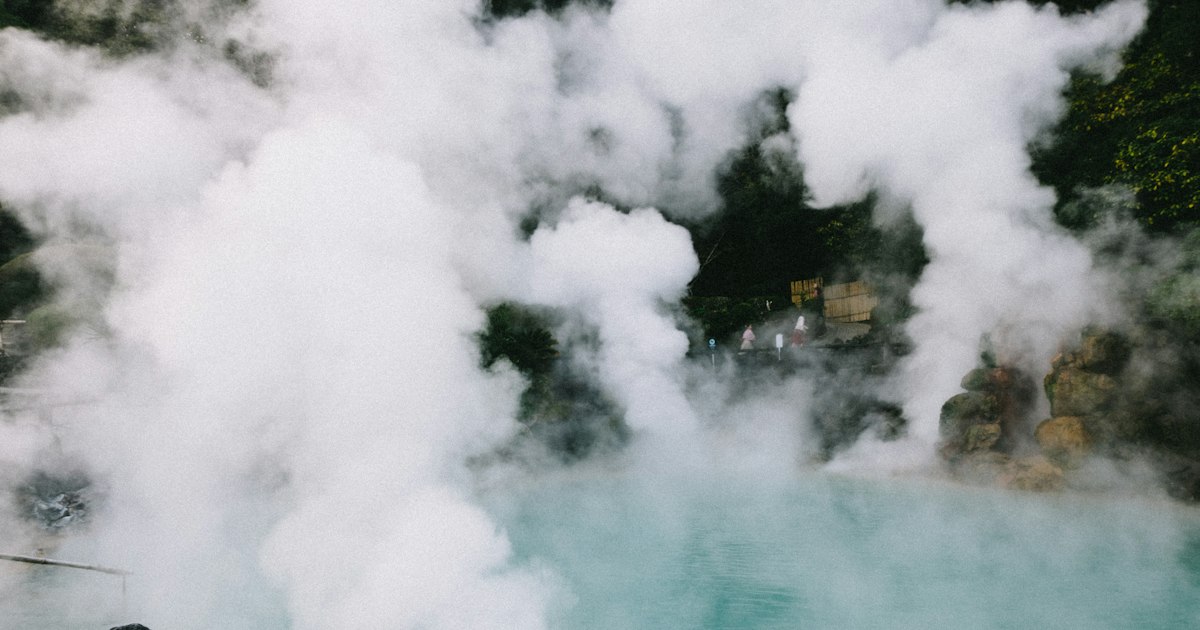
Photo by Tayawee Supan on Unsplash
Tucked into a forested valley in the mountains of Aso-gun, Kurokawa Onsen is the hot spring town Japanese travelers quietly rank above the famous names. There’s no garish neon, no pachinko parlor, no vending machine on every corner — just steam rising over a cluster of wooden ryokan along a narrow river, and a simple wooden pass that lets you hop between their outdoor baths for the afternoon. If you’ve already done Hakone or Atami and want something that feels less like a resort town and more like a village that happens to sit on hot water, this is the trip to plan.
What Makes Kurokawa Onsen Different
Kurokawa is small by design. In the 1980s and 90s, local innkeepers — led by the owner of the Shinmeikan ryokan — agreed to a set of unwritten rules: no bright signage, no love hotels, no amusement arcades, and every ryokan should keep at least one rotenburo (open-air bath) that feels built into the landscape rather than bolted onto a building. That agreement is why the town today looks the way it does: about 30 ryokan connected by stone paths and little footbridges, cedar and bamboo screening the baths from the road, and a soundtrack of running water instead of traffic. It’s the kind of place where you walk the main lane in a rented yukata between baths and nobody looks twice.
The Nyuto Tegata: How Rotenburo-Hopping Works
The signature Kurokawa experience is the nyuto tegata (入湯手形), a small round wooden pass sold at the Kurokawa Onsen Tourist Information Center in the middle of the village. It costs around 1,300 yen for adults and about 700 yen for children, and it entitles you to enter three different ryokan baths of your choosing among roughly 20+ participating inns. Each time you use one, staff stamp or burn a mark onto the tag; once you’ve used all three you get to keep the pass as a souvenir. It’s valid for six months from purchase, so if you only manage two baths before dinner, you can finish the set the next morning before checking out.
A few practical notes: not every ryokan’s bath is open to outside day-visitors at every hour, mixed-gender rotenburo exist at some inns (always marked clearly, and towels are provided for coverage), and a handful of the most photogenic baths — particularly ones with cave pools or river views — can have a line on weekends. If you don’t want to commit to the pass, most ryokan also sell single-visit day-bathing (higaeri onsen) directly for roughly 500–700 yen per bath, no tag required.
Getting to Kurokawa Onsen
This is the one part of the trip that takes real planning, since Kurokawa isn’t on a train line.
- From Kumamoto: A direct highway bus (Kumamoto Kotsu) runs from Kumamoto Station/Kumamoto Airport to Kurokawa Onsen in roughly 70–90 minutes. Seats on the limited daily departures should be reserved in advance.
- From Fukuoka/Hakata: A direct highway bus takes about 2.5–3 hours; reservations are required and schedules run only a few times a day, so book this before you build the rest of your itinerary around it.
- From Beppu/Yufuin: The Kyushu Odan (“Kyushu Crossing”) highway bus connects Yufuin and Kurokawa Onsen in around 2 hours, continuing on to Kumamoto — a convenient way to combine Kyushu’s two biggest onsen regions in one loop, though it typically only operates seasonally, so check current schedules before relying on it.
- By car: The easiest option if your Japan itinerary includes a rental car. It’s about an hour from Kumamoto Airport and roughly 2.5–3 hours from Fukuoka via expressway. Cars are left in a paid village lot (a few hundred yen) since the inn lanes themselves are pedestrian-scale.
However you arrive, build in a full afternoon — the appeal of Kurokawa is slowing down, not rushing between buses.
Best Time to Visit
Kurokawa is genuinely a four-season destination, but two windows stand out. Late October through November brings fall foliage down the valley walls above the baths — one of the most photographed combinations in Kyushu. December through February is the other peak: snow on the cedar roofs and steam rising off the rotenburo makes for the classic “onsen in winter” scene, and several ryokan light up outdoor baths for evening snow-viewing. Summer is cooler here than in the cities below thanks to the elevation, which makes it a decent escape from Kumamoto or Fukuoka heat, though the baths themselves feel less dramatic without steam in the air. Whatever season, avoid Japanese holiday weekends (Golden Week in early May, Obon in mid-August, New Year) if you can — the village is small enough that even moderate crowds change the feel of the place.
Where to Stay: Budget to Splurge
Staying overnight — rather than visiting as a day trip — is worth prioritizing, since many of the best baths are reserved for guests after the day-bathing hours end (typically mid-afternoon).
- Budget: Smaller family-run ryokan with shared bath access run roughly 15,000–20,000 yen per person with two meals included.
- Mid-range: Inns with a private or semi-private rotenburo and a proper kaiseki dinner generally land around 25,000–35,000 yen per person.
- Splurge: Well-known names like Yamamizuki or Shinmeikan — the latter famous for a bath set inside a natural cave — can run 40,000 yen and well beyond per person for a room with its own open-air bath and a multi-course dinner. These book out months ahead for foliage and snow season.
If you’ve stayed somewhere like Noboribetsu Onsen in Hokkaido or made a quick trip to Atami from Tokyo, Kurokawa is a useful point of comparison — it trades Noboribetsu’s volcanic drama and Atami’s retro seaside-resort energy for something quieter and more rustic, closer in spirit to a mountain village than a hot spring resort.
Common Mistakes to Avoid
- Not reserving the long-distance bus. These routes run only a handful of times a day and fill up, especially around foliage season — book as soon as your dates are set.
- Trying to pack in too many baths. Walking between ryokan, changing, and soaking properly takes longer than it sounds; three baths in an afternoon is a full, satisfying day, not a warm-up.
- Forgetting tattoo policies vary by ryokan. Some baths welcome visitors with tattoos, others don’t, and a few offer cover-up stickers. If you have visible tattoos, it’s worth asking at the tourist information center which baths on your tegata are tattoo-friendly before you set out.
- Assuming day-bathing is available any time. Many ryokan close their baths to outside visitors from mid-afternoon through the evening to prioritize overnight guests. Start your rotenburo-hopping by midday if you’re not staying the night.
- Expecting convenience stores. Part of what preserves the atmosphere here is the deliberate absence of them — bring cash (many small ryokan don’t take cards) and don’t count on finding a conbini for forgotten toiletries.
If a slow, forested soak isn’t quite enough on its own, the drop into the Aso caldera is less than an hour away by car, and travelers who enjoy a scenic streamside walk — in the way Oirase Gorge draws hikers up in Aomori — will find the short riverside path connecting Kurokawa’s ryokan has a similar, unhurried appeal, just on a much smaller scale. Either way, come with low expectations of “seeing” much and high expectations of actually relaxing — that’s the entire point of the place.