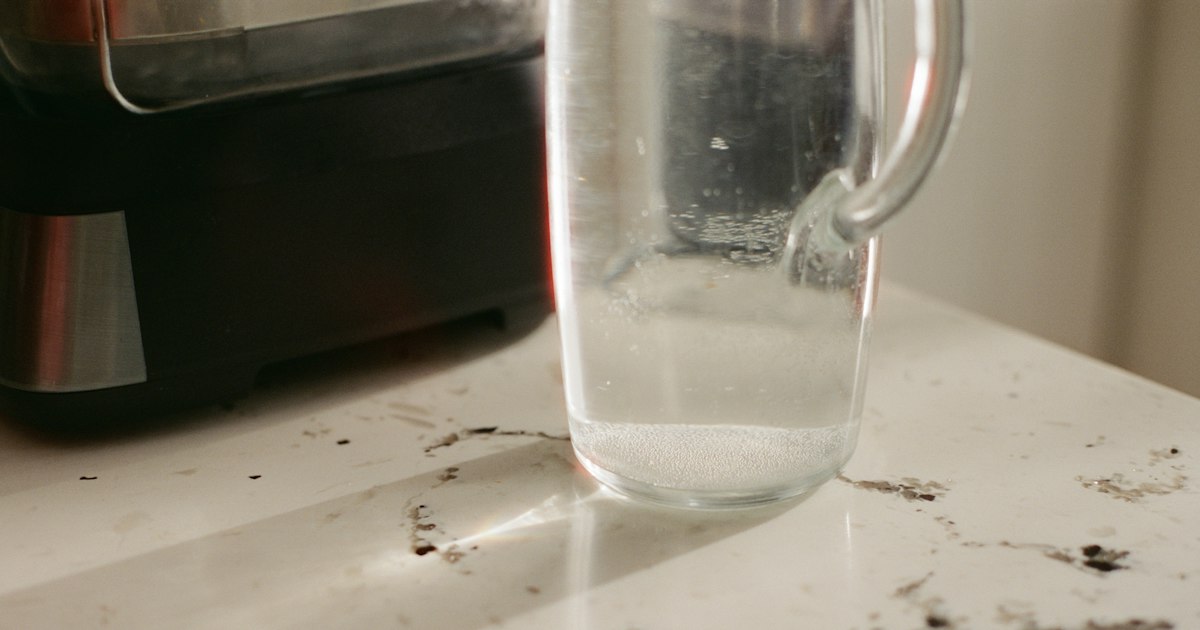
If you’re staying in Japan for more than a couple of weeks — on a working holiday, a long-term Airbnb, a weekly mansion, or a company apartment — you’ll eventually open the kitchen cabinet, find no filter in sight, and wonder whether you actually need one. Japanese tap water is some of the most reliable in the world, but that doesn’t mean it tastes great straight out of every tap, and long-stay residents buy pitcher filters for reasons that have little to do with safety. Here’s what’s actually worth knowing before you buy.
Is Japanese Tap Water Actually Safe to Drink?
Yes, unambiguously. Japan’s tap water meets strict national potability standards nationwide, from Tokyo high-rises to rural ryokan taps, and locals drink it straight from the faucet without a second thought. You do not need a filter to avoid getting sick.
What you might notice, especially in big cities, is a faint chlorine smell or taste — utilities chlorinate more heavily in summer when demand and bacterial risk both rise. Mineral content (hardness) also varies by region: Tokyo and most of Honshu run soft to moderately soft, while parts of Okinawa and some groundwater-fed towns run harder, which can affect both taste and how quickly a kettle scales up. A filter pitcher doesn’t change safety; it changes taste, chlorine smell, and kettle longevity — which is exactly why so many long-term residents keep one on the counter.
Cleansui vs. Brita Japan: What’s the Difference
Two brands dominate Japanese supermarket and drugstore shelves. Cleansui is made by Mitsubishi Chemical and is the more “Japanese” of the two, with cartridges tuned specifically for Japanese tap water chemistry and a strong reputation for chlorine and trihalomethane reduction. Pitcher-style Cleansui units (the CP, CA, and C-series) run roughly ¥2,500–¥4,500, with replacement cartridges around ¥1,200–¥1,800 each, typically rated for 2–3 months or about 300–350 liters of use.
Brita sells its standard Marella and Style pitchers in Japan at similar price points, roughly ¥2,000–¥3,500 for the pitcher, with MAXTRA+ cartridge 3-packs around ¥1,800–¥2,400 (about ¥700–800 per cartridge), each rated for about one month or 150 liters. Brita’s cartridges are a bit easier to find outside Japan if you want to keep using the same pitcher after you leave, which matters if you’re the type who hates switching systems. Cleansui’s cartridges reduce more substances specific to Japanese water treatment (notably trihalomethanes, a chlorination byproduct), which is why many long-term Japan residents — including a fair number of foreign nurses, teachers, and students on multi-year contracts — specifically choose it over the more globally familiar Brita name.
Where to Buy a Pitcher and Cartridges
You don’t need to hunt. Both brands are stocked at:
- Don Quijote (Donki) — open late or 24 hours in most urban locations, useful if you’re moving into an apartment at night and need a pitcher immediately.
- Bic Camera and Yodobashi Camera — the home appliance floors carry the full pitcher and cartridge range, often with tax-free counters for short-term visitors (not relevant if you’re on a long-stay visa, but worth knowing).
- Nitori and MUJI — cheaper own-brand pitchers (sometimes under ¥2,000) that fit standard Cleansui or Brita-style cartridges, good if you just want something functional.
- Supermarkets like Life, Seiyu, and Ito-Yokado — replacement cartridges are usually cheaper here than at electronics stores once you’ve already got a pitcher.
- Amazon.co.jp and Rakuten — fine for cartridge subscriptions once you’re settled, but shipping takes a day or two, so buy your first pitcher in person.
If you’re stretching a long-stay budget and converting currency as you go, it’s worth reading up on currency exchange in Japan before a big shopping trip — IC-card and credit card payment is near-universal at these chains, but cash still wins at smaller local supermarkets.
Picking the Right Size for a Share House or Weekly Mansion
Most pitchers sold in Japan hold 1.0–1.2 liters of filtered water despite looking larger — the filtration chamber eats into the capacity. If you’re in a weekly mansion or share house with limited fridge space, this is actually a feature, not a limitation: a slim 1-liter Cleansui pitcher fits a standard door shelf, while bulkier imported models from home often don’t. For a household of two or a longer stay where you’re filling a kettle daily, look at Cleansui’s larger CP-series (around 2 liters) or Brita’s Marella XL, both still compact enough for a typical Japanese apartment fridge.
Budget, Mid-Range, and Splurge Options
- Budget (~¥1,500–2,500): A Nitori or supermarket own-brand pitcher with generic cartridges. Fine for a few months’ stay; cartridges cost slightly less but need replacing more often.
- Mid-range (~¥3,000–4,500): A standard Cleansui C-series or Brita Marella. This is what most long-term residents actually buy — reliable, widely stocked, cheap-to-replace cartridges available everywhere.
- Splurge (~¥8,000–15,000): Cleansui’s under-sink or faucet-mounted systems (the MONO series), which skip the pitcher entirely and filter water at the tap. Worth it only if you’re committing to an apartment for a year or more, since installation involves attaching to the kitchen faucet — ask your landlord or agency before drilling into anything.
Common Mistakes Long-Stay Visitors Make
The biggest one: buying a Brita pitcher from home and assuming you can keep using the cartridges you brought. Japanese Brita pitchers use the same MAXTRA+ cartridge sold internationally, so this actually works — but Cleansui pitchers use a proprietary cartridge shape not sold outside Japan, so a Cleansui pitcher bought here becomes dead weight once you leave unless you can keep sourcing cartridges online.
The second mistake is ignoring the cartridge calendar. Cleansui and Brita both print a little dial or sticker to track installation date, but it’s easy to forget in a new kitchen — an unreplaced cartridge well past its limit does less filtering, not more, and can start growing bacteria if left wet and unused for a week during a trip. If you’re heading out for a multi-day excursion (say, a trip out to Kochi or anywhere off the beaten path), empty the pitcher before you leave rather than letting filtered water sit.
The third: not descaling the kettle. Even filtered water leaves some mineral deposits over months of daily boiling, especially in harder-water regions. A pitcher filter slows this down but doesn’t eliminate it — a monthly citric acid descale (sold cheap at any drugstore) keeps an electric kettle running well for a full-year stay.
Taking It Home (or Not)
Pitchers are light but bulky, and airlines won’t care that it’s “just plastic” when you’re already over your baggage allowance. Most long-stay visitors leave the pitcher behind — sell it via a local resale app, hand it to the next tenant, or donate it to a share house common kitchen — and simply buy a new one wherever they land next. If you do want to bring Japanese-specific kitchen gear home as something more lasting than a water filter, it’s worth browsing Japan’s other essential cooking tools while you’re already thinking about what’s actually useful versus what’s just taking up suitcase space.