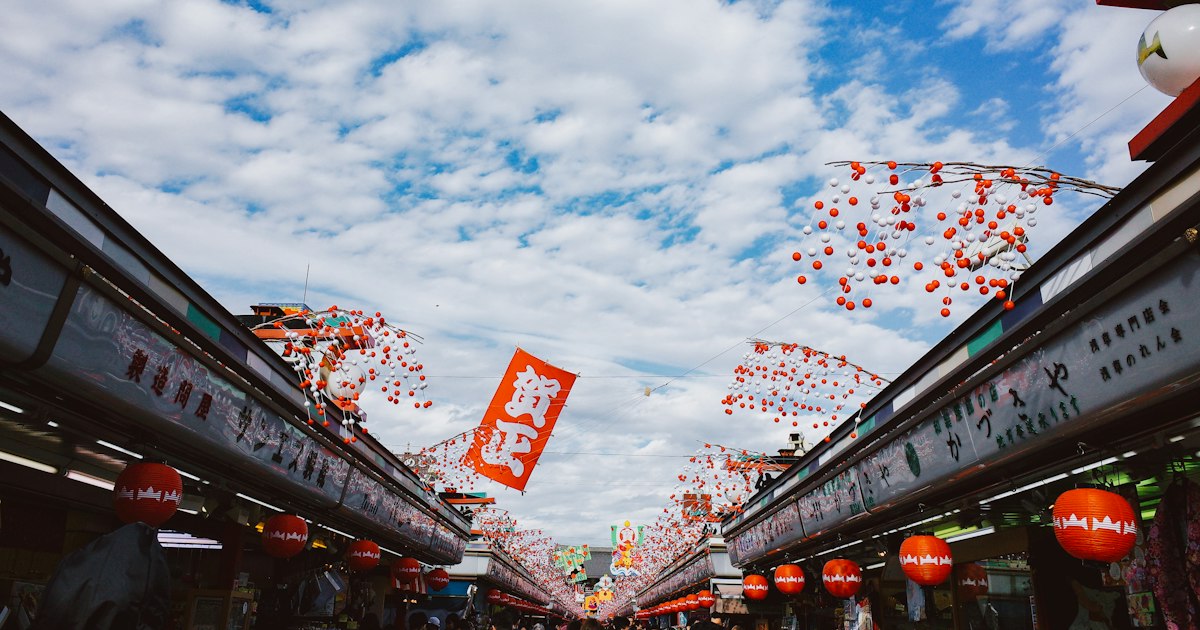
In a glass case near Tokyo’s Senso-ji temple, a craftsperson pulls a blob of molten sugar off a heated spatula, and in under three minutes it becomes a rabbit, a goldfish, or a dragon — still warm, perfectly symmetrical, and small enough to eat. That’s amezaiku, Japan’s centuries-old art of sculpting candy by hand, and it’s one of the few traditional crafts in the country you can watch happen in real time, up close, for the price of a snack. Here’s where to find it, what it costs, and how to avoid the two or three mistakes that ruin a candy sculpture before it even leaves the shop.
What Is Amezaiku, Exactly?
Amezaiku (飴細工) uses a sugar-and-starch-syrup candy called ame, heated until pliable, then worked almost entirely by hand and scissors while it’s still hot — typically in the 80–90°C range at the start, cooling fast as it’s shaped. The artisan kneads a lump onto the end of a stick, then uses small scissors, fingertips (often protected with nothing more than practice-hardened calluses), and sometimes food coloring brushed on at the end to pull out ears, fins, legs, and horns before the sugar hardens past the point of shaping — usually inside two to four minutes. It’s a performance as much as a craft: most shops set up their workbench facing the street or a front window specifically so passersby can watch.
The tradition dates back centuries, originally sold by itinerant candy sculptors at temple festivals and street fairs for children. Today only a small number of shops keep it alive as a daily practice rather than a once-a-year festival stall act, which is exactly why it’s worth planning a stop around.
Where to Watch It in Tokyo: Asakusa
Asakusa is the center of gravity for amezaiku, and it’s an easy add-on to a Senso-ji visit. Two names matter here:
- Amezaiku Yoshihara — widely credited as the shop that trained much of the current generation of amezaiku artisans, tucked in the Nishi-Asakusa area a short walk from Tawaramachi Station. It’s a tiny shop, standing-room for watching, with the sculptor working right at the front counter.
- Ameshin — run by a craftsperson who trained under the Yoshihara lineage before opening an independent brand, with a shop on Asakusa’s Jizo-dori shopping street and a second location in Kyoto (see below). Ameshin leans slightly more tourist-friendly, with English signage and a clearer price list posted near the register.
Both shops operate roughly 10:00–18:00, though amezaiku shops are notorious for irregular closures when the sugar batch runs out early or the artisan has a festival booking elsewhere — if you have one specific shop in mind, it’s worth checking their social media the morning of your visit rather than assuming standard hours. Expect to pay somewhere in the ¥1,000–¥2,500 range for a standard made-to-order animal piece, with more elaborate custom shapes (a specific zodiac animal, a dragon, a character request) running ¥3,000 and up. There’s no reservation needed just to watch — you can stand at the window for free and only buy if a piece catches your eye.
Where to Watch It in Kyoto
Kyoto’s Ameshin branch sits on Teramachi-dori, within walking distance of Nijo Castle and the covered Teramachi/Shin-Kyogoku shopping arcades, making it an easy stop if you’re already wandering central Kyoto on foot. The format is the same as Asakusa — live sculpting at the counter, similar pricing — but the Kyoto shop tends to be quieter outside peak holiday weeks, which means a better chance of chatting with the artisan or getting an unobstructed view of the work. If you’re building out a Kyoto-area itinerary around hands-on traditional crafts, pairing this with a stop at an ikebana class makes for a culturally dense but low-effort afternoon — both are short, beginner-friendly, and don’t require advance Japanese ability.
How a Piece Actually Gets Made
Watching closely is the whole point, so know what to look for. The artisan starts with a ball of ame kept warm over a small gas burner or heat lamp, kneads out an even temperature throughout the lump (uneven heat means it cracks instead of stretching), then works from the body outward — ears and legs are pulled last because they cool and set first, locking the shape before the body is even fully formed. Color goes on last, usually with a few fast brush strokes, because the candy is sealing shut within seconds of leaving the heat. A skilled artisan rarely reheats a piece once shaping starts; if you see one return a piece to the flame mid-sculpt, that’s usually a sign of a trainee rather than a senior craftsperson.
Trying It Yourself: Workshops
Several amezaiku shops, including Ameshin’s Asakusa location, run short hands-on workshops where visitors shape their own simple piece (usually a basic shape like a rabbit or goldfish rather than the elaborate dragons on display) under guidance. These typically run 30–45 minutes, cost somewhere in the ¥3,000–¥5,000 range per person, and need to be booked in advance — same-day walk-in slots are rare since class sizes are small and the artisan is also running the regular shop. Book directly through the shop’s own website or Instagram rather than a general tour aggregator; amezaiku workshops aren’t commonly listed on the big booking platforms, and official channels tend to have the most accurate current pricing and availability.
Common Mistakes and Timing Tips
- Buying first thing in the morning. Pieces made fresh in the first batch of the day look best; by afternoon on a hot day the display case candy can look slightly dulled even if it’s perfectly fine to eat.
- Carrying it loose in a bag. Ame is sugar glass — it shatters. Shops wrap pieces in a rigid box or hard plastic sleeve; keep it upright and don’t let anything heavy sit on top of it in your bag for the rest of the day.
- Visiting in peak summer heat without a plan. Amezaiku softens and deforms in high heat and humidity, so avoid leaving a piece in direct sun, a hot pocket, or a car. If you’re traveling onward the same day in August, treat it as something to eat within hours, not a multi-day souvenir.
- Expecting it to ship or survive a long flight home well. It’s best treated as a here-and-now souvenir or an edible one you finish during the trip, not something you pack for the plane.
Pairing It With Other Sweet Stops
If amezaiku gets you interested in Japan’s regional confectionery traditions more broadly, it’s worth building a short “sweets crawl” into your itinerary. Fukuoka’s chick-shaped hiyoko manju and Obuse’s chestnut sweets in Nagano are both built around the same idea amezaiku represents — a local craft tradition you can watch, taste, and buy in the same five minutes. And if you’re in Kanazawa, the teahouses of Higashi Chaya District often serve traditional wagashi alongside matcha, giving you a sit-down counterpart to the fast, performative sugar craft of amezaiku.
Amezaiku rewards a bit of patience and a willingness to just stand and watch for a few minutes — it’s one of the only crafts in Japan where “window shopping” and “seeing the whole creative process” are literally the same activity.