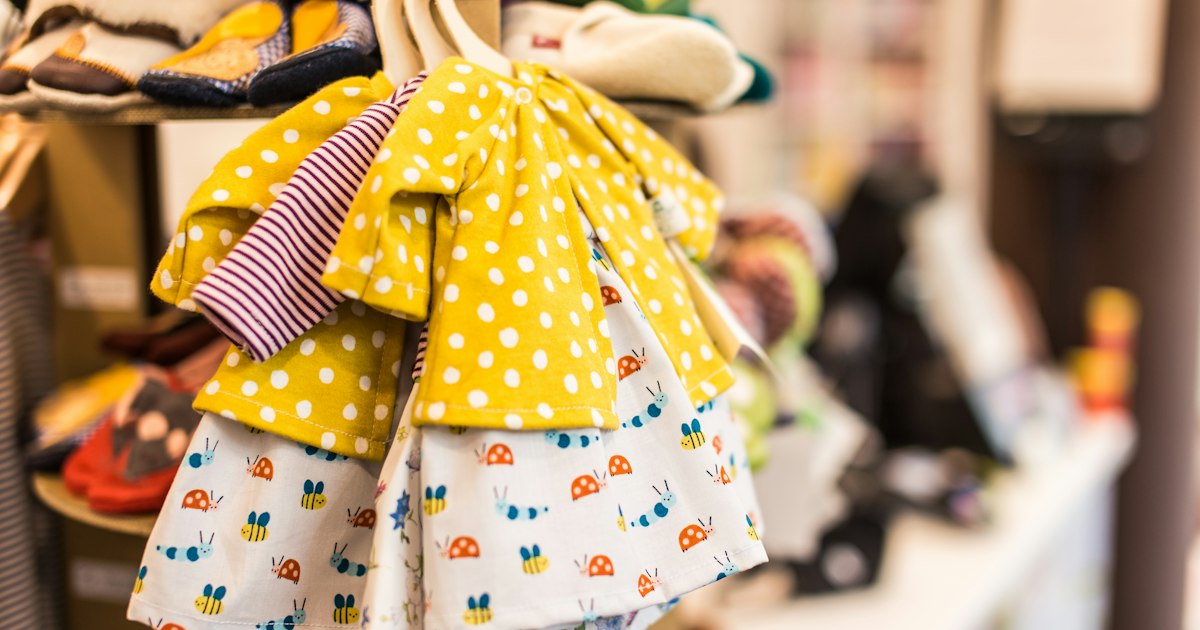
Photo by Baby Natur on Unsplash
If you’ve ever seen a Japanese baby in an impossibly soft cardigan or a toddler in rubber boots shaped like a bear, there’s a decent chance it came from Miki House or Familiar. These two brands sit at the top of Japan’s baby and kids clothing market, and for visitors shopping for a new niece, nephew, or grandchild, they’re worth seeking out deliberately rather than stumbling into. This guide covers what makes each brand distinct, where to find their flagship stores, what things actually cost, and how to avoid the mistakes most first-time shoppers make.
Miki House vs. Familiar: What’s the Difference?
Miki House was founded in Osaka in 1971 and is the brand you’ll recognize instantly by its logo of two running children. It’s playful, colorful, and famous for durable, slightly oversized basics — sweatshirts, rompers, and especially its tsumugi-weave cotton bodysuits, which are a go-to baby gift among Japanese parents. Miki House also has an unusually strong connection to Japan’s Imperial Family; the brand has outfitted young royals for decades, which locals are well aware of even if it’s never advertised loudly.
Familiar, founded in Kobe in 1948, has a gentler, more old-money aesthetic — think smocked dresses, Peter Pan collars, and a pastel, slightly European sensibility. It’s the brand grandparents buy for a baby’s first photoshoot or shichi-go-san ceremony outfit. Both brands are considered “department store tier” quality — thicker fabric, reinforced seams, and construction meant to survive being handed down to a younger sibling — and both price accordingly, roughly 2 to 4 times what you’d pay for an equivalent item at a mass retailer like Uniqlo or Nishimatsuya.
Where to Shop: Flagship Stores and Locations
Miki House’s flagship is in Osaka’s Shinsaibashi area (Miki House Head Office Shop), but the most convenient stop for most travelers is inside major department stores — Isetan Shinjuku, Hankyu Umeda, and Takashimaya locations all carry full Miki House sections, typically open 10:00–20:00 matching store hours. There’s also a dedicated Miki House store in Tokyo’s Omotesando area with a wider range than a typical department store corner.
Familiar’s flagship is in Kobe, its birthplace, in the Motomachi/Sannomiya shopping district, but it also maintains well-stocked counters inside Isetan, Mitsukoshi, and Hankyu stores nationwide. If you’re based in Tokyo and don’t have time for a Kobe or Osaka day trip, Isetan Shinjuku’s children’s floor (usually the 5th or 6th floor) is the single best place to compare both brands side by side, along with other premium Japanese kids labels like Family and Comme Ça Ism.
If you’re already planning a Kansai itinerary, it’s easy to fold a Miki House or Familiar stop into a day that includes other Osaka or Kobe shopping — and if you’d rather not plan the routing yourself, this is exactly the kind of errand a private guide or concierge service can handle efficiently, especially if you’re juggling kids of your own while shopping for someone else’s.
What Things Actually Cost
Prices vary by line, but here’s a realistic range as of 2026:
- Budget-conscious splurge: Miki House baby socks or a single bodysuit, ¥2,200–¥3,800
- Mid-range: A Miki House sweatshirt or Familiar casual dress, ¥6,000–¥12,000
- Splurge: Familiar’s formal/ceremony dresses or coordinated outfit sets, ¥18,000–¥35,000
- True splurge: Miki House’s signature tsumugi cotton gift sets in presentation boxes, ¥15,000–¥25,000
Both brands run seasonal sales twice a year — late June to July for summer stock, and late December to early January for winter stock — with discounts of 20–40%. If your trip timing is flexible, shopping during these windows is the single best way to make the splurge items feel more reasonable.
Sizing Notes for Foreign Shoppers
Japanese kids’ sizing runs by height in centimeters (50, 60, 70, 80cm for infants, then 90, 100, 110cm for toddlers), not by age or Western “months” labeling, though most tags do list an approximate age range alongside the cm size. Japanese cuts also tend to run slightly narrower through the shoulders than European or American baby clothes, though both Miki House and Familiar are cut a bit more generously than ultra-slim domestic brands. If you’re buying for a baby you can’t measure in person, size up one increment from what the age suggests, or ask staff — most department store locations have at least one English-speaking staff member, particularly in Tokyo and Osaka flagship locations.
Tax-Free Shopping and Common Mistakes
Both brands qualify for Japan’s consumer tax exemption for tourists at flagship and department store locations, provided you spend over ¥5,000 (pre-tax) in a single transaction and show your passport at checkout or a dedicated tax-free counter. If you’re not familiar with how this actually works at the register, it’s worth reading up on how Japan’s consumption tax and tax-free purchases work before you go, since the displayed price and your final total won’t match, and department stores often process the refund at a separate counter rather than at the till where you paid.
The most common mistake visitors make is buying newborn-size (50–60cm) items as “safe” gifts — these get outgrown within weeks and Japanese parents often already have plenty from baby showers. Sizes in the 80–100cm range (roughly 1–3 years) get more wear and are generally a safer gift choice. The second common mistake is skipping the rain and outerwear sections entirely; both brands make excellent kids’ rain boots and jackets built for Japan’s wet seasons, and if you’re shopping during typhoon season or just curious what Japanese families use their kids in during downpours, it’s worth a look alongside the broader category covered in our guide to nagagutsu, Japan’s rubber rain boots.
Best Time to Shop
Outside the biannual sales, late autumn (October–November) is a good window: new winter collections have just launched, stock is full, and stores are less crowded than the pre-New Year gift-buying rush in December. If your main goal is ceremony or formal wear — for shichi-go-san (ages 3, 5, 7) or hatsumode New Year visits — shop at least a month ahead, since the most popular sizes and styles in Familiar’s formal line sell out before the season itself.