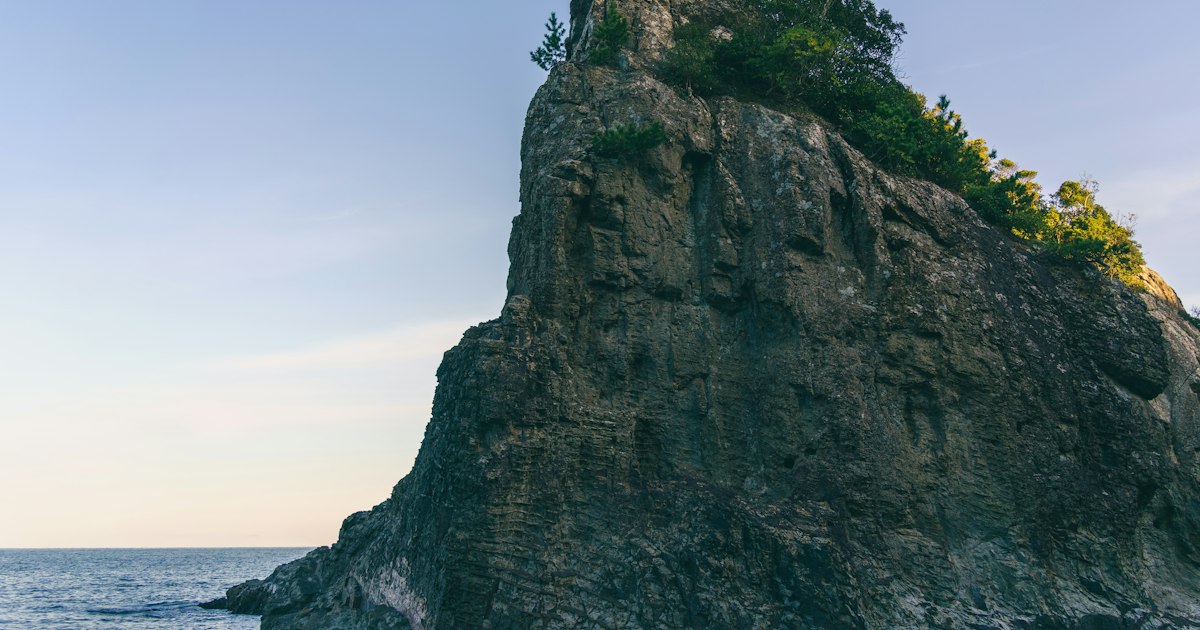
Photo by Red Shuheart on Unsplash
Japan’s climbing scene rarely makes it onto a first-time visitor’s radar, but the country has two genuinely world-class outdoor crags within reach of a normal trip: Jogasaki Coast on the Izu Peninsula, where bolted routes run right above the Pacific, and Ogawayama in the Nagano highlands, a granite playground with over a thousand boulder problems and multi-pitch slabs. Neither requires fluent Japanese or a dedicated climbing trip — both are doable as a day or overnight add-on if you plan the logistics correctly.
Two Very Different Crags, One Country
Jogasaki and Ogawayama sit at opposite ends of the climbing spectrum. Jogasaki is low-elevation sea-cliff sport climbing on volcanic rock, climbable almost year-round, loud with waves and seabirds. Ogawayama is alpine granite at 1,400–1,700 meters, prized for its friction and its cool summer air, but snowed in for roughly half the year. Many visiting climbers pick one based on season: Jogasaki in spring, autumn, or winter; Ogawayama in summer. If your trip spans both windows, doing one of each gives a real sense of how different Japanese climbing can be from crag to crag.
Jogasaki Coast: Sea-Cliff Sport Climbing on the Izu Peninsula
Jogasaki’s rock is andesite from an eruption of nearby Mt. Omuro roughly 4,000 years ago, and it has weathered into dark, pocketed cliffs that drop straight into the ocean. It’s one of Japan’s most established sport climbing areas, with bolted lines generally in the 5.9–5.13 range (using the US grading most visiting climbers will recognize), split across several sectors along the coastal trail. The area is also a designated scenic spot, so some sections sit close to the Kadowaki Suspension Bridge and hiking paths — expect walkers and sightseers nearby, not solitude.
A few things that catch first-timers out: tide and swell matter. Some of the lower sectors are only climbable at low tide, and spray from a rough sea makes volcanic rock slippery fast — check a tide table before committing to a route list. A handful of sectors are also off-limits by long-standing agreement with local fishing cooperatives, so don’t assume every cliff face you see is open; stick to known, documented sectors rather than exploring blank rock on your own.
Getting to Jogasaki and When to Go
From Tokyo, the easiest route is the JR/Izukyu line to Izu-Kogen Station (about 1.5–2 hours on the limited express Odoriko from Tokyo Station), then a 10–15 minute bus or taxi ride to the Jogasaki Kaigan area. The coastal trail and climbing sectors are a short walk from the bus stop. There’s no entrance fee to walk the coast itself, though the Kadowaki Suspension Bridge charges a small toll (a few hundred yen) if you want to cross it.
Best conditions run from October through May. Summer is humid, the rock gets greasy, and typhoon season (roughly August–October) brings swell that can shut sectors down entirely. Winter is mild here by Japanese standards — the Izu coast rarely freezes — so it’s one of the few outdoor crags in the country climbable comfortably in January.
Ogawayama: Granite Climbing in Nagano’s Highlands
Ogawayama, in Kawakami village, is a different scale of area: dozens of named boulder fields and multi-pitch granite walls spread through forest, developed over decades by Japanese climbers. The rock is clean, high-friction granite, similar in feel to parts of the Sierra Nevada or Fontainebleau’s sandier cousins, and the grading runs the full range from easy slab warm-ups to serious multi-pitch objectives. Classic zones like “The Garden” and “Castle Rock” are well-trodden and well-documented, with approach trails that are easy to follow even without reading Japanese.
The Kawakami village-run Ogawayama Campsite sits right at the base of the climbing and is the obvious place to stay — tent sites run roughly ¥1,000–1,500 per person per night, cash only, with basic toilets and water available. It’s open from late April to early November and gets genuinely busy on summer weekends, since it’s one of the coolest, most comfortable places to camp in Japan during the hot months.
Getting to Ogawayama and When to Go
Ogawayama is easiest to reach by car — about 3 hours from Tokyo via the Chuo Expressway, with parking near the campsite and trailheads. If you’re driving a rental, it’s worth understanding how Japan’s standard rental insurance excess waiver works before you take a car onto mountain roads; see this breakdown of the NOC insurance excess waiver for what you’re actually covered for. Without a car, the nearest station is Nobeyama on the JR Koumi Line, followed by a taxi (around 20–30 minutes, roughly ¥5,000–6,000) — there’s no year-round public bus directly to the crag.
The climbing season runs roughly May through October, with July and August the most popular because the altitude keeps temperatures 5–10°C cooler than the lowlands. Snow and ice make the approach trails unsafe from late November through April. Bears are present in the area, so hanging food and making noise on approach trails isn’t optional caution — it’s standard practice here.
Gear, Guides, and Common Mistakes
Neither crag has gear rental on-site, so you need to arrive with your own rope, shoes, harness, and quickdraws (or crash pad, for Ogawayama bouldering). If you’re flying in without checked gear, Tokyo’s big-box sporting goods chains are the fallback — see this guide to Alpen and Sports Depo for where to buy or sometimes rent before heading out. Local guide services operate at both areas (Jogasaki has coastal-specific guides familiar with tide timing; Ogawayama has guides who know the maze of boulder fields and can get you onto classic multi-pitches safely). Expect a guided half-day to run roughly ¥15,000–25,000 per person for a small group — book a few days ahead in peak season, since the better-known guides fill up on summer and autumn weekends.
The most common mistakes: skipping the tide table at Jogasaki and getting cut off from a sector; underestimating how cold and wet Ogawayama gets at altitude even in summer (bring a shell layer); not carrying enough cash, since neither campsite nor most guide services take cards; and assuming mobile signal will be reliable — Ogawayama’s reception is patchy at best, so download maps and confirm guide meeting points before you lose signal.
Budget, Mid-Range, and Splurge Planning
On a budget, bring your own gear, camp at Ogawayama for about ¥1,000–1,500 a night, and climb established routes using a guidebook or topo app rather than hiring a guide. Mid-range looks like a half-day guided session at either crag (¥15,000–25,000) paired with a business hotel near Izu-Kogen (¥8,000–12,000/night) or a simple lodge in Kawakami village. For a splurge, book a private multi-day guide for Ogawayama’s longer granite multi-pitches, then unwind afterward at one of the onsen ryokans the Izu Peninsula is known for — a fitting reward after a day on sea cliffs. If climbing isn’t quite your speed but you want another adrenaline option while you’re in the country, Japan’s paragliding and tandem skydiving operators run from several of the same coastal and mountain regions.