Photo by Michael Lee on Unsplash
On a humid August afternoon in Tokyo, walking into an air-conditioned soba shop and being handed a bamboo tray of glistening cold noodles feels like a small miracle. Zaru soba — chilled buckwheat noodles served on a bamboo mat with a dipping sauce — is one of Japan’s simplest and most affordable dishes, but it comes with a surprising number of unwritten rules. Get them right and you’ll eat like a local; get them wrong and you’ll still enjoy the noodles, just with a few curious glances from the counter staff. Here’s what to actually do.
What Zaru Soba Is (and How It Differs from Mori Soba)
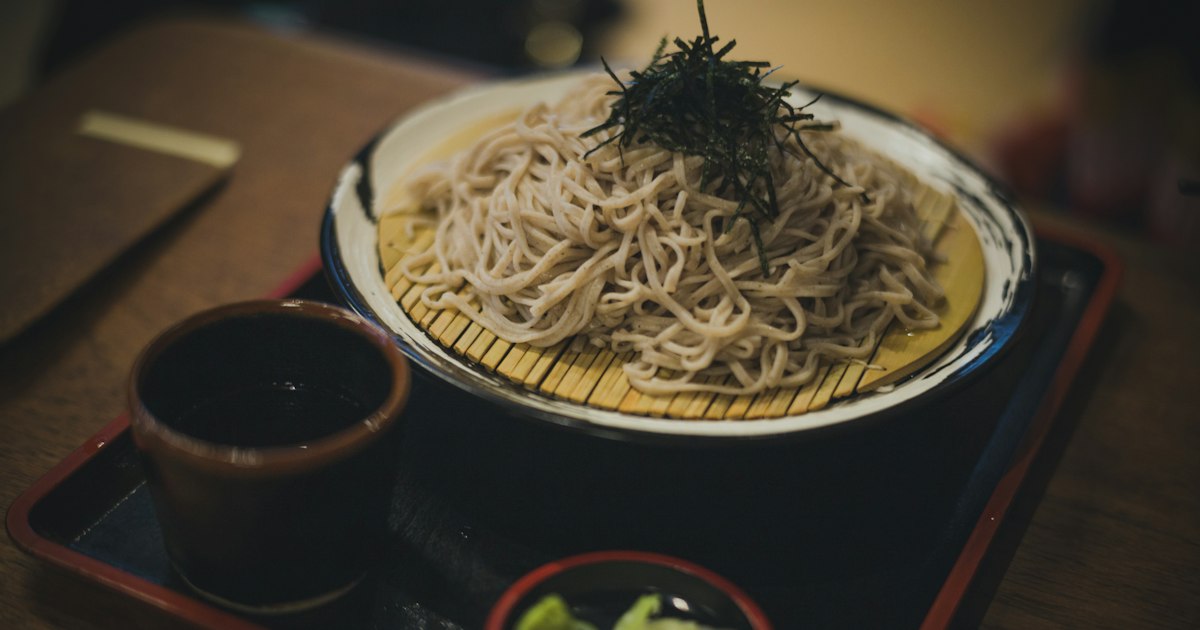
Soba noodles are made from buckwheat flour, giving them a gray-brown color and a nutty, slightly earthy flavor that’s distinct from wheat-based udon or ramen. Zaru soba is the cold version: noodles are boiled, rinsed in cold water to firm them up and stop the cooking, then piled onto a bamboo-slatted tray called a zaru. You dip small bunches into a cold, concentrated sauce called tsuyu before eating.
You’ll often see “mori soba” on the same menu, usually 50–100 yen cheaper. The only real difference is that zaru soba comes topped with a pinch of shredded nori (seaweed), while mori soba doesn’t. Some shops also offer “seiro soba,” an older term for essentially the same dish, named after the steaming tray noodles were historically served on. Don’t overthink the naming — if a shop has several similar names on the menu, the cold basic version is what you want in summer.
Where and When to Order It
Zaru soba is a warm-weather food. It appears on menus year-round, but it’s genuinely at its best from June through September, when the cold noodles offer relief from Japan’s heat and humidity. Many shops actually swap in hot soba (kake soba or tanuki soba) as their default recommendation once autumn arrives, though zaru soba remains available. If you visit in December or January, don’t be surprised if a shop suggests a hot bowl instead — it’s not a mistake, just a seasonal nudge.
For lunch, standalone soba shops (sobaya) are everywhere near train stations, and many open around 11:00 and close their kitchens by 15:00 or so before reopening for dinner around 17:00–20:00. Standing soba stalls inside train stations — quick, cheap, and popular with commuters — serve continuously through the day and are worth trying if you’re catching a train and want a fast, authentic bite. Chain shops like Fuji Soba, Yudetaro, and Komoro Soba are reliable, inexpensive, and often open very late, sometimes 24 hours in busy areas like Shinjuku or Shibuya.
Reading the Menu and What to Order
A basic plate of zaru soba typically costs 500–900 yen at a standing counter or chain shop, and 900–1,500 yen at a proper sit-down sobaya. Specialty or artisanal soba restaurants using stone-ground, freshly made noodles can run 1,500–3,000 yen for a modest plate — you’re paying for the noodle quality and the craft, not a bigger portion.
- Budget (500–900 yen): Station stand-and-eat counters and casual chains. Fast, no-frills, good for a quick lunch between sightseeing stops.
- Mid-range (900–1,500 yen): Neighborhood sobaya, often family-run, with better noodle texture and homemade tsuyu.
- Splurge (2,000 yen+): Restaurants specializing in te-uchi soba (hand-cut noodles), sometimes served as a tasting course with tempura on the side, pushing the total to 3,000–5,000 yen.
A common add-on is “soba-yu” — the hot, starchy water the noodles were boiled in. After finishing your noodles, the server (or a pot left at your table) offers it so you can pour it into your leftover tsuyu and drink it like a light broth. This is standard practice at proper soba restaurants, not something you need to request, though at fast chains it may not be offered at all.
How to Dip and Eat Zaru Soba
The tsuyu is meant to be strong and salty on its own — it’s designed to be used as a dip, not a soup to submerge the noodles in. Pick up a small bundle of noodles with your chopsticks (roughly a bite or two’s worth, not a huge clump), dip just the bottom third to half into the sauce, and eat. Dunking the entire bundle makes the dish overwhelmingly salty and is one of the most common mistakes visitors make.
If condiments like wasabi, grated daikon, or chopped scallion are provided on a small side plate, add a small amount directly into your tsuyu cup rather than onto the noodles themselves. Mix it in gradually and taste as you go — you can always add more, but you can’t take it out.
Slurping: Why It Happens and Whether You Should Do It
Slurping noodles audibly is genuinely normal in Japan and isn’t considered rude the way it might be elsewhere. It serves a practical purpose too: pulling air in while eating helps cool the noodles slightly and is said to enhance the aroma of the buckwheat as it passes over your palate. You don’t need to force loud slurping to seem polite — plenty of Japanese diners eat soba quietly — but you also shouldn’t feel embarrassed if a slurp slips out. What does read as unusual is eating soba very slowly; it’s traditionally a fast, casual food, and lingering excessively over a cold plate that’s meant to be eaten while still cool can look odd in a busy shop.
Other small points of etiquette: it’s fine to hold the tray and tilt it slightly toward you toward the end to gather the last noodles, and you don’t need to finish every drop of the dipping sauce. Tipping isn’t expected anywhere in Japan, including soba shops.
Common Mistakes to Avoid
- Over-dipping: submerging the whole noodle bundle in tsuyu, resulting in an overly salty bite.
- Ordering zaru soba expecting a large meal: portions are intentionally light; if you’re hungry, pair it with a side of tempura (tenzaru soba combines both, usually 1,200–2,000 yen) or a side of rice.
- Skipping the soba-yu: at sit-down restaurants, not trying the noodle water at the end means missing part of the intended experience.
- Assuming all “soba” is cold: if you want the chilled version, look specifically for “zaru,” “mori,” or “seiro” on the menu — plain “soba” listings are often the hot version by default.
Zaru soba pairs naturally with other quick, casual Japanese dining experiences worth trying on the same trip — if you’re building out a food-focused itinerary, dishes like karaage or a visit to Fukuoka’s yatai food stalls make good companions to a soba lunch. For evenings, a stop at a tachinomi standing bar follows the same unpretentious, quick-service spirit that makes soba shops so easy to enjoy as a visitor.