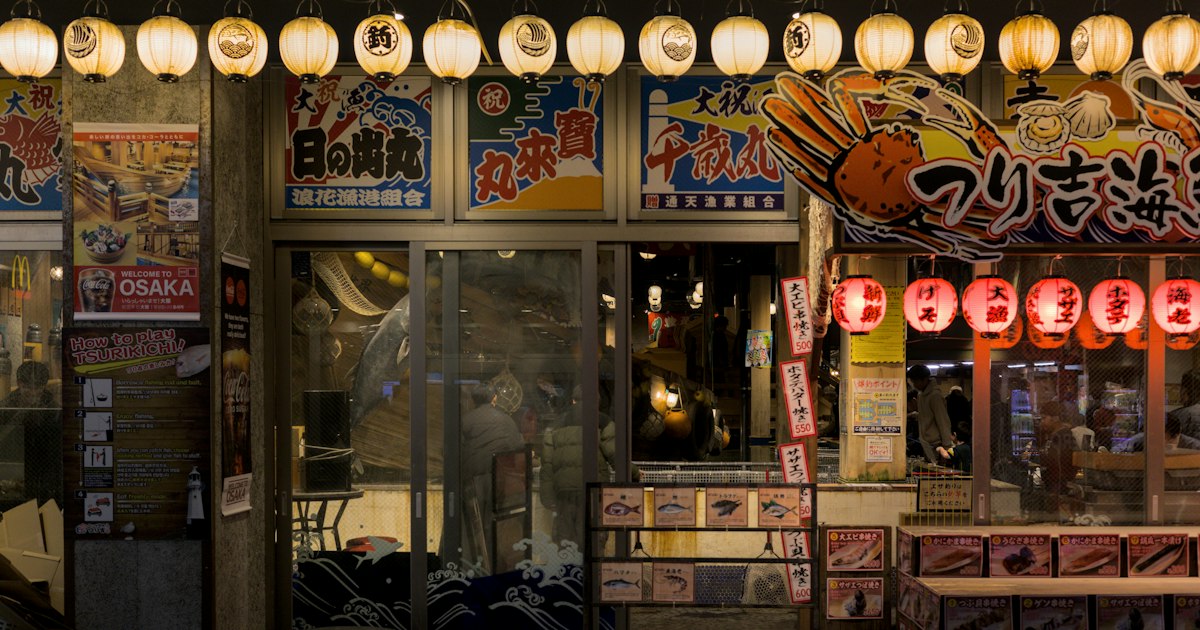
In Osaka, deep-fried skewers on a stick are less a snack than a small ritual — one with a rule that trips up nearly every first-time visitor. Kushikatsu (also spelled kushiage) are bite-sized pieces of meat, seafood, and vegetables, breaded and fried, then dunked into a shared pot of thin, savory-sweet sauce. That shared pot is exactly where the trouble starts. Here’s how to eat kushikatsu the right way, where to find the best of it, and what it actually costs.
What Kushikatsu Actually Is
Kushikatsu started as working-class food in Osaka’s Shinsekai and Nishinari districts in the early 20th century, built for factory workers who needed cheap, fast calories between shifts. A skewer holds one or two pieces of a single ingredient — pork, beef, quail egg, lotus root, cheese, shrimp, shiitake, asparagus — coated in a light panko breading and deep-fried to order. Unlike tempura, the batter is drier and crunchier, and unlike yakitori, nothing is grilled; everything goes into hot oil. Each skewer typically runs ¥120–¥350 depending on the ingredient and the shop, and a satisfying meal of 8–10 skewers plus a drink lands around ¥2,000–¥3,500 per person at a casual counter.
The No-Double-Dipping Rule (Sōsu Nido-zuke Kinshi)
Every kushikatsu counter shares one communal vat of dark, Worcestershire-style dipping sauce. Because dozens of diners use the same pot, the rule is absolute: you dip once, take a bite, and never re-dip a skewer you’ve already put your mouth on. Signs reading “ソース二度づけ禁止” (no double-dipping) are posted at nearly every shop in Shinsekai, sometimes in English too. If you want more sauce for a second bite, use the cabbage instead — free, unlimited raw cabbage is provided at most counters specifically as a sauce-scooping tool. Cup a cabbage leaf, ladle sauce onto your skewer or the leaf itself, and eat that way. Staff will politely (or not so politely, at old-school shops) call out anyone who dips twice, so this is genuinely the one etiquette point worth memorizing before you sit down.
Where to Eat It in Shinsekai
Shinsekai, the retro neighborhood clustered around Tsutenkaku Tower, is the spiritual home of kushikatsu and the easiest place to try several shops in one outing.
- Daruma — the most famous chain, founded in 1929. The original Shinsekai branch (near Tsutenkaku) is often crowded with a line out front; skewers run roughly ¥150–¥400 each. Open daily, typically 11:00–22:30.
- Yaekatsu — a Shinsekai institution since 1954, known for a thicker, more old-fashioned batter and a lively, no-frills dining room. Budget ¥2,500–¥3,500 for a full meal with drinks.
- Kushikatsu Daruma vs. smaller family-run counters — for a cheaper, more local experience, wander the side streets off Jan Jan Yokocho, a covered arcade in Shinsekai lined with tiny standing counters where skewers can be as low as ¥100–¥150 each and beer is ¥400–¥500. It’s a similar atmosphere to the standing-bar culture described in our guide to tachinomi, Japan’s standing bar culture — order at the counter, eat quickly, and don’t linger over a single beer if the shop is packed.
Getting there: Shinsekai is a 5-minute walk from Dobutsuen-mae Station (Midosuji, Sakaisuji, and Sennichimae subway lines) or Shin-Imamiya Station (JR Osaka Loop Line and Nankai lines). From Namba it’s about 10 minutes by subway.
Budget, Mid-Range, and Splurge Options
Kushikatsu scales well across budgets:
- Budget (¥1,500–¥2,500): Standing-only counters in Jan Jan Yokocho or Shinsekai back streets. Order 6–8 skewers and a highball; no reservation needed, expect to eat standing or on a stool at a shared counter.
- Mid-range (¥2,500–¥4,000): Sit-down chains like Daruma or Yaekatsu, or Dotonbori branches that stay open late (many until 23:00 or midnight) for post-dinner grazing.
- Splurge (¥6,000–¥12,000+): Omakase-style kushiage counters, common in Kyoto and upscale Osaka neighborhoods like Kitashinchi, where a chef fries a fixed course of 12–20 skewers using premium ingredients (wagyu, seasonal fish, foie gras) and pairs each with a specific sauce or salt rather than the communal dip. These require reservations and run more like a tasting menu than a casual meal.
Best Time to Go
Kushikatsu is eaten year-round and isn’t seasonal food, but timing your visit still matters practically. Lunch (11:00–14:00) is quietest and some shops offer set lunch skewer plates for ¥1,000–¥1,500. Dinner from 17:00 onward gets busy fast, especially on weekends, and popular Shinsekai shops can have 30–45 minute waits by 19:00. Arriving right at opening or after 21:00 avoids most of the queue. Shinsekai is also at its liveliest and most atmospheric after dark, when Tsutenkaku Tower is lit up — so if you can tolerate a short wait, evening is worth it for the scenery alone.
Common Mistakes to Avoid
- Double-dipping — covered above, but worth repeating: it’s the single fastest way to get an awkward correction from staff.
- Skipping the cabbage — it’s not a garnish, it’s your sauce-delivery tool and a free palate cleanser between fried bites. Eat it throughout the meal.
- Over-ordering at once — skewers are fried to order and best eaten immediately; order in small rounds of 3–4 rather than a giant batch that goes cold and limp.
- Assuming it’s the same as tempura or yakitori — the breading, technique, and sauce culture are distinct; don’t expect tempura’s light tenpura sauce or yakitori’s tare glaze.
- Not checking cash-only policies — many old-school Shinsekai counters are still cash-only or have low card minimums; carry ¥5,000–¥10,000 in cash for an evening out.
Kushikatsu pairs naturally with a broader crawl through Osaka’s fried and street-food scene — if you’re building out a food-focused itinerary, it’s worth comparing notes with other regional specialties like karaage, Japan’s fried chicken, or the open-air stall culture at Fukuoka’s yatai food stalls, which shares the same communal, order-as-you-go energy. But for a single evening in Osaka, a few rounds of hot skewers, a cold beer, and careful cabbage-dipping in Shinsekai is hard to beat.