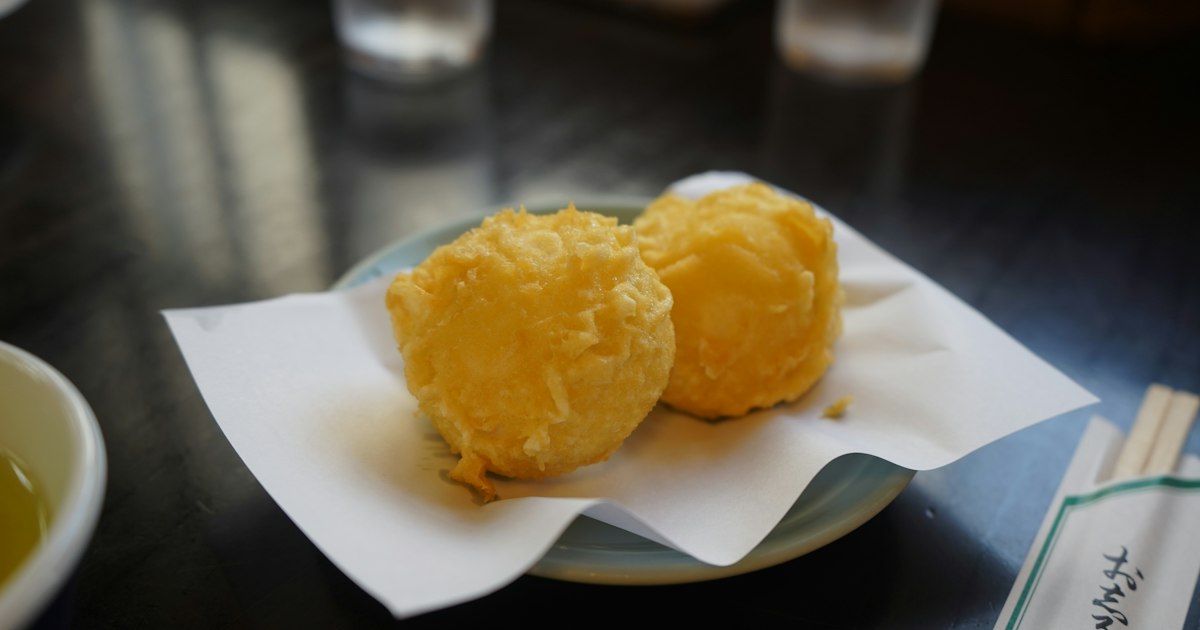
Photo by Yosuke Ota on Unsplash
Bite into a good monaka and you get a split second of crackle before the shell gives way to a dense, sweet filling—usually red bean paste. It’s one of Japan’s oldest confections and one of the easiest to get wrong as a souvenir, because the thing that makes it special (a paper-thin, crisp wafer) is also the thing that ruins it if you store it badly. Here’s how monaka is made, what to look for, and exactly where to buy it—whether you want a ¥150 convenience store treat or a boxed set from a 500-year-old wagashi house.
What Exactly Is Monaka?
Monaka (最中) is a wagashi (traditional Japanese sweet) made of two thin wafers pressed from mochiko (glutinous rice flour) batter baked between hot iron molds—the same basic technique used for taiyaki and imagawayaki molds, just much thinner and crisper. The wafers are stamped with a pattern on the way out: cherry blossoms, chrysanthemums, temple gates, or a regional symbol depending on where you buy it. Sandwiched between the two wafers is a filling, most commonly smooth or chunky azuki red bean paste (anko), though shiro-an (white bean), kuri (chestnut), matcha, or even ice cream versions are widely sold.
The name comes from a Heian-era poem referencing the full autumn moon (“mochizuki no naka”)—a nod to the round shape of early versions. Today monaka come in round, square, flower, and novelty shapes, and the wafer itself is sometimes sold separately as a crisp, barely-sweet snack on its own (look for bags labeled “monaka no kawa” in supermarkets—they’re the shells without filling).
The One Thing That Ruins Monaka: Moisture
This is the most common mistake visitors make: buying a box of monaka early in a trip and letting it sit in a hotel room or suitcase for a week. The wafer is hygroscopic—it pulls moisture out of the filling and out of the air, and within a day or two a crisp monaka turns chewy and soft, which defeats the entire point of the sweet.
Better wagashi shops solve this by selling the wafers and the filling in separate compartments inside the same box, so you assemble each piece yourself right before eating (look for the phrase “ご自分で挟んでお召し上がりください” on the packaging, or just ask—staff are used to the question). If you’re buying monaka to eat within the day, pre-assembled boxes are fine. If you’re buying them as a gift to open a few days later, ask specifically for the self-assembly style, or buy them on your last full day in Japan rather than your first.
Budget Option: Convenience Store Freezer Cases
The cheapest, lowest-commitment way to try monaka is the ice cream version, sold in every convenience store and supermarket freezer section year-round for roughly ¥120–¥180. These use crisp wafer shells (sometimes shaped like a cone or cup rather than a flat sandwich) filled with vanilla, azuki, or matcha ice cream instead of bean paste—Lotte’s long-running “Monaka Jumbo” bar is the most widely recognized brand and a good benchmark if you want to compare the ice cream style against the traditional bean-paste version. They’re genuinely satisfying in summer heat and require zero planning—just grab one at any Lawson, 7-Eleven, or FamilyMart.
Mid-Range: Department Store Food Halls (Depachika)
For traditional anko-filled monaka at a reasonable price, head to the basement food hall (depachika) of any major department store—Isetan Shinjuku, Nihombashi Mitsukoshi, and Takashimaya Shinjuku all have dedicated wagashi counters stocking monaka from multiple regional makers side by side, which makes comparison shopping easy. Expect individual pieces around ¥150–¥400 and gift boxes of 5–10 pieces running ¥1,000–¥3,000. Most depachika floors open around 10:00 and close between 20:00 and 21:00; go on a weekday morning if you want to avoid the pre-closing rush and get first pick of fresher stock, since popular counters sell out of same-day batches by early evening.
These counters are also where you’ll find monaka with seasonal wafer designs—a good complement if you’re already tracking seasonal wagashi like the one covered in our sakura mochi guide, since both sweets rotate shapes and flavors with the calendar.
Splurge: Old-Line Wagashi Houses
If you want the best version of the real thing, visit a long-established wagashi maker directly rather than buying through a department store counter. Toraya—one of Japan’s oldest confectionery houses, with a history stretching back roughly 500 years—sells refined monaka through its boutiques, including locations in Tokyo Midtown and inside several department stores, with prices generally higher than mass-market versions but noticeably better bean paste and crisper shells. In Kyoto and Kanazawa, cities with deep tea-ceremony traditions, small neighborhood wagashi shops often make monaka in-house daily in small batches—worth seeking out if you’re wandering Kyoto’s Gion area or central Kanazawa and want something more personal than a boxed souvenir.
Best Season and Timing to Buy
Monaka is sold year-round, but the wafer designs change seasonally: cherry blossom shapes appear from March to April, hydrangea or fan motifs through summer, maple leaf and chrysanthemum shapes from September through November, and plum or pine designs around New Year. If you want a monaka whose shape actually matches your trip’s season, buy it close to your travel dates rather than weeks ahead. For practical timing, buy monaka on a day you’ll actually eat it or within 24–48 hours if pre-assembled—shelf life on filled monaka is short compared to many Japanese sweets, which is part of why it’s rarely sold far in advance.
Taking Monaka Home
Monaka travels well compared to most Japanese sweets—no refrigeration needed for the bean-paste versions, and the box shape is sturdy for a suitcase. The catch is the moisture issue above: if you’re flying home in a day or two, buy pre-assembled boxes; if you have a longer trip ahead, buy the self-assembly style or wait until your last stop. It also makes a light, pack-friendly snack for a long train ride—something to keep in mind alongside the options covered in our guide to ordering food on the Shinkansen, or as a sweet counterpart to station-platform finds like the regional specialties in our kamameshi ekiben guide. And if convenience-store snacking is already part of your Japan routine, pairing a monaka ice cream bar with something like the fried pork sandwiches in our katsu sando guide makes for a solid, cheap combination on a travel day.