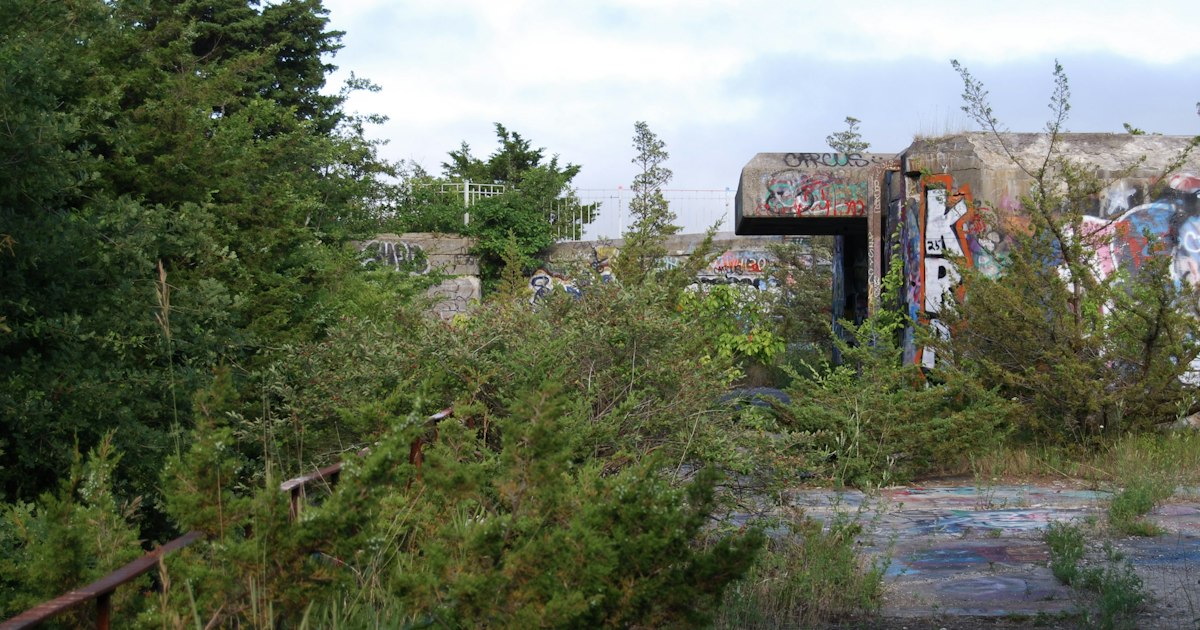
An hour from central Tokyo, there’s an island with no residents, no convenience stores, and no roads — just a swimming beach, a forest, and the vine-covered brick ruins of a 19th-century coastal fort. Sarushima (猿島), floating in Tokyo Bay just off Yokosuka, is the only natural uninhabited island in the bay, and it’s one of the easiest “I can’t believe this is near Tokyo” day trips you can pull off without a car. Here’s how to get there, when to go, and what to actually expect once you’re on the ground.
What Is Sarushima, and Why Go
Sarushima is a small, forested island — about 1.6 kilometers around — that served as a Tokyo Bay defense point from the late Edo period through the Pacific War. What’s left today are red-brick ammunition stores, tunnels, and gun batteries built in the 1880s–90s, now half-swallowed by tree roots and moss. The combination of military ruins and untouched coastal forest gives it an atmosphere people often compare to a Studio Ghibli backdrop, but it’s a real, walkable historical site, not a theme park reconstruction. Beyond the ruins, there’s a pebble-and-sand beach for swimming in summer, a BBQ area, and short walking trails around the perimeter with Tokyo Bay views in multiple directions.
How to Get There
Sarushima isn’t reachable on your own — you take a short ferry operated by Tryangle from Mikasa Pier (三笠ターミナル) in Yokosuka.
- To Mikasa Pier: Take the Keikyu Main Line to Yokosuka-Chuo Station (about 1 hour from Shinagawa, no transfers needed on most trains). From the station, it’s roughly a 10–12 minute walk through Mikasa Park — you’ll pass the preserved WWI-era battleship Mikasa on the way, which is worth a look even if you don’t go aboard.
- Ferry fare: Figure on roughly ¥1,800 round-trip for adults and about ¥900 for children, with the crossing itself taking around 10 minutes.
- Island landing fee: There’s a separate park usage fee collected on the island, roughly ¥500 for adults and ¥300 for kids, which goes toward maintaining the trails and ruins.
- Schedule: Boats run most frequently in summer (hourly or better in July–August) and on a reduced schedule in spring and autumn. Winter service is limited, and the ferry typically pauses entirely for a stretch in January for maintenance — always check Tryangle’s current timetable before you plan the day, since this isn’t a route you can wing.
Because the island has no other way off, keep a hard mental note of the last return sailing time. Missing it means waiting for the next (possibly hour-plus) departure with no shelter beyond what the island itself offers.
Best Season and Timing
July and August are peak season — warm enough to swim, and the beach and rental BBQ pits are in full use, but also the busiest and most humid. If swimming isn’t the point, late spring (May–June, before the rainy season settles in) and autumn (October–November) are quieter, cooler for walking the fort trails, and still comfortable enough to enjoy the views. Winter visits are possible on the days boats run, and the bare trees actually make the brick ruins easier to photograph, but go expecting a shorter visit window and fewer amenities open. Whatever season, aim for an early or midday ferry — the island has very little shade in the open battery areas, and afternoon sun on bare brick and sand gets intense in summer.
What to Do Once You’re There
Most visitors spend two to four hours on the island, which is enough to walk the full loop trail, explore the main fort tunnels and gun emplacements (bring a phone flashlight — some tunnel sections are genuinely dark), and relax at the beach. The swimming beach is small but functional in summer, with simple changing facilities; it’s also a fun, low-key spot to run a round of suika wari if you bring a watermelon over on the ferry, since the island has no shops of its own to buy one. BBQ sets can be rented on-site in warmer months — reservations are strongly recommended in peak summer, as walk-up slots sell out on weekends.
There is no convenience store and only a small snack stand that keeps limited hours, so bring your own water and food, especially outside peak season when the stand may not open at all. Public toilets exist near the pier area but are basic.
Budget, Mid-Range, and Splurge Options
- Budget (~¥2,300–2,600 per adult): Round-trip ferry plus landing fee, bring your own snacks and water, and stick to the free walking trails and beach.
- Mid-range (~¥4,000–5,000 per adult): Add a rented BBQ set and ingredients for a lunch cookout on the island — a popular option for groups splitting the rental cost.
- Splurge: Charter boats and private group bookings are available through the ferry operator for larger parties or events; worth inquiring about directly if you want the island without a public ferry schedule, though this is overkill for a solo or couple’s day trip.
Common Mistakes to Avoid
- Wearing the wrong shoes: The fort paths are uneven brick, dirt, and tree roots, and the terrain is genuinely hike-like in parts, not a paved park. Sneakers with real tread matter more than sandals — if you’re already outfitting yourself for other outdoor days in Japan, this is the kind of trail where gear from a shop like Montbell earns its keep.
- Not checking the winter/off-season schedule: Boats run far less often outside summer, and can pause entirely in January. Confirm same-week or same-day before heading to Mikasa Pier.
- Treating it as a half-day afterthought: Between the train from Tokyo, the walk to the pier, the ferry wait, and the island visit itself, this easily fills most of a day — don’t stack it with another distant destination.
- Forgetting bug spray and water: There’s real forest here, mosquitoes included, and no shop guaranteed to be open to bail you out.
- Skipping Mikasa Park: The preserved battleship and park right by the ferry terminal are easy to see on the way in or out and complement the fort-ruins history on the island itself.
Pairing It With the Rest of Your Trip
Sarushima works well as a contrast to Tokyo’s more polished historical sites — if you’re also interested in how Japan’s modern era is preserved elsewhere, the reconstructed neighborhoods at the Edo-Tokyo Open-Air Architectural Museum make for a very different, building-by-building look at the same broad period, without the ferry ride. For most travelers based in Tokyo, Sarushima is best treated as a self-contained day: out on an early train, back by early evening, with sand still in your shoes.