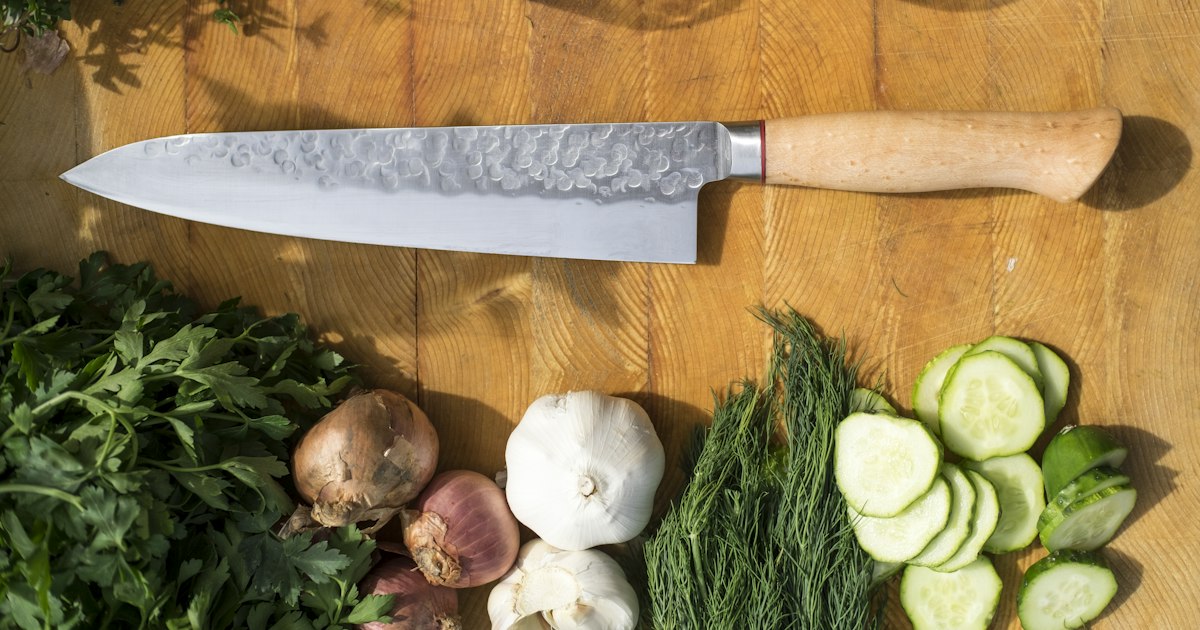
Photo by Kevin Doran on Unsplash
Most of Japan’s famous knife towns — Sakai, Seki, Sanjo — built their reputations on centuries of guarded, family-run workshops. Takefu does something different. In this quiet corner of Echizen City, Fukui Prefecture, a group of independent blacksmiths share one roof, pool their equipment, and openly collaborate with industrial designers to make knives that look nothing like the traditional wa-bocho you’ll find elsewhere. If you want a Japanese knife that’s both genuinely hand-forged and visually modern, this is one of the few places in the country where you can watch it happen and buy directly from the people making it.
A 700-Year Blacksmithing Tradition in Echizen
Echizen cutlery (Echizen uchihamono) traces back to the late 1300s, when a swordsmith named Chiyozuru Kuniyasu is said to have traveled from Kyoto to the area and began forging sickles for local farmers. That sideline eventually grew into a full cutlery industry producing kitchen knives, scissors, and sickles, and in 1979 Echizen uchihamono was officially designated a traditional craft by Japan’s Ministry of Economy, Trade and Industry — one of the oldest such designations for blades in the country. The techniques passed down here, particularly the double-layered (warihocho) forging method that sandwiches a hard steel core between softer iron, are the same ones you’ll see used at Takefu Knife Village today.
What Makes Takefu Knife Village Different
Takefu Knife Village was established in 1996 when a group of local blacksmiths decided to break from the old model of isolated, secretive family workshops. Instead, roughly a dozen independent craftsmen work under a single roof, sharing forges and grinding equipment while still running their own individual brands. The cooperative also actively invites outside industrial designers to collaborate on new shapes and finishes, which is why you’ll see knives here with minimalist handles, unusual bolster shapes, or mirror-polished Damascus patterns that look closer to a design-museum piece than a traditional Japanese kitchen tool. It’s a deliberate hybrid: old-world forging, new-world design sense.
Getting There
Takefu Knife Village sits in Echizen City, in a light-industrial district a short taxi or bus ride from Echizen-Takefu Station. Since the Hokuriku Shinkansen extension opened in March 2024, Echizen-Takefu is now a direct shinkansen stop, roughly 15 minutes from Fukui Station and about an hour from Kanazawa — a huge improvement over the old route, which required switching to a local JR line. If you’re coming from Tokyo, the fastest route is shinkansen to Fukui or Tsuruga and transferring, rather than routing through the Tokaido line (if you’re also mapping out that side of your trip, our guide to choosing the right Tokaido Shinkansen train explains why Nozomi, Hikari, and Kodama matter for the Tokyo–Osaka corridor, though Fukui itself is on the separate Hokuriku line). From the station, it’s a 10–15 minute taxi ride to the Village; there’s no direct train to the door, so budget for a cab both ways unless you’re renting a car, which is the more practical option if you’re combining this with other stops in Fukui or Kanazawa the same day.
Visiting the Showroom and Watching the Forge
The Village operates as a working facility, not a museum, so hours follow a typical business schedule — generally weekday daytime hours with the showroom and forge viewing closed on Sundays and national holidays, though as a cooperative of independent artisans, individual workshops sometimes close for trade shows or travel. It’s worth calling ahead or checking current hours before you make the trip out, especially if you’re hoping to see blacksmiths actually working the forge, since that depends on which members are in that day. The on-site shop stocks finished knives from multiple member-blacksmiths side by side, which makes it one of the only places where you can compare several independent makers’ work — and ask questions about steel type, hardness, and maintenance — in a single visit.
What to Buy and What It Costs
Prices span a wide range because you’re buying from several independent brands under one roof rather than one factory price list.
- Budget (around ¥5,000–10,000): Small paring or fruit knives, and simpler single-bevel utility knives, are the easiest entry point and pack well in a suitcase.
- Mid-range (around ¥15,000–40,000): A well-made gyuto (chef’s knife) or santoku in the 180–210mm range with a laminated steel core typically falls in this bracket — this is the sweet spot most visiting home cooks land on.
- Splurge (¥50,000 and up): Designer-collaboration pieces, hand-finished Damascus-pattern blades, and larger specialty knives from well-known individual smiths can run well past ¥50,000, occasionally into six figures for signature or limited pieces.
If you’re building out a full Japanese kitchen setup rather than just a knife, it’s worth pairing this trip with our guide to sushi-making kits and tools to bring home, which covers the hangiri, makisu, and rice essentials that round out what you buy here.
Common Mistakes to Avoid
The biggest mistake is treating this like a quick souvenir stop on the way to somewhere else — the Village is genuinely out of the way, and if you arrive without checking hours or without a plan for getting back to the station, you can lose half a day. Second, don’t assume every staff member speaks fluent English; blacksmiths are craftsmen first, not retail staff, so bringing a translation app smooths over questions about steel grade or whether a knife is suitable for a particular cutting board. Our guide to Pocketalk and translation gadgets is a useful reference if you want backup beyond your phone’s default translator. Finally, remember that carbon-steel blades (common on the higher-end pieces here) need to be dried and lightly oiled after use — if you’re not prepared to maintain that, ask specifically for a stainless-clad option before you buy, since staff can usually point you to one.
Best Time to Visit
Weekdays are quieter and give you a better chance of seeing an actual forge in operation, since weekend staffing varies by workshop. There’s no strong seasonal reason to time a visit around weather — Fukui’s climate is unremarkable either way — but if you’re building a Hokuriku itinerary, pairing Takefu with Kanazawa makes sense given the new shinkansen link; while you’re in that area, it’s worth trying Kanazawa’s jibuni duck and wheat-gluten stew as a regional meal to go with your new knife. Spring and autumn are the most comfortable seasons for the taxi ride and any walking around the surrounding industrial district, but this is fundamentally an indoor, workshop-based visit, so it works year-round.