Photo by Nichika Sakurai on Unsplash
Deep in the Hakkoda mountains of Aomori Prefecture, a single wooden bathhouse has been drawing bathers for over 300 years with a promise that sounds almost too simple: soak in acidic, sulfur-rich water said to ease everything from joint pain to skin conditions, in a room big enough — according to local legend — to fit a thousand people at once. That’s Sukayu Onsen, home to the Sennin Buro, or “Thousand Person Bath,” one of the last large-scale mixed-bathing halls still operating in Japan. It’s rustic, it’s a little intimidating for first-timers, and it’s one of the most memorable onsen experiences in the Tohoku region.
What Makes Sukayu Onsen Special
Sukayu Onsen Ryokan sits at roughly 900 meters elevation on the slopes of Mt. Hakkoda, inside Towada-Hachimantai National Park. The name itself — “sukayu,” literally “vinegar hot water” — refers to the spring’s strongly acidic quality, among the most acidic hot spring water in Japan. For generations it’s been promoted as a “spring that cures many ailments,” and the bathhouse still has the worn wooden beams, cloudy milky-white water, and faint sulfur smell to prove its age.
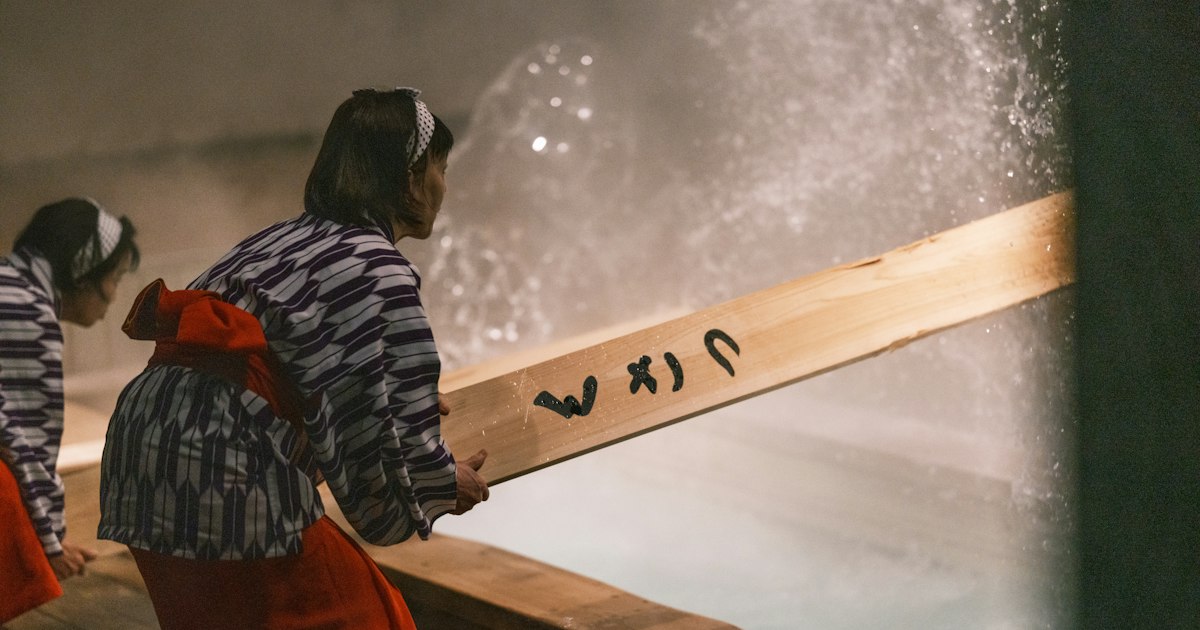
The Sennin Buro itself is the draw: a single cavernous hall with several stone and wood-lined pools of varying temperature, lit by skylights and framed by huge timber columns. It’s not fancy, and that’s the point — this is an onsen experience closer to a 19th-century mountain cure resort than a modern spa.
Inside the Sennin Buro: What to Expect
This is genuine mixed-gender bathing (konyoku), which still catches some visitors off guard. A few practical notes: you bathe nude, as at any traditional onsen — no swimsuits are permitted in the main pool. Most visitors carry a small modesty towel to hold in front of themselves while walking between pools, though it shouldn’t go in the water itself. Because the water is used for its mineral/therapeutic qualities rather than for washing, there are no shower stations or soap inside the Sennin Buro — you rinse off with a bucket of spring water before entering rather than showering, and you don’t shampoo or scrub inside.
If mixed bathing isn’t for you, Sukayu also operates a separate gender-divided bathing building elsewhere on the property, and the Sennin Buro itself sets aside specific women-only time slots each day (the current schedule is posted clearly at the entrance and changes occasionally, so check on arrival rather than assuming a fixed hour).
Because the water is so acidic, remove contact lenses and metal jewelry before soaking — sulfur water will tarnish silver and gold over a long stay — and don’t linger as long as you would in a milder bath. Ten to fifteen minutes per soak, with breaks to cool down, is the local rhythm.
Getting to Sukayu Onsen from Aomori
The easiest approach is by bus from JR Aomori Station (reachable via Shinkansen to Shin-Aomori, then a short local transfer). JR Bus Tohoku runs the Sukayu Onsen Line directly from the station, taking about 1 hour 10 minutes one-way, with fares in the ¥1,400–1,600 range depending on current pricing. Buses run several times a day but are not frequent, so check the timetable before you go and plan your return trip in advance — missing the last bus back means an expensive taxi down the mountain.
By rental car, it’s about 45–60 minutes from central Aomori via Route 103 through the Hakkoda mountain pass — a scenic but winding drive. In winter, snow tires or a 4WD rental and caution on the pass are essential; the road stays open because Sukayu is also a base for Hakkoda’s famous backcountry skiing, but conditions can turn quickly.
From the Lake Towada/Oirase Gorge side, a seasonal sightseeer bus (running roughly late April through early November) connects Towada-ko and Aomori via Sukayu, making it easy to combine the onsen with a day exploring the gorge.
Best Time to Visit
Sukayu is a year-round destination, and each season changes the experience. Early-to-mid June brings fresh green foliage (shinryoku) across the Hakkoda range. Late September into early October is peak autumn color — Hakkoda is known for turning early compared to the rest of Tohoku, so it’s a good target if you’re chasing foliage ahead of the crowds further south. Winter (December–March) buries the area in deep snow, and soaking in the steaming, half-outdoor-feeling Sennin Buro while snow piles up outside is its own reward, though access takes more planning. Summer is the easiest season logistically but also the busiest with day-trippers.
Day Trip vs. Overnight Stay
Budget (day bathing): Non-staying visitors can use the Sennin Buro for around ¥1,000 for adults and roughly half that for children, with day-use hours typically running from about 7:00 am to 5:30 pm (last entry around 30 minutes before close — times can shift seasonally, so confirm when you arrive).
Mid-range (standard overnight): Staying at Sukayu Onsen Ryokan with two meals (a kaiseki-style dinner featuring local Aomori ingredients, plus breakfast) generally runs from around ¥13,000 to ¥18,000 per person, depending on room grade and season. Staying overnight also means access to the baths outside the day-tripper hours, including very early morning, when the hall is quietest.
Splurge: Larger or renovated rooms, and peak-season weekend stays, can push ¥20,000+ per person. It’s still modest compared to upscale ryokan elsewhere in Japan — the appeal here is the bath and the mountain setting, not luxury furnishings.
Common Mistakes to Avoid
- Not knowing it’s mixed bathing. Read up before you go — some visitors are caught off guard and feel too uncomfortable to enjoy it. If that’s a concern, use the women-only hour or the separate gender-divided bath building instead.
- Bringing soap or shampoo into the Sennin Buro. There are no washing facilities in the main hall; it’s strictly for soaking.
- Missing the last bus back to Aomori. Services are infrequent — confirm the return schedule before you relax too long in the water.
- Overstaying in the water. The acidity is intense compared to most onsen; take breaks rather than one long soak, especially if you have sensitive skin or open cuts.
- Driving the mountain pass unprepared in winter without proper tires or chain experience.
Combining Sukayu with the Rest of Your Tohoku Trip
Sukayu pairs naturally with a day at Oirase Gorge and Lake Towada if you’re traveling via the seasonal sightseeing bus. If you’re building a broader Tohoku itinerary around nature and mountain escapes, it’s worth comparing with other regional highlights like Zao Fox Village in Miyagi or the midwinter spectacle of Yokote Kamakura in Akita, both reachable within a multi-day Tohoku loop. If what you’re really after is a quieter mountain retreat with hiking and local dining rather than a bathhouse, the Kyoto-area day trip to Kurama and Kibune offers a similar change of pace, just much further south.
However you build the trip, give Sukayu at least half a day — between the bus ride up, the soak itself, and the walk around the surrounding beech forest, it’s not a quick stop, and it isn’t meant to be.