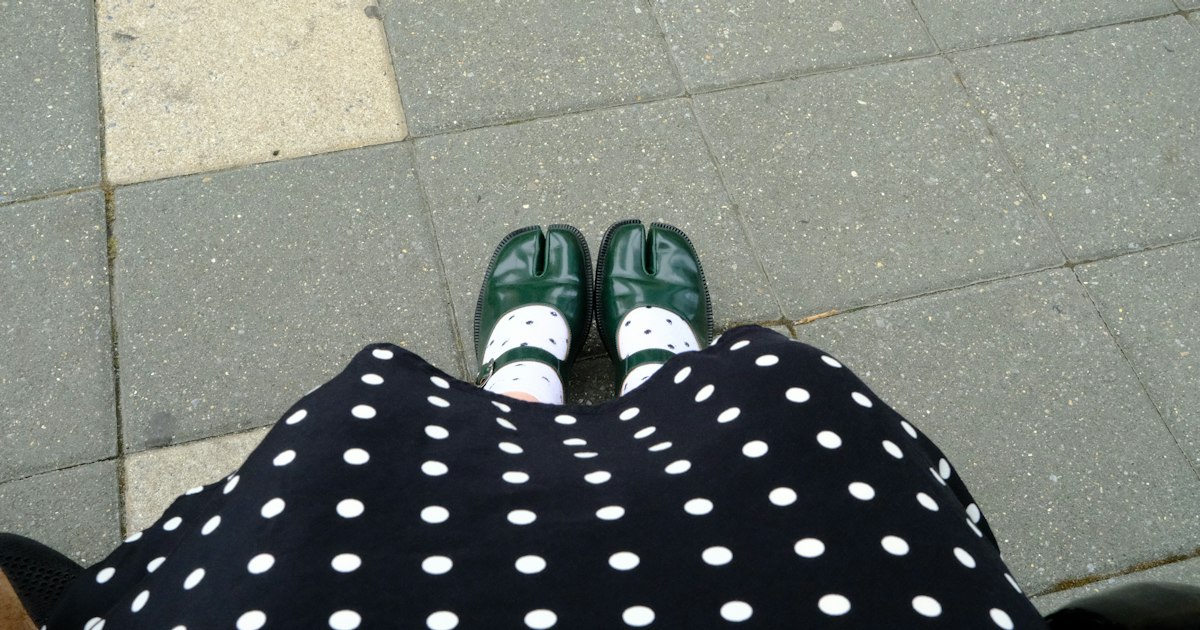
Photo by Ana Soares on Unsplash
Long before European designers turned the split-toe silhouette into a runway statement, Japanese farmers, carpenters, and festival crews were wearing it to work. Tabi — the two-toed sock — and its rubber-soled cousin jika-tabi are some of the most functional, least understood pieces of Japanese clothing you can bring home. This guide breaks down what they actually are, where to buy real ones, and how to avoid the sizing mistakes that trip up almost every first-time buyer.
What Exactly Are Tabi?
Tabi are ankle-high socks with a separated big toe, designed to be worn with thonged footwear like zori and geta sandals, or under kimono. Traditional tabi fasten up the back with small metal hook-and-loop clasps called kohaze — usually four or five of them, with more clasps generally meaning a more formal, tighter-fitting sock. White cotton tabi are the standard for formal kimono wear; patterned or colored tabi (often indigo-dyed or printed with traditional motifs) are everyday or festival versions.
Jika-tabi are a different animal entirely: heavier-duty boots with a rubber sole built directly onto a tabi-shaped upper, worn by construction workers, rice farmers, roofers, and the teams who carry mikoshi shrines during summer festivals. The split toe gives better grip and balance on uneven ground, ladders, and scaffolding — which is also why skateboarders and some outdoor brands have borrowed the shape in recent years.
Jika-Tabi Work Boots: Function First
If you want the real workwear item rather than a fashion reinterpretation, look at Japanese workwear chains rather than boutiques. Workman — a nationwide workwear retailer with stores near stations, highways, and suburban shopping centers — stocks jika-tabi from around ¥2,000 to ¥5,000, in both ankle-high and tall “tobi”-style versions popular with construction crews. Stores typically open 9:00am–8:00pm daily. Sizes are listed in centimeters and run true to Japanese foot measurements, which tend to be slightly narrower in the heel than Western lasts.
Fun fact worth knowing before you shop: Bridgestone, now a global tire giant, began in Kurume, Fukuoka in the early 20th century as a rubber-soled jika-tabi manufacturer before pivoting to tires in 1931. The split-toe boot and the modern Japanese rubber industry share the same roots.
Where to Find Fashion-Forward Tabi Footwear
For a more wearable, street-ready take on the shape, Kyoto’s Sou-Sou is the name to know. Clustered around Nishiki-koji and the Teramachi covered arcade in central Kyoto — an easy walk from Kawaramachi or Shijo Station — Sou-Sou’s shops sell tabi-shaped sneakers with a thin rubber sole alongside patterned cotton tabi socks in collaboration prints. Expect ¥3,000–¥8,000 for sock-weight tabi items and ¥8,000–¥16,000 for the sneaker-soled versions. It’s a good contrast stop after browsing Kyoto’s weaving district — if you’re already visiting [[Nishijin-ori: Kyoto’s 1,200-Year-Old Silk Weaving District]](https://japantrove.com/nishijin-ori-kyotos-1200-year-old-silk-weaving-district/) wait, skip — see link list below.
In Tokyo, Asakusa remains the best neighborhood for traditional tabi: the area’s kimono and festival-supply shops cater to locals who need tabi for shrine events and obon matsuri, so you’ll find a wider range of kohaze counts and seasonal patterns than in a general department store. For the designer-adjacent, streetwear side of the split-toe trend — including Japanese and international labels playing with the shape — boutique neighborhoods like Daikanyama are worth a browse, though stock of true tabi-last shoes rotates with the season.
Tabi Socks for Everyday Wear
If you’re not buying a full kimono outfit, plain cotton tabi socks are a cheap, genuinely useful souvenir — they’re comfortable in regular sneakers too, once you get used to the toe split. Basic white or navy cotton tabi run ¥600–¥1,500 a pair at department store kimono floors (Isetan, Takashimaya, and Mitsukoshi all carry them) or specialty tabi shops. Tabi socks for everyday use, as opposed to formal kimono tabi, usually have a stretch panel and fewer or no kohaze clasps, closer to a two-toe sock than a traditional garment.
Fabric matters more than it looks: cotton tabi shrink noticeably after a hot wash, so size up slightly or wash in cold water if you plan to wear them long-term. Tabi made with a tabi-specific knit (common in brands sold at specialty shops rather than souvenir stores) hold shape better over repeated washes.
Budget, Mid-Range, and Splurge Picks
- Budget (¥600–¥2,000): Plain cotton tabi socks from a department store kimono floor, or basic jika-tabi from Workman.
- Mid-range (¥3,000–¥8,000): Patterned Sou-Sou tabi socks, mikoshi-festival jika-tabi with reinforced soles, or locally made tabi from a dedicated Asakusa shop.
- Splurge (¥8,000–¥20,000+): Sneaker-soled tabi shoes from Sou-Sou or similar specialty brands, and custom-fitted tabi made to your exact foot measurements by an artisan tabi maker — a service still offered by a handful of long-running shops in Tokyo and Kyoto, usually requiring an in-person fitting and a wait of one to several weeks.
Common Mistakes to Avoid
The single biggest error visitors make is sizing tabi like a regular sock — they should fit snugly, almost tight, since cotton tabi stretch slightly with wear and loosen over the day. Buying a size too large results in bunching at the toe seam, which is both uncomfortable and visibly wrong with kimono.
Second: don’t confuse soft cotton tabi (for sandals and kimono) with jika-tabi (rubber-soled work boots) when shopping — staff at workwear stores may not carry the formal kimono version, and kimono shops rarely stock heavy-duty jika-tabi. Know which one you want before you go.
Third, check return policy before buying, especially for sized items purchased in a hurry. Japanese retailers are generally stricter about returns than many Western shoppers expect, and worn footwear is almost never returnable for hygiene reasons — it’s worth reading Returns, Exchanges & Receipts in Japan before you commit to a pair, and keep your receipt until you’ve confirmed the fit at home.
Best Time to Shop
Tabi and jika-tabi are sold year-round, but stock and selection peak around two windows: early summer through August, when matsuri season drives demand for festival-grade jika-tabi and specialty shops restock patterned designs, and late December into early January, when kimono shops refresh their formal tabi ahead of New Year visits to shrines. If you want the widest selection of patterns and sizes, shop in those windows rather than the quieter off-season months of late autumn.