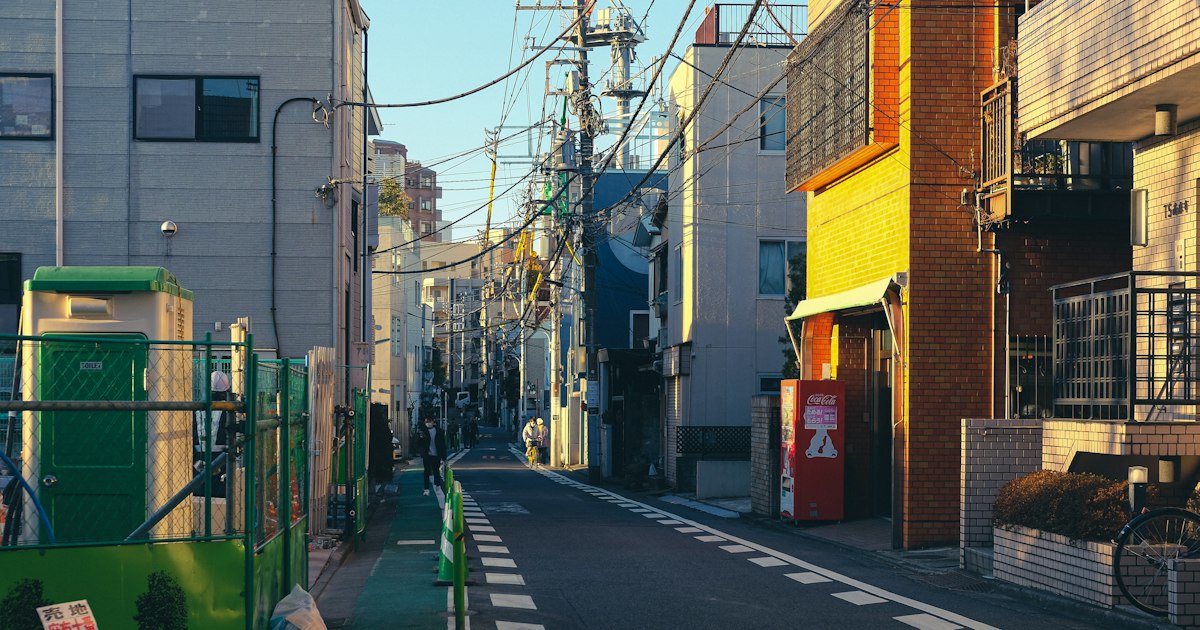
Photo by Mylène Larnaud on Unsplash
You finish a can of coffee or a convenience store onigiri, turn around, and realize there isn’t a trash can anywhere in sight. This is one of the first things that throws visitors off in Japan — a country famous for cleanliness has remarkably few public bins. It’s not an oversight; it’s the result of a very specific system, and once you understand it, carrying your own trash for a few hours stops feeling strange and starts feeling normal. Here’s how sorting and disposal actually work, and how to avoid the mistakes most tourists make.
Why Japan Has So Few Public Trash Cans
Many public bins were removed from train stations and streets after the 1995 Tokyo subway sarin gas attack, when bins were seen as a security risk for hiding dangerous items. That policy mostly stuck, and it combined with a cultural expectation that you take your trash home (or back to where you bought the item) rather than leave it for someone else to manage. The result is a country where streets are spotless precisely because there’s nowhere to litter — people simply hold onto their rubbish until they find an appropriate bin.
The Basic Sorting Categories You’ll Encounter
Japanese municipalities split waste into categories, and the exact names and rules vary slightly by city, but as a traveler you’ll mainly run into:
- Moeru gomi (燃えるごみ) — burnable waste: food scraps, tissues, most packaging.
- Moenai gomi (燃えないごみ) — non-burnable: metal, ceramics, small electronics.
- PET bottles (ペットボトル) — plastic drink bottles only, usually rinsed, with caps and labels removed and binned separately.
- Cans and bottles (缶・びん) — aluminum/steel cans and glass bottles.
- Plastics (プラスチック) — snack wrappers, trays, and other soft plastic packaging, kept separate from PET bottles in many areas.
Bins are almost always labeled with small pictures even when the text is in Japanese, so you can usually match the shape of your item (bottle, can, wrapper) to the icon without reading a word of Japanese.
Where You Can Actually Throw Away Trash
As a visitor, your realistic disposal points are:
- Convenience stores (7-Eleven, Lawson, FamilyMart) — nearly all have a small bin bank near the entrance, open whenever the store is (most are 24 hours). These are intended for items you bought there, so it’s good etiquette to use them after a konbini purchase rather than dumping a bag of loose travel trash.
- Vending machines — almost every vending machine has a recycling bin attached, but it’s for cans, bottles, and sometimes cartons only.
- Train station platforms — bins reappeared in many stations in recent years, usually past the ticket gates, sorted into burnable/PET/cans.
- Food stalls and festival areas — at matsuri and street-food alleys, vendors typically set out sorted bins near their stalls. This is especially true at big events like Awa Odori, where food stands line the dance route, or in skewer-and-beer alleys like Shinsekai’s kushikatsu strip — look for the bin cluster near where you bought the food rather than carrying it elsewhere.
- Your hotel room — standard hotels empty room bins daily as part of housekeeping, so you don’t need to sort anything there.
Vending Machines and Convenience Store Bins: The Fine Print
This is where most travelers slip up. Vending machine recycling bins are for the can or bottle you just bought at that machine — not a general trash can. Shoving in a tissue, a food wrapper, or an umbrella bag will sometimes jam the chute, and locals notice. Likewise, convenience store bins are meant for purchases made in that store; walking in just to dump a bag of trash from elsewhere is considered poor form, even though staff rarely say anything. If you buy a drink, finish it before you leave the area near the vending machine or store — that’s the easiest way to stay within the unwritten rules.
If You’re Staying in a Vacation Rental or Kominka
This is the one situation where sorting mistakes actually have consequences. Hotels handle your trash for you, but if you book an Airbnb, machiya, or a traditional kominka farmhouse stay, you become responsible for sorting your own waste according to the local municipal calendar. Collection happens on fixed days — burnable waste might be picked up twice a week, PET bottles and cans once a week, non-burnables only once or twice a month — and putting bags out on the wrong day means they simply get left behind. Many municipalities also require designated garbage bags sold at local supermarkets or convenience stores, printed with the ward or city’s logo; these typically cost around ¥20–50 per bag depending on size and region, and generic bags may be rejected. Good hosts leave a printed sorting guide and calendar in the house; if yours doesn’t, ask before your first collection day rather than guessing.
Common Mistakes Travelers Make
- Carrying trash into a shrine, temple, or scenic viewpoint bin that doesn’t exist — these areas are almost always bin-free to keep them pristine.
- Mixing PET bottles with cans in combo bins without checking the icon, even though many stations and stores do separate them.
- Leaving large items on the street, like a broken umbrella or a cheap suitcase bought for souvenirs — oversized item disposal (sodai gomi) requires a paid sticker, usually ¥200–2,000 depending on the item and city, arranged in advance through the local ward office. It’s not something a short-term visitor can realistically do, so it’s better to leave bulky purchases behind in your home country, pack light, or ship items home instead.
- Assuming every bin accepts food waste — some station and convenience store bins are “bottles and cans only,” with nowhere for leftover food, so finish meals before disposing of containers.
A Simple System for Your Trip
The easiest habit is to carry a small resealable bag or a spare konbini bag in your daypack. Use it to hold wrappers, tissues, and empty containers between bin sightings, then sort everything in one go at the next convenience store or train station. Finish drinks near the vending machine you bought them from rather than carrying open containers around. If you’re hopping between regions — say, combining a street-food crawl in Shinsekai with a few evenings at a standing bar through Japan’s tachinomi culture — you’ll generate a lot of small cans and skewer sticks over a single night, and knowing that the bin by the register is fair game (because you bought the food there) makes the whole system much less stressful. Within a day or two, scanning for the bin icons becomes second nature, and the lack of public trash cans stops being a puzzle and starts making sense as part of why Japan’s streets stay so clean.